How to Select Koi? Practical Buying Tips Shared
I. General Criteria
1
. Body shape
The fish's back should be straight, the body balanced left and right, the swimming posture steady and upright, and the body robust and powerful.
The shape of the cheeks and the position of the mouth should be well-formed, without crookedness, full at both ends without sunken areas, and all fins should be symmetrical and complete, moving flexibly when swimming.
2
. Color
Color iskoithe most intuitive manifestation; when selecting, those that are vivid, brilliant, with clear patterns, neat edges and dazzling luster are
top grade; as for the patterns, you may choose according to personal preference.
Koi are distinguished by different colors, patterns and scales. In
1980
the butterfly koi, successfully bred in the 1980s, famous for its long and smooth fins,
is actually a hybrid of koi and Asian carp, and is not a true koi.
Koi colors include one to three colors, among which are: white, yellow, orange, red, black and blue
(
a light gray shade appearing due to black
beneath the scales
)
, with colors being matte or glossy. Although the patterns have endless variations, the best
patterns are the small round spots on the head and the stepped-stone pattern on the back.
The scales may be present,
or absent
;
large or small
;
or
wrinkled, like a “diamond”.
II. Choosing a Farm
The largest producer of koi is Japan,
which has the most mature breeding technology and equipment,
and possesses a large number of high-quality,
pure-bloodline
koi, making enthusiasts from all countries flock to it. Every year they go to the birthplace of koi,
-
the Hiroshima and Niigata
regions of Japan, to seek famous koi.
In recent years,
Taiwan, China,
Malaysia,
Singapore,
Israel,
the Chinese mainland and other emerging regions have risen rapidly,
with breeding standards and product competitiveness pressing close to Japan, strongly shaking Japan's market dominance.
The fish farm should be honest and reliable, with good service, and located relatively close by. In this way, even if the koi is in danger, effective service can be obtained.
The fish farm owner must have strong appreciation skills and possess superior bloodline brood koi.
You must choose an expert who is careful, responsible and able to provide after-sales service as your guide, so that you can get advice from them at ordinary times.
Choose a fish farm with brisk business; first, you can see many fine koi, and second, you will not buy feed that has been stockpiled and spoiled.
III. Main Categories
Koi varietiesare divided mainly according to their color into several strains.
Their carp species sources are divided into red carp,
leather carp and mirror carp.
Koi
are divided into nine major strains, with about a hundred or more varieties. According to color, patterns and the distribution of scales, they are mainly divided into
13
varieties
types.
1
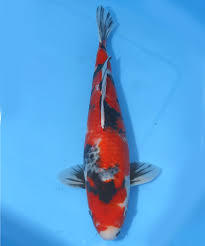
. Kohaku koi
The authentic koi, with a pure white base and red markings over the whole body, without any other colors mixed in; the base should be snow-like pure white, and the red markings deep and even with clear
boundaries. This type is divided into
20
many varieties.
IV. Price Koi have no fixed price standard, so sometimes even the buyer and the dealer find it hard to decide. In short, a rough price is set according to the koi's quality and size, and of course there is also the matter of personal preference. At ordinary times you should pay more attention to the general prices of koi in various places, and then you can understand roughly how much a koi of a certain quality, size and type is worth. Koi prices vary enormously; some are several hundred thousand yuan per fish, or even over ten million yuan, while others are a dozen or so yuan per fish. Therefore, people of any social class can afford them. When buying, it is enough that the price is reasonable and the quality matches your personal preference.
V. Key Points for Selection Selecting young fish is the most important step in obtaining high-quality koi during the rearing process. Generally, 3-4 selections are carried out over a period of more than 3 months after hatching. The timing of selection varies with the variety, the speed of growth and how early the patterns appear. For example: Showa Sanshoku koi are selected when they are more than two weeks after hatching; koi of the Ogon system begin batch selection at 50 days; while koi of the Kohaku and Taisho Sanshoku systems begin batch selection at around 60 days. In short, selection begins when the young fish grow to a body length of 3-5 cm.