Methods for Selecting Young Koi Back Then and Tips for Beginners
How should beginners select good young koi? Below, the editor will share with you some experience on selecting young koi. What should you pay special attention to when buying young koi? I hope it will be helpful to everyone!...
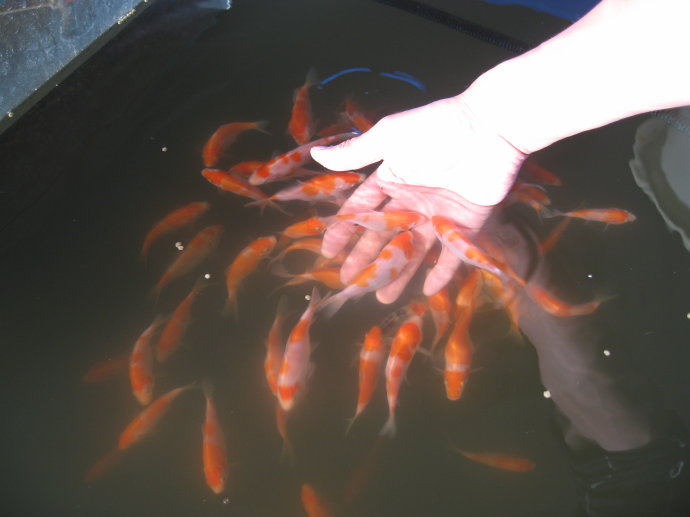
When selecting, first of all, be careful not to buy diseased or deformed fish. In particular, pay attention to the following points:
1. Whether it moves together with the other fish.
2. Whether it stays apart from the group and remains motionless.
3. Whether there is gill disease, and whether its breathing is rapid.
4. Do not choose ones with small red markings, because the markings will shrink as they grow, and may even disappear.
5. Do not choose ones whose red markings have blurred edges, because the red markings may disappear, or the red patches may scatter or become dot-like.
6. Do not choose ones with a moderate amount of red and black markings, because there is a risk that the red and black markings may fade and disappear.
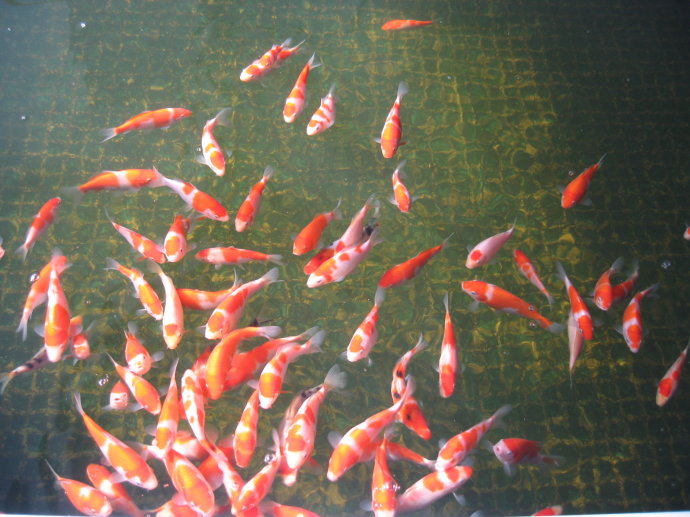
Fry Selection Method
Fry refers only to small fish 2 cm long. It is important to buy fry produced by excellent parent koi, and it is best to see the parent fish before buying. Usually, people who buy fry mostly want to obtain good koi from them, but after you buy a large batch of thousands of fry, the selection work later is very important, and you must never leave them unattended. The first culling removes white ones with no markings, red ones with no markings, deformed ones, and misshapen ones. The second culling removes those with poor patterns. In short, raising fry is not just about feeding them food; it also requires patient selection before good varieties can emerge.
Juvenile Fish Selection Method
Fish 5-10 cm long are what we call juveniles. Most people who buy juveniles are hobbyists, and they usually choose about a hundred to raise, hoping to breed three to five high-quality koi from them. This type of hobbyist usually goes to the fish farm in August to September each year, which is when the farm conducts its second and third cullings, to select a dozen or so juveniles. If selecting Kohaku, Taisho Sanke, or Showa Sanshoku, choose those with well-positioned red markings, clear edges, and deep colors. It is best not to choose those with larger and more numerous black spots, because the black spots will concentrate and grow larger as the beloved koi grows, and then tend to fade and scatter, so it is better to choose ones where faint black markings can be seen on a white base.
In addition to paying attention to the pattern, the body shape must not be too thin and small. Fish that are deformed, misshapen, injured, or diseased must absolutely not be selected. If possible, it is best to look at the parent koi, because if the parent koi are of excellent quality, the juveniles are more likely to inherit excellent bloodlines. In addition, you can also observe the dorsal fin of the koi; high-quality koi have white dorsal fins. Besides that, you should also see whether the juveniles have the trait of being able to grow into large fish. At this time, observe the head: a large, round head skeleton that looks bigger than those of other juveniles at a glance indicates a shape that is more likely to grow. For metallic koi, choose those whose heads and pectoral fins shine.
Although we have already carefully selected juveniles to raise, once juveniles are found to have variations such as fading or deformation, they must be culled as early as possible to reduce the number being raised. This can not only save feed, but also reduce water pollution and increase dissolved oxygen.
Young Fish Selection Method
So-called young koi refers to small fish 15-35 cm long. The patterns and appearance of young fish and adult fish differ greatly. For example, a Taisho Sanke with beautiful patterns as a young fish often loses its charm as an adult because the distance between the markings becomes too great; and sometimes the large patterns on the body surface of a young fish look somewhat uncoordinated, but once it grows into a large fish, with the addition of an appropriate white base, it instead becomes very beautiful.
German koi are also relatively beautiful as young fish. The characteristics of German koi are the pattern variations formed by large scales, as well as the vivid markings revealed on scaleless skin, so German koi are very beautiful and gorgeous during the young fish stage. Once they grow into adult fish, because the patterns are too vivid, they instead feel lacking in steadiness. German koi are mostly based on mirror koi, so it is most ideal when the two rows of large scales along the back ridge and the center of the belly are neatly arranged and there are no superfluous scales.
It is difficult to distinguish male from female in young fish. Generally speaking, during this period male koi grow quickly, have deep color patches, and have clear edges, but after growing larger, females instead grow larger and plumper more easily than males. Therefore, this phenomenon is common: young fish that once won at a judging competition have very little chance of winning when they become adult fish.