What's the problem with koi being thin? After 14 years, Japanese koi swim into Ningbo
Koiare here | After 14 yearsJapanese koiswim into Ningbo
Wow
So many koi
Quick, quick, share this
Is this everyone's first reaction upon seeing koi?
Don't rush to share
Let the editor tell you all about koi
Koi
Ko i
Koi are hailed as the king of ornamental fish in the world. In Japan, Japanese koi are known as "living works of art" and "living gems in the water," and are Japan's "national fish." Their lifespan can reach 60-70 years, and their body length can reach 1.5 m. On the auction market, Japanese koi worth hundreds of thousands of yuan are everywhere. The wonderful thing about Japanese koi is that, as they age and as the ambient water temperature changes, the color, luster and form of the patterns on their bodies also constantly change, just like a specially hand-painted ink wash painting. In recent years, with the growth of the domestic consumer market and the rapid development of the leisure fishery industry, demand for high-grade ornamental fish has been growing day by day, and Japanese koi have become the darling of the market for their excellent quality.
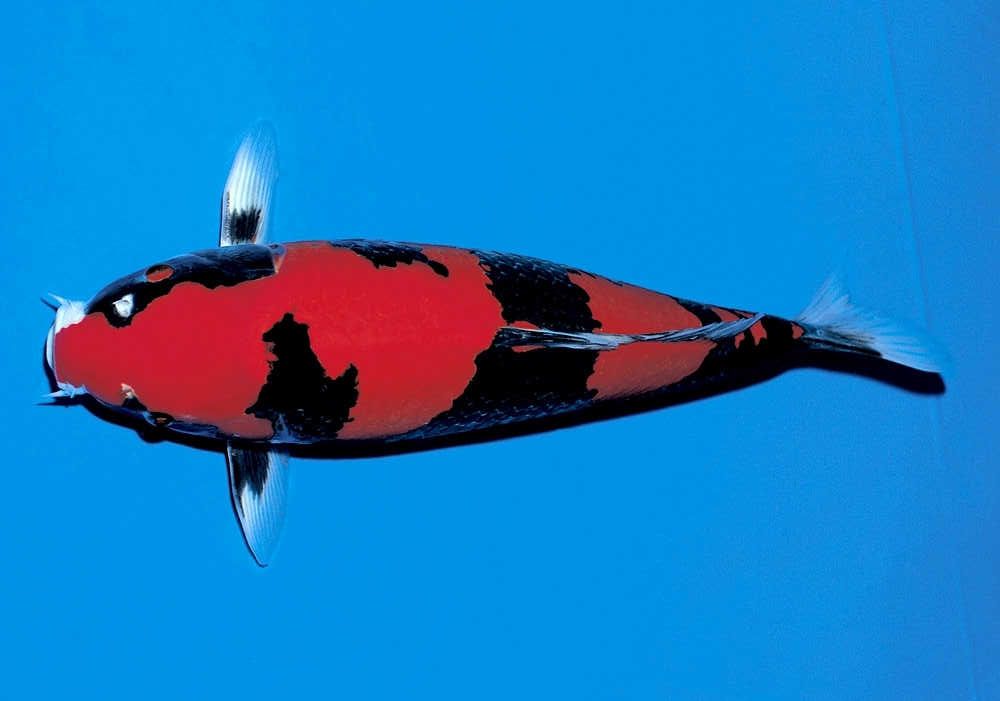
At the beginning of the 21st century, because of an outbreak of koi herpesvirus (KHV) in Japan, the General Administration of Quality Supervision, Inspection and Quarantine issued a warning notice in 2003 and suspended the import of Japanese koi into China. In recent years, with good control of the koi epidemic in Japan, and after our country's risk assessment, in 2016 China resumed imports of Japanese koi. The current batch is the first to come to Ningbo since our country lifted the ban on the trade of Japanese koi into China.
From 2003 to 2017, that is a gap of 14 years.
Please enter the title bcdef
[The koi are here]
On the afternoon of March 22, a special vehicle carrying 11 Japanese koi arrived at the Ningbo Guo Bin Koi Farm. They set out from Tokyo Haneda Airport in Japan in the early hours of that day, were flown to Shanghai Pudong Airport, and then quickly transported by land to Ningbo.
The Japanese koi imported this time totaled 11, about 2 years old and about 60 cm in body length, belonging to the "juvenile" stage, with an average price of 400 US dollars each. Among this batch of koi, only 9 were introduced for breeding, and the other 2 were "sentinel fish" with a special status, that is, fish used to monitor the growing environment and epidemic diseases.
Please enter the title abcdefg
The path for the koi to come in is like this
In order to welcome the arrival of these "nobles in the water," the General Administration of Quality Supervision, Inspection and Quarantine specially organized an expert assessment team at the end of last year to conduct an on-site assessment of the Ningbo Guo Bin Koi Isolation and Quarantine Facility, ensuring that the software and hardware facilities and environmental sanitation conditions met the requirements for koi isolation and quarantine, training relevant employees of the isolation facility in the basic knowledge of isolation and quarantine of imported animals, and guiding the isolation and quarantine facility in implementing various preparatory work such as epidemic prevention and disinfection and feed provision. After a comprehensive assessment, the Ningbo Guo Bin Koi Isolation and Quarantine Facility was recognized as a dedicated isolation and quarantine facility for imported Japanese koi, and is currently one of only 2 dedicated quarantine and isolation facilities for imported Japanese koi in China.
Please enter the title abcdefg
Everything is ready
Only waiting for the koi
Let's see how the quarantine is specifically carried out
1. Do a good job of quarantine inspection before entering the pond
Verify the cargo information
Unpack and put into the pond
As the dedicated transport vehicle arrived, the inspection and quarantine personnel first verified the relevant information on the outer packaging, carefully checking the name, place of origin, approval number of the source farm, and so on. Then they opened the boxes to check whether their packaging had any air leaks, made a preliminary judgment of the health status of each fish in the packaging, observed whether they swam abnormally, whether there were ulcers, bleeding, cysts or parasitic infections on the body surface, whether the body color was abnormal, and whether the fish abdomen was swollen or the anus was red and swollen, and so on.
2
Supervise proper disinfection of the fish bodies
Water temperature equalization
Unpack
Fish body disinfection
After the water temperature was equalized, the workers opened the plastic bags, scooped the koi out of the bags and quickly put them into a large basin prepared nearby, and added a small amount of potassium permanganate to the basin to help disinfect and sterilize them. Only after 3 minutes were they scooped out and put into the pond, and in this way the koi truly entered their new home.
3
Supervise the disinfection and treatment of transport packaging and wastewater
After all the koi entered the pond, the inspection and quarantine personnel supervised the enterprise in immediately carrying out harmless treatment of the plastic bags used to transport the koi, the transport tools, the water brought from Japan and the water just used for disinfection, ensuring the sanitation and safety of these items and the waste water.
4
Do a good job of disease monitoring
These koi will remain under the close attention of the inspection and quarantine staff for the next 30 days. The inspection and quarantine personnel still need to supervise their food, drink and daily life, and pay attention to the keepers who raise them, the feed, water quality and sanitation, and health status.
In accordance with the World Organisation for Animal Health's International Aquatic Animal Health Code and the regulations of the General Administration of Quality Supervision, Inspection and Quarantine, the inspection and quarantine personnel will take samples from them to test for relevant diseases, ensuring that the introduced koi are all safe and healthy aquatic animals, and strictly preventing the introduction of epidemics into our country.
Q
A
Friend
Someone who wants to raise koi
Friend
Inspector
Someone who answers questions
Inspector
Friend
Inspector, I want to import Japanese koi. How do I do it?
Inspector
Koi imports must pass through "three gates"
Guide to importing Japanese koi
No.1 Registration. Japanese farms must register with our country's General Administration of Quality Supervision, Inspection and Quarantine. So far, only 6 farms in all of Japan have registered with our country, and only the koi from these farms are eligible to enter our country;
No.2 Quarantine approval. Before koi are imported, a quarantine permit must be applied for from the General Administration of Quality Supervision, Inspection and Quarantine. Only after obtaining this permit can they smoothly enter the country;
No.3 Isolation and quarantine. Koi that arrive within our country's territory must enter a designated isolation and quarantine facility and spend a 30-day isolation and quarantine period, and finally enter a designated farm. Only after passing a monitoring cycle at a suitable natural water temperature and indeed having no outbreak of disease are they allowed to be sold.
Friend
I see. I have another question
Friend
Ahem... are they tasty?
Inspector
...Huh?
Contributors to this issue: Tang Dian, Yongcheng Office; Shu Linjun, Animal and Plant Division; Huang Bin, Yinzhou Bureau
Editor of this issue: Wang Sihong
。