What are the morphological characteristics of the Beni Asagi koi?
Introducing the Beni Asagi koi. The Beni Asagi differs from the Hana Asagi and Ki Asagi among Asagi koi in that its body color is a deeper crimson red and gives a relatively strong visual impact. The so-called Beni Asagi refers to the Asagi variety whose back is not blue but, like the belly, entirely red. It is...
The Beni Asagi differs from the Hana Asagi and Ki Asagi among Asagi koi in that its body color is a deeper crimson red and gives a relatively strong visual impact. The so-called Beni Asagi refers to the Asagi variety whose back is not blue but, like the belly, entirely red. It is a variant of the Asagi koi and is also more expensive.
We mainly define Asagi from two aspects: color and bloodline. Generally speaking, its back appears deep blue or light blue, and the outer edges of the scales on the back are bordered by white. The belly and the bases of the various fins appear red. Add to this the typical German koi characteristic of no scales or few scales.
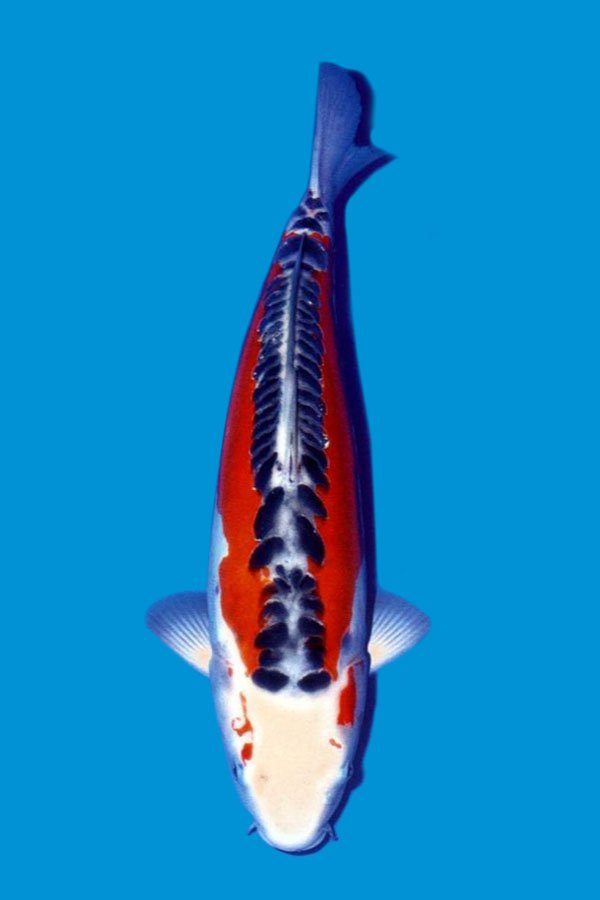
When it comes to the Beni Asagi, in identification we must first pay attention to how it differs from the other two types of koi: the German Kohaku and other types of Asagi. Let us look at them separately below:
Its difference from other types of Asagi is that the back lacks the appearance of blue color zones such as deep blue or light blue, which makes the red appear richer and more unified, often possessing a soul-stirring power. The lack of blue also gives the Beni Asagi a greater sense of simplicity, and the mutual fitting between the colors is more natural, with transitions appearing especially smooth.
Its difference from the German Kohaku is that although the blue on its back has already merged with the red and white into one, the belly and other parts of the fish body still have blue faintly flashing, either obviously or indistinctly, and this kind of beauty can be said to be just right. Gorgeous yet not at all showy, with a unique charm.
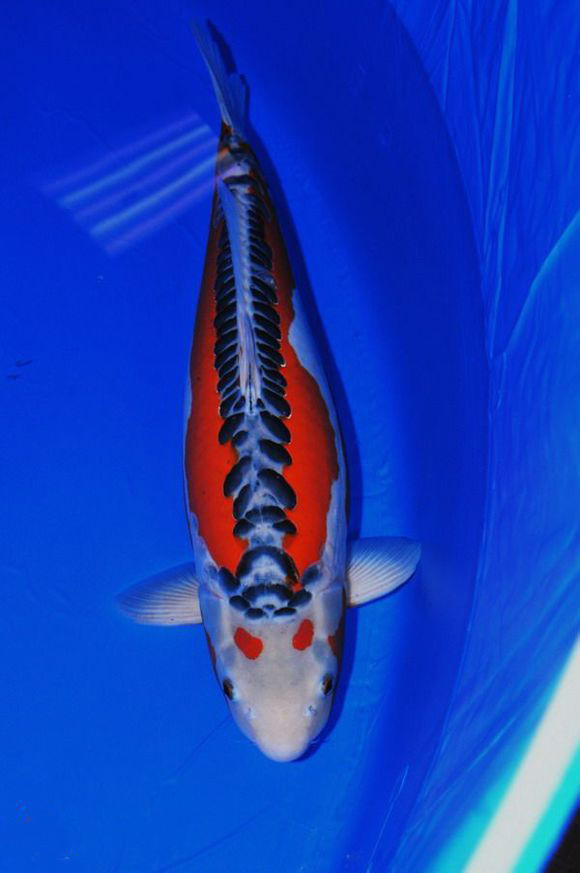
First is to find individuality through comparison. That is to say, faced with a dazzling array of fish pondskoi varieties, what we need to do is often, relying on first impressions, to see that certain fish or a certain fish among them has a unique distinctiveness, and this distinctiveness is precisely where its value lies. Of course, this is an ability formed on the basis of continuously accumulating experience.
Second is to abstract the common appreciation rules from individuality. This process is the reverse of the above method, that is, to value those common rules of koi appreciation. By combining the two techniques, one can certainly select the idealkoi。