Which koi varieties have good colors, and what feed do they eat every day?
Daily feeding of koi Feeding is the most important part of daily management, and also the most interesting one. Every day beside the pond (or tank), watching the fish happily compete for the feed, the joy is truly endless. The feeding amount is something to pay attention to. Feed too little...
KoiDaily——Feed feeding
The feeding amount is something to pay attention to. Feed too little, and the fish do not get enough to eat and cannot obtain sufficient nutrition; feed too much, and the leftover feed will pollute the water, causing oxygen depletion in the water and ultimately leading to the death of the fish.
So exactly how much should be fed to be appropriate? Feeding according to the fish's body weight is the most scientific approach.
According to research by relevant experts, the most appropriate feed amount for fish is 3% of their body weight. However, strict weighing is not really possible in home keeping, so how should one feed in the most convenient yet most scientific way?
Based on experience, usually, healthy, normal fish can eat their fill within 15 minutes, so without weighing, the amount eaten within 15 minutes is the most appropriate feeding amount. If they finish eating in less than 15 minutes, it proves that too little was fed, and more should be added next time; on the contrary, if they cannot finish within 15 minutes, it means too much was fed, and the amount should be reduced next time. If they still have not finished eating right before bedtime at night, the leftover feed should be scooped out so as not to affect water quality.
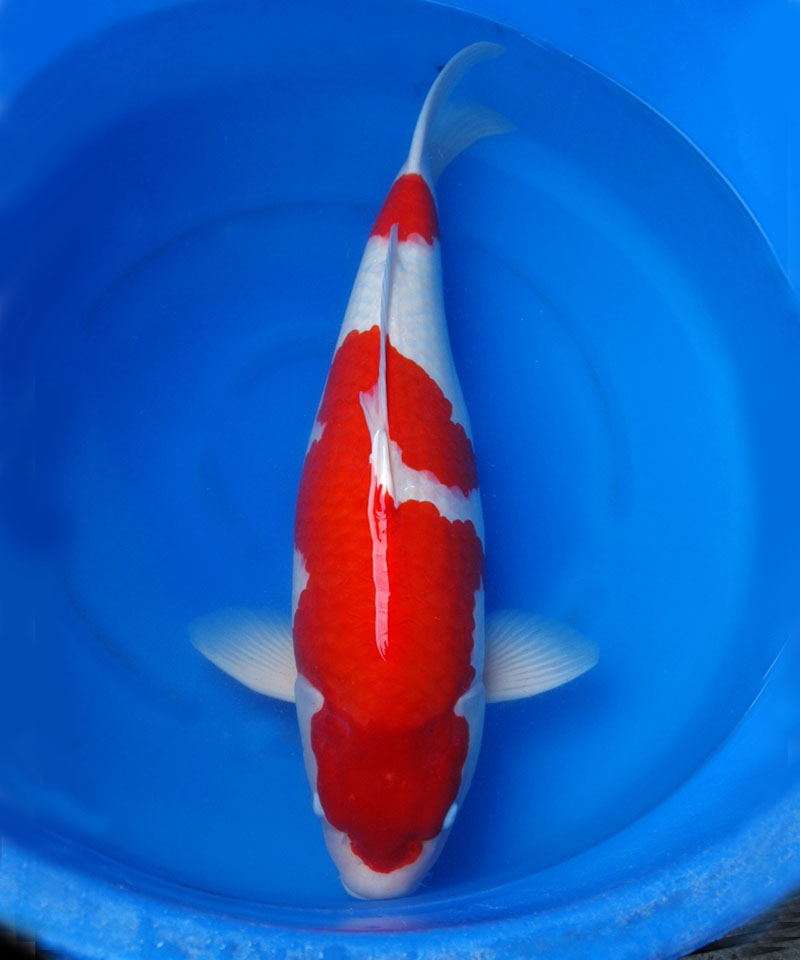
Koi daily——Selection of feed
The nutrition of fish basically comes from feed, and fish in each growth stage need different nutrition. In the four seasons of a year, due to differences in water temperature, the digestion and absorption of fish differ, and the feed used is also different. At the same time, the feed used for ordinary rearing and the feed used for color enhancement are also not entirely the same.
First, select feed according to the different growth stages. The small fish stage (8 ~ 10 cm) is the stage of body growth, mainly providing growth feed for the nutrition needed for the fish body's development. Usually the protein content is relatively high, with animal protein and plant protein in equal amounts, totaling about 40%. The pellets cannot be too large, or they will be unable to eat them; generally pellets of size No. 1 ~ 2 are more suitable;
When the fish grows beyond 10 cm, in addition to feeding growth feed, a small amount of color-enhancing feed should also be added, but the amount should not be too much; about 10 grams of the feeding amount is more suitable. In this way, besides growing the body, it also lays some foundation for the brilliant colors to come.
When they reach 20 ~ 30 cm, it is the vigorous growth period of koi. If only growth feed is given during this period, their growth will be inhibited; at this time, fast-growth feed should be fed. Fast-growth feed has a relatively high fat content, and the nutrition it provides is beneficial to the rapid growth of koi, which is very advantageous for those hoping to cultivate large giant koi. If handled properly at this time, the body length of koi can increase by 20 ~ 30 cm, that is, rapidly growing from 20 cm to 50 cm. Fish that grow quickly require great attention in color preservation methods, because when koi grow rapidly, their colors often fade, especially the red patches; once they fade away completely, they will not recover.
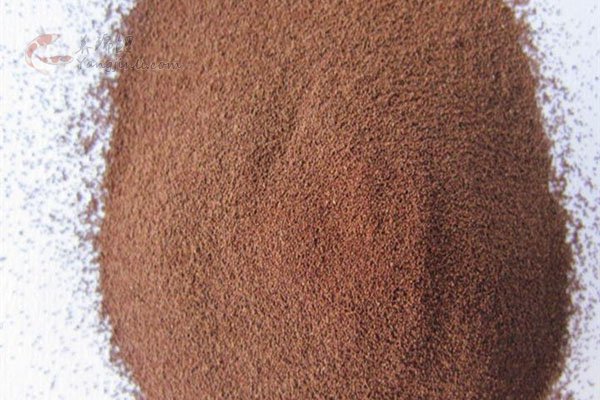
While feeding fast-growth feed, better-quality color-enhancing feed should also be added, in order to keep their color patches from fading and keep them brilliant. It should also be noted that the most suitable condition for feeding fast-growth feed is when the water temperature is above 25 °C. If the water temperature is below 25 °C and fast-growth feed continues to be fed, enteritis disease is very easy to develop.
Nowadays, factory-prepared compound pellet feed is available on the market, and it is divided very finely according to function. We can choose feed according to water temperature and needs.
Nowadays, factory-prepared compound pellet feed is available on the market, and it is divided very finely according to function. We can choose feed according to water temperature and needs.
When the water temperature is above 25 °C, the fish's metabolism is fast and absorption is good, so feed with high protein content can be chosen, and the fish's growth rate will be fast. At this time, the protein content of the selected feed should be 38% ~ 45%. On the contrary, if the water temperature is below 25 °C and feed with high protein content continues to be chosen, the fish will absorb poorly due to slow metabolism, and at the same time are very prone to enteritis disease and concurrent fin rot disease. At this time, feed containing wheat germ meal, which is relatively easy to absorb, should be chosen.
If the water temperature is below 12 °C, not only should high-protein feed not be fed, but stopping feeding altogether can even be considered. In addition, generally color-enhancing feed is more effective when fed at high water temperatures.
In addition, some additives are mixed into the feed. For example, medicated feed can have some antibiotics mixed into the feed to treat bacterial gill rot; some traditional Chinese medicines can be mixed into the feed to improve the fish's immunity and disease resistance; mixing some beneficial bacteria into the feed can speed up the growth rate of koi and improve water quality.