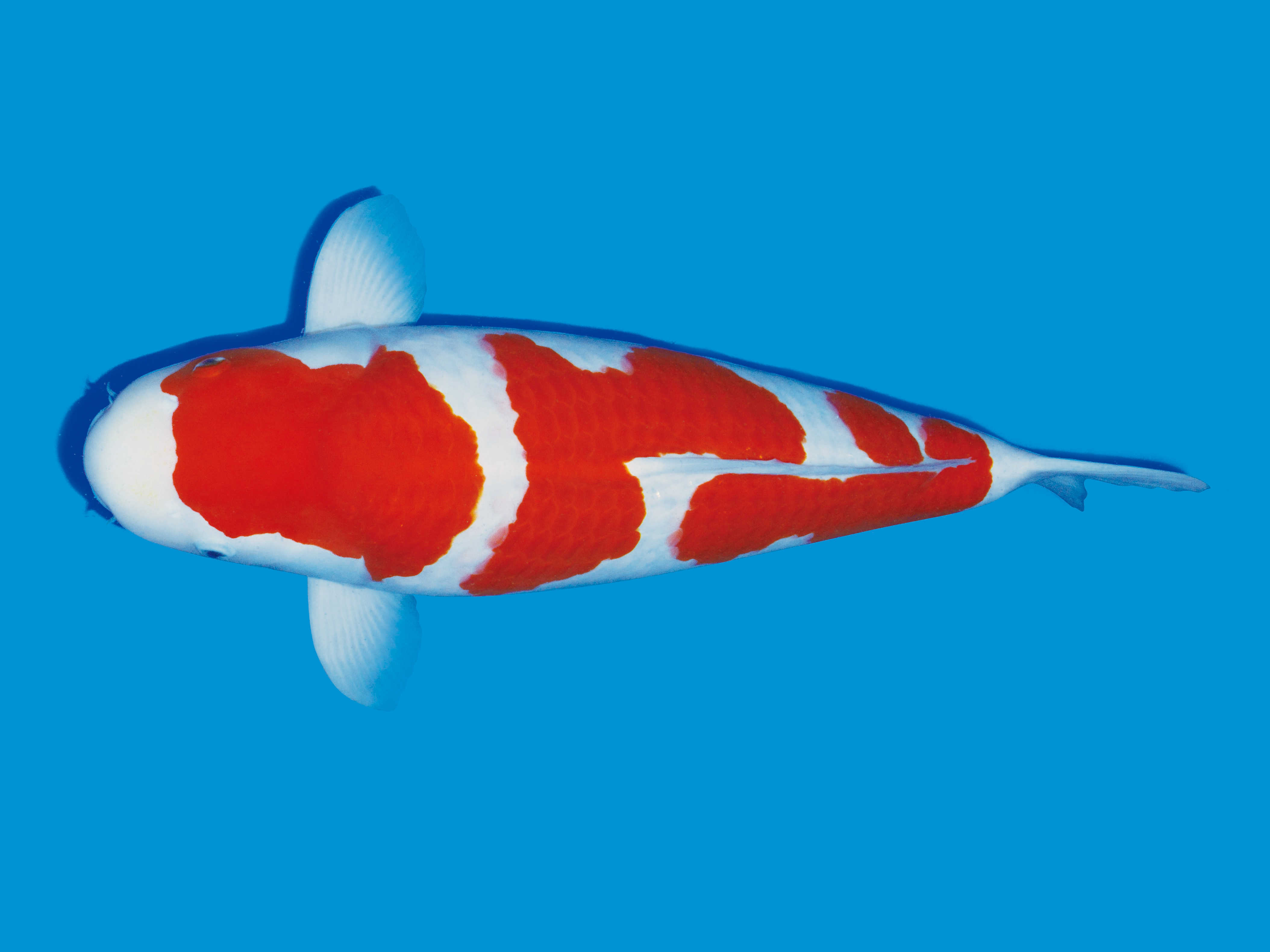
Japanese Koi VS Chinese Koi VS Chinese Fish Dealers === China Koi Forum: Share the Koi Around You === As long as you are a member of the China Koi Forum, click the ... button in the upper right corner of the page to share this message to your Moments and send your registered username on the China Koi Forum to...
JapanKoiVS Chinese Koi VS Chinese Fish Dealers
===ChinaKoi Forum: Share the Koi Around You===
As long as you are a member of the China Koi Forum, click the ... button in the upper right corner of the page to share this message to your Moments and send your registered username on the China Koi Forum to the China Koi Forum WeChat, and you will have a chance to get a copy of the downloadable material "Koi Navigation"!
After several years of keeping fish, I have come into contact with many Chinese fish dealers and farm owners. The purpose of this post is to let netizens understand another side of koi that fish keepers do not know about. When talking about koi, one cannot avoid mentioning Japanese koi. Regarding the origin, bloodlines and development history of Japanese koi, many veteran fish keepers have learned a great deal through forums. Those famous names are often on people's lips, so I will not repeat them one by one here.
I want to talk about Japanese koi as I understand them. When speaking of Japanese koi, one cannot avoid speaking of the Japanese people. The Japanese nation is a remarkable nation. Although history has brought us heavy disasters, there are still many things about the Japanese that are worth learning from. Carp and goldfish originated in China, but they were elevated to a higher level in Japan. And not only these; for example, peacocks, ornamental shrimp, aquascaping, equipment and so on have all been taken to the extreme. As for what the reason is, let me give an example with koi to explain my view. Everyone knows that koi originated in Niigata, Japan. The ancestor was the Japanese carp, the true carp, which mutated to produce red-headed carp. The Japanese carried out inbreeding of this red-headed carp and obtained red carp, white carp and red-headed carp. Red carp and white carp were crossed to obtain the prototype of Kohaku. China already had a prototype of red carp long ago. In southern China there is a kind of lotus-pouch carp whose color was already red long ago. Why did we not create koi? Many fish keepers say that the water quality of Niigata and so on led to the mutation. I do not agree with this view. Since China has red genes and black genes, could we not create Kohaku koi? I think the answer is no. On the contrary, China's red lotus-pouch carp is a delicious dish. Second, Japanesekoi fishWhat is the culling rate? 5 million fry, and after culling 1500 remain. Fewer than 300 are stocked at 2 years old, and at most 100 at 3 years old. In contrast, what is the culling rate of Chinese breeders? I once watched a video on Zhongjin Web. A top-grade koi fish could sell for 150,000 US dollars back in the 1980s. You can imagine. I have come into contact with many fish dealers. In their words, it is how much per jin for koi, how many jin of fish are produced this year, and how much money can be made after deducting feed. They basically do not stock 2-year-old or 3-year-old fish. On one side, many Chinese people pursue astronomically priced Japanese fish; on the other side, there is rough and careless production. Many fish farms in Guangzhou are extraordinarily imposing, looking at pool after pool of imported fish, but how many can truly settle down and produce their own? Looking at the big Niigata exhibitions in Japan every year, many Chinese hobbyists and fish dealers participate. How many people know that those winning fish were all purchased from Japanese fish farms, competing just for the sake of competing to increase fame? With your farm's great name attached, how much real value do you have? Paying high fees every year, and they do not even come back to China. What I cannot understand is, fish that cost a thousand jin, facing such a large market in China, why? The reason, I think, is simply that they do not want to break the existing profit model. Having said so much, it really comes down to one reason: the market is immature. China's koi farming area is the largest in the world, but how much value is behind this number one? Third, on the website of the Japanese Airin Kai, there are detailed records of the problems encountered by koi hobbyists. Diseases, breeding methods, case pictures and so on... even microscope slides, very intuitive. It teaches you how to keep fish, how to treat them and so on. In contrast, domestic forums and fish dealers seal chlorine dioxide in a bag and call it a special effective medicine. Something that costs a few mao is sold for dozens of yuan. Is this how money should be made? Many simple things are deliberately made so mysterious. Strange theories about cultivating water, sky-high-priced filter media, sky-high-priced medicines, sky-high-priced feed. To a large extent this restricts the development of koi. On the Japanese website, there is a sentence noted: koi are not suitable for tank keeping. In contrast, in China, how many fish dealers can tell you this sentence? A fish dealer tells you that for a 1 m tank, a hobbyist can keep 9 fish, and for a 2 m tank, 18 fish. No matter how much filter media you put in, isn't it still a drop in the bucket? Large Japanese koi are not necessarily suitable for hobbyists in the north. On the contrary, small koi are suitable for tank keeping. Since you choose tank keeping, you cannot raise them according to pond standards. Fourth, a Japanese koi farm with a production scale of 5 million fry spends about 80,000 US dollars on feed each year. Because of the special nature of koi farming, basically each farm formulates feed according to its own climate and varieties. Only by eating well can they grow large. Most Chinese fish farms use feed costing a few thousand yuan per ton. If koi are to develop, one must not keep fish merely to make money, but keep fish for the sake of keeping fish. If the fish are good, the market will naturally recognize them. It is not by waging price wars that you will survive. Fifth, Japan holds hundreds of auctions, large and small, every year, handing the right to set prices to the hobbyists. I have been to many fish markets, where native koi cost a few hundred yuan, Taiwanese koi, pure Japanese koi and so on with exaggerated promotional methods, making beginners cry out that they have been cheated. After fooling you about fish, they fool you about equipment, and after fooling you about equipment, they tell you to kill this and that. Ask how many fish are good to keep, and the more the better, the fish dealer says there is no problem keeping dozens in a tank, easy to keep. But little do you know that fish dealers do not feed fish in tanks at all, so of course the water is not clear. Having said so much about Japanese koi, what I want to say is that hobbyists should no longer be superstitious about Japanese koi. Not every Japanese fish bought at a high price will grow to look like the promotional pictures. The most important point is that koi is a fish with very unstable genes. I once bought a 2-year-old fish for 50,000 yuan that I considered top-grade, and after keeping it for half a year it became a white fish. Such examples have basically happened among high-end hobbyists, so home-produced fish may actually be more suitable for beginner and intermediate hobbyists. Also, Japanese koi are heavily modified, with color enhancement, shaping. Do not think that a particularly red fish is a good fish. Let me tell you, after keeping it in a tank for a while, it will definitely fade. Third, no matter how good the fish is, tank keeping will not give it good texture, not even a cement pond. Only earthen ponds can give fish good texture. Also, in tank keeping, male fish have an advantage over female fish. Finally, about the breeders, let me talk about China. Stop fooling us. Fooling us with a digital camera. Printing a certificate for 10 yuan and continuing to fool us. This Dainichi, that Momotaro, this Sakai. Can you stop deceiving us? Either top-grade, or tategoi, or this one is whose son, that one is whose daughter, is it interesting? You wish you could smash someone to death with it. 10 cm, and obediently a 1 cm small fish is priced at several thousand to tens of thousands, over a thousand yuan per 1 cm. You are not selling fish, you are robbing. Being able to tell a tategoi at 10 cm, you really are invincible. If it could be seen, would Japan sell it to you? Also I remember a fish farm, the boss is a top Chinese breeder. How much is this one, how much is that one. I asked about 10 fish, and in the end I asked him again how much the second one was. The first time he told me 10,000, the second time he told me 5,000. Ah, it is really quite sad. I advise those who hang a sheep's head and sell dog meat, by doing this sooner or later you will fool yourselves to death. Business is a long, steady stream. If you want to eat yourself fat in one bite, aren't you afraid of high blood lipids? Let me also talk about those bosses who sell newly hatched fry. I know your broodstock are expensive and look good. One fish is 2 or 3 mao. Let me ask you in return, how much is a set of broodstock? A good spawn produces nearly 500,000 fry, enough to buy an ordinary set of broodstock in Japan. How much is your breeding cost? Why, with such resources, can it not be more reasonable? Koi farming and common carp farming techniques are about the same. You guarantee by word of mouth that the fish produced are the same as imported ones. If they really are the same, I will buy them back from you at half the price of Japanese fish, how about that? Speaking of keeping koi, it is actually not that hard. All kinds of bacteria just make hobbyists dizzy. Simply put, the main points are just these: first, pH value, generally 6.8 to 7.2, do not let NO3 levels exceed the standard, keep oxygen content high, keep the temperature suitable, feed less in tank keeping, change water regularly, clean the filter cotton regularly, and that is enough. Get some fish food from proper brands, install a UV lamp, and most importantly, if there is no quarantine tank, do not buy fish all the time; the faster you buy, the faster they die. Many hobbyists also care a lot about acclimating water, this method and that method. Actually, do not make simple problems too complicated. If you bought fish from a proper fish farm, basically you can just float the bag for temperature equalization with tap water and then drop them straight in without much problem. If the fish were shipped by air, add good salt at 5 per thousand, equalize temperature for a longer time, use strong aeration, and 10 grams of yellow powder per ton of water is enough. Do not feed for the first few days after the fish arrive. What you play with is fish; do not let the fish play you.
========Sharing is happiness=========
WeChat public account: koibbs
Click the ↗... button in the upper right corner to share this article to your Moments
Add the WeChat public account: koibbs. You can reply with any koi-related topic such as: Kohaku, Taisho, scale disease, filtration, fish pond and so on. Then you can find the information you need.
Only what you cannot imagine, nothing that I do not know, and more surprises are waiting for you!
。