What are the morphological characteristics of the Hi Utsuri koi?
Introducing the Hi Utsuri koi. As a type of Utsuri koi, the Hi Utsuri koi is overall composed of two colors, red and black. Its unique color and pattern characteristics make it very easy to recognize and identify. A typical Hi Utsuri koi has a body that is entirely crimson red, with part of the red being glossy, so that from a distance...
As a type of Utsuri koi, the Hi Utsuri koi is overall composed of two colors, red and black. Its unique color and pattern characteristics make it very easy to recognize and identify.
A typical Hi Utsuri koi has a body that is entirely crimson red, with part of the red being glossy, so that from a distance its silvery scales glitter;
The head has large black patches, and these black patches closely resemble the head markings of the Showa Sanshoku koi;
At the dorsal fin, red patches and black patches alternate, spreading outward in a radial pattern, and their streamlined shapes are very graceful and smooth;
Black spots generally appear at the pectoral fins, but they often take the form of overlapping with the red patches;
The pattern form on the caudal fin complements that of the pectoral fins, with the distribution of color and the direction of the texture coexisting harmoniously; the appearance of such rich, heavy color on fins so thin they are nearly transparent often gives a very strong visual impact.
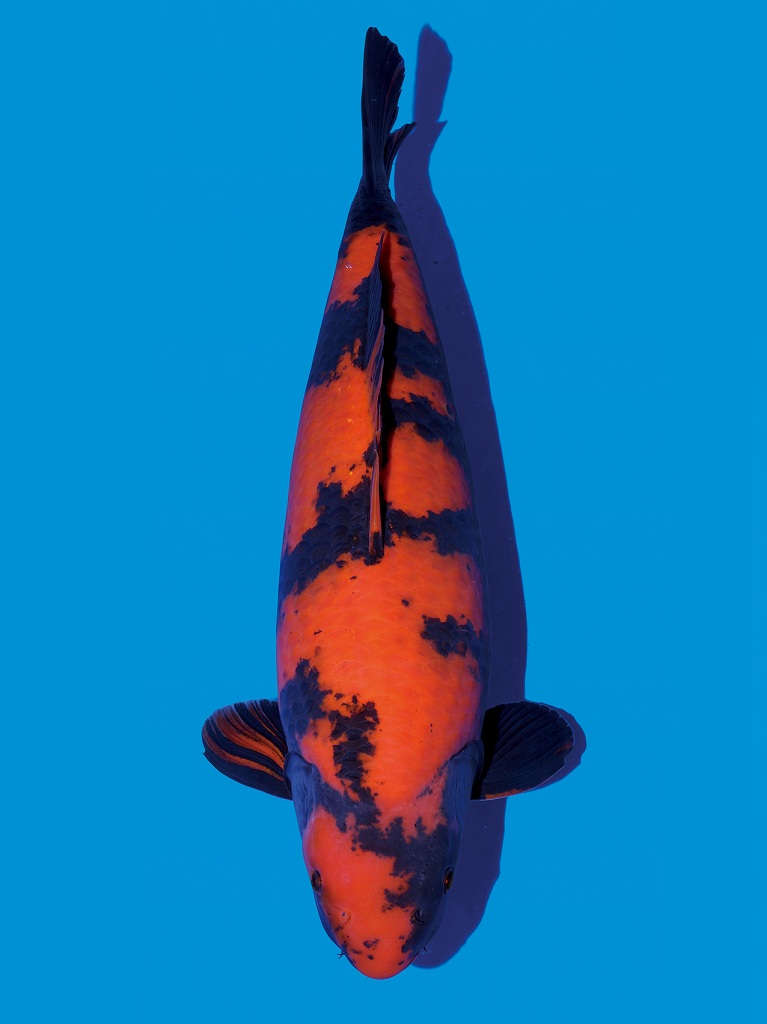
First is the pattern type: the red and black patterns of the Hi Utsuri vary in shape. In some, the sumi forms by curling up from the belly along the original mountain-shaped pattern, dispersing over the head, dorsal fin and other areas, appearing rather loose and free; in others, the sumi looks like a whole block of black spreading across the fish's body, giving the fish a greater sense of weight and solidity.
In addition, if the sumi patches are poorly formed, granular sumi is likely to appear on the red plates, which is a very fatal defect and directly affects the overall evaluation of the fish.
In addition, if the sumi patches are poorly formed, granular sumi is likely to appear on the red plates, which is a very fatal defect and directly affects the overall evaluation of the fish.
Second is the pattern color: the pattern color of the Hi Utsuri emphasizes striking contrast and visual impact. The red is best when it is as vivid as possible; uneven color, or color that is thin in places and thick in others, is a major taboo. The sumi is also best when it is jet-black and heavy.
In a top-quality Hi Utsuri, the sumi often looks as though it grows from within, rather than being splashed on as if by an external force. It is precisely in this interplay of black and red, of dark and bright, of restraint and release, that the charm of the Hi Utsuri is fully revealed.
In a top-quality Hi Utsuri, the sumi often looks as though it grows from within, rather than being splashed on as if by an external force. It is precisely in this interplay of black and red, of dark and bright, of restraint and release, that the charm of the Hi Utsuri is fully revealed.
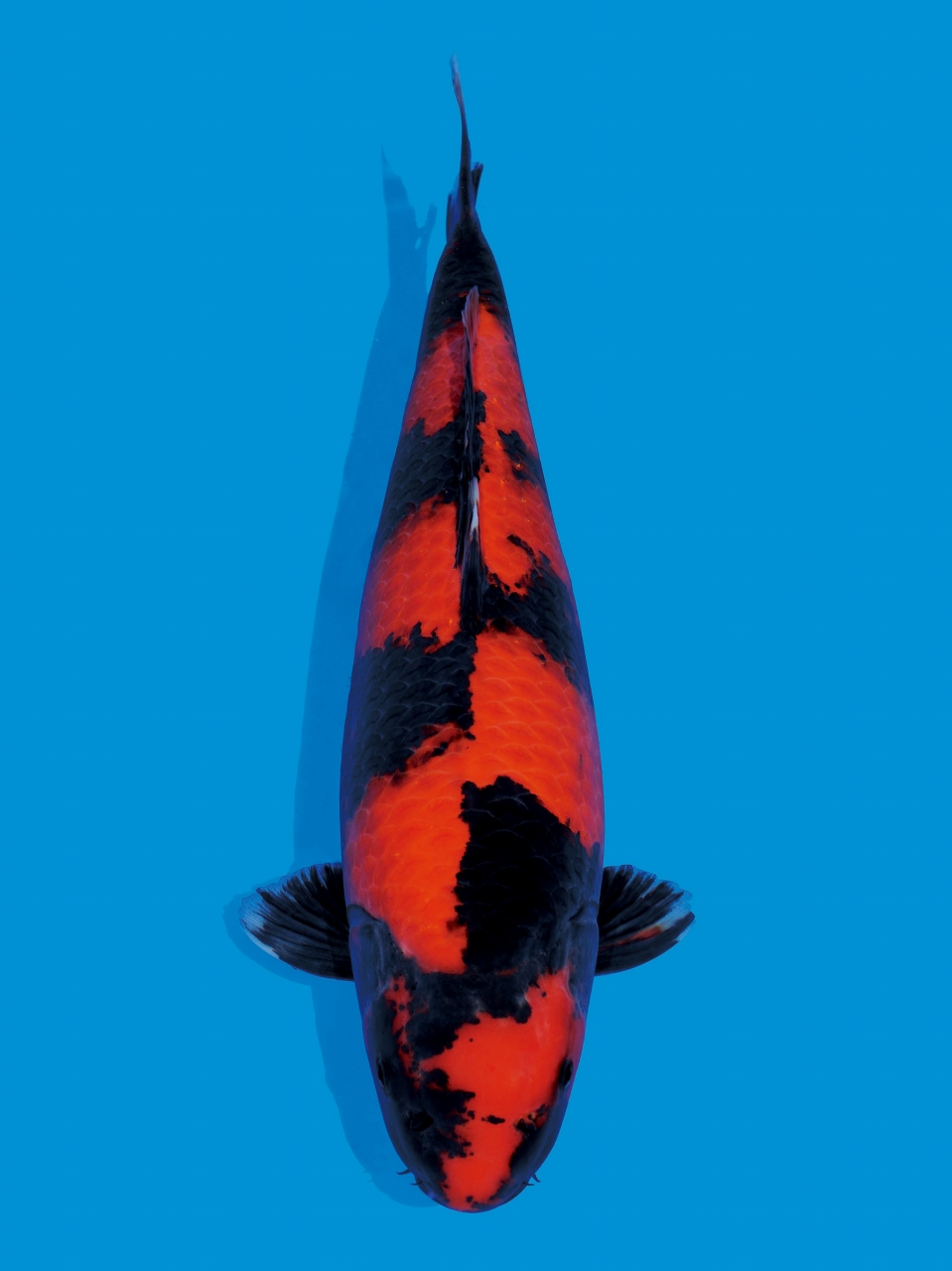
There is also the intuitive impression it gives: in a pond, the Hi Utsuri may not be the one we notice most easily at first glance; it is indeed a koi that rewards long appreciation.
Its heaviness keeps it from seeming frivolous, while its brightness keeps it from feeling oppressive. Some connoisseurs describe it with the word "poignant beauty," and this is apt. This word also reflects that it is precisely these hobbyists with delicate sensibilities and a reflective temperament who are especially fond of the Hi Utsuri.
Its heaviness keeps it from seeming frivolous, while its brightness keeps it from feeling oppressive. Some connoisseurs describe it with the word "poignant beauty," and this is apt. This word also reflects that it is precisely these hobbyists with delicate sensibilities and a reflective temperament who are especially fond of the Hi Utsuri.
Finally, and most importantly, there are its body shape, swimming posture and other general standards common to koi appreciation. A fish with a well-proportioned body and vigorous swimming posture can add a great deal to its score, and can even, to a certain extent, make up for the sense of something lacking caused by flaws in the pattern.
In short, if a Hi Utsuri with its characteristic combination of solidity and brilliance can also have a vigorous, graceful and effortless form, then such an excellent specimen would be in no way inferior even when placed alongside the Gosanke and varieties such as Shiro Utsuri.