What Are the Important Differences Between Taisho Sanke and Kohaku Koi
Taisho Sanke Naming: Those with red and black markings on a white base are called Taisho Sanke. The basic requirements are that the head has only red markings and no black spots, and the pectoral fins have black stripes; together with Kohaku, it is a representative variety of koi.
Those with red and black markings on a white base are called "Taisho Sanke." The basic requirements are that the head has only red markings and no black spots, and the pectoral fins have black stripes; together with Kohaku, it iskoia representative variety.
Taisho Sanke was named after Hoshino Eisaburo fixed its traits in Taisho 4 (1915). Afterward, it was gradually improved to produce excellent bloodlines such as "Jinbee," "Torazo," and "Sadazo."
The white base must meet the same requirements as Kohaku: it must be pure white, not candy yellow. The red and black must be vivid and deep.
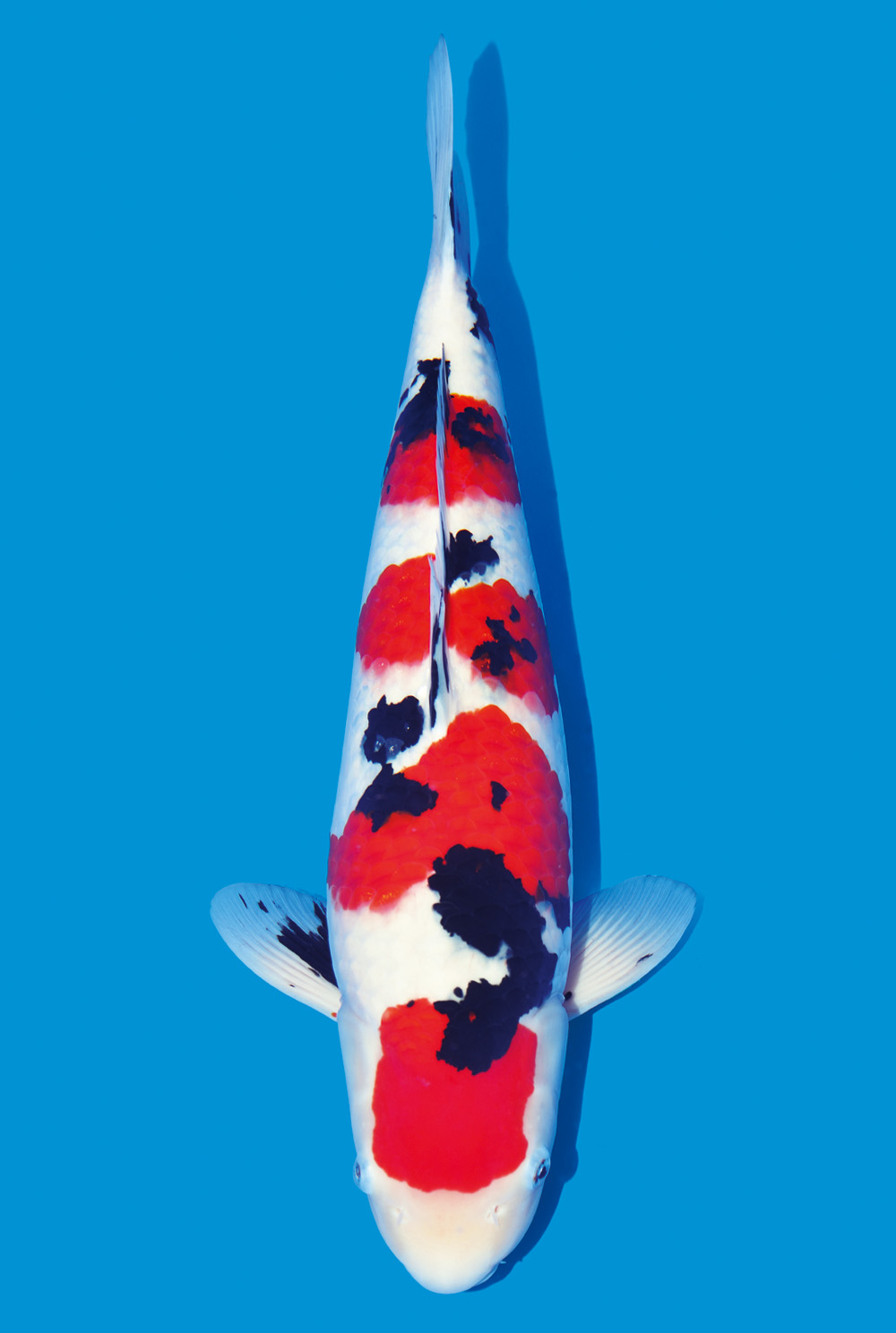
The red markings must also meet the same requirements as Kohaku: they must be even and deep, with clear edges. The red markings on the head must not extend to the eyes, nose, or cheeks, and it is best to have a white base behind the tail joint. The markings on the body should be evenly balanced left and right, and the fins should not have red streaks.
There must be no black spots on the head, but there must be some on the shoulders; this is the key point of appreciation for the whole fish.
Sumi spots on the white base are called ana-sumI, and sumi spots on the red markings are called kasané-sumI; ana-sumI is preferred. The sumi spots should not look messy, and the sumi quality should not be a dotted cluster but rather have very clear, sharp edges, which is best.
The hi plates and sumi spots on the fish body must be arranged evenly, balanced left and right, and harmonious front to back. Those with a few solid block-like black spots evenly distributed left and right on the white base have higher quality. There must not be too many black spots on the rear half of the body.
It is ideal if there are two to three black stripes on the pectoral fins; there must not be too many black stripes.
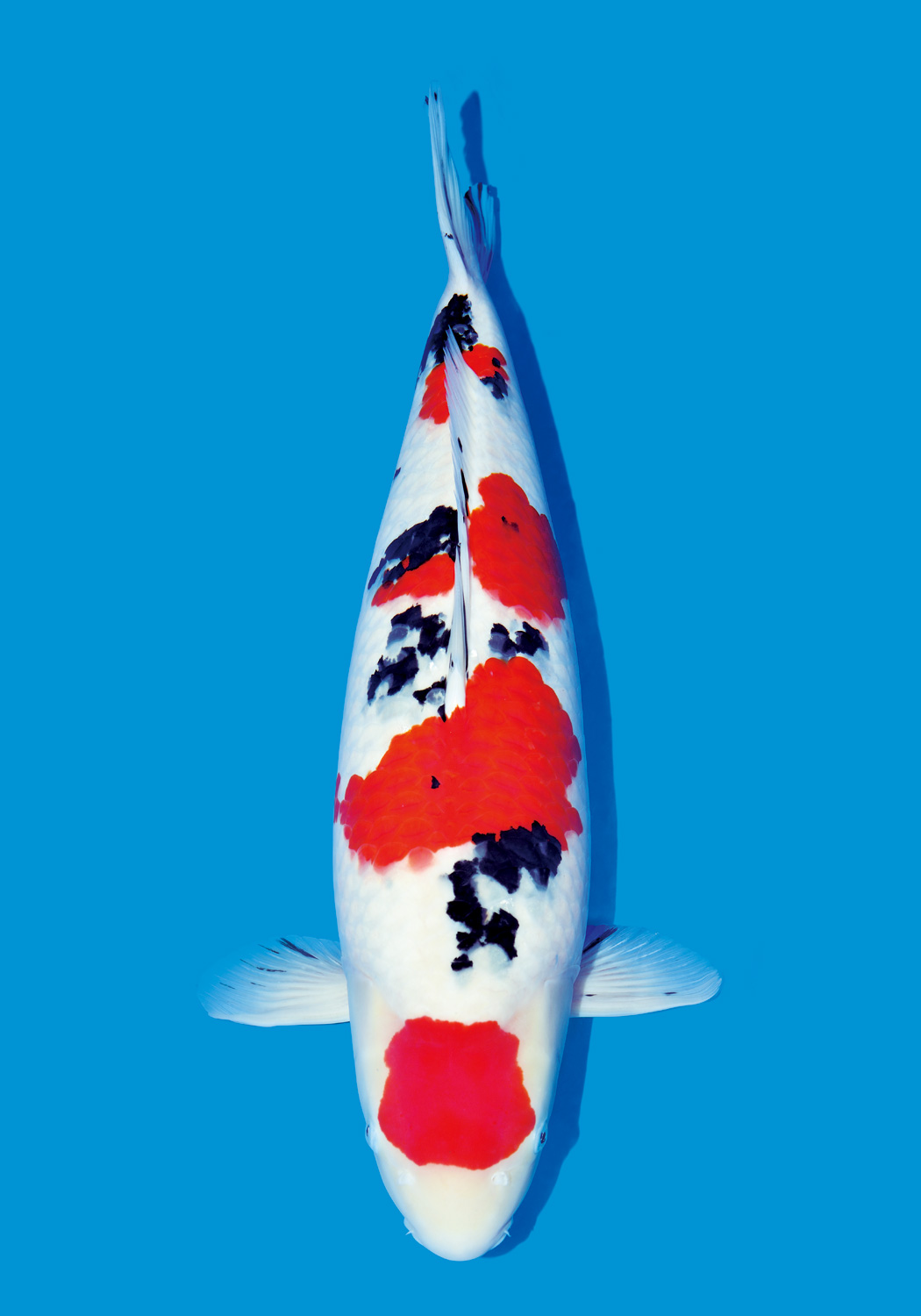
Maruten Taisho Sanke koi: there is an independent round red-and-white patch in the center of the head.
⟧
German Sanke koi: the Taisho Sanke of German carp is called this.
Kuchibeni Sanke koi: a Taisho Sanke with small red spots on the lips.
Fuji Sanke koi: on the white base of the fish body, in addition to red and black markings, silvery-white granular markings mainly appear on the head.
Aka Sanke koi: a Taisho Sanke with continuous red markings from the head and back all the way to the tail joint, giving a strong visual impression, but the quality is not high.