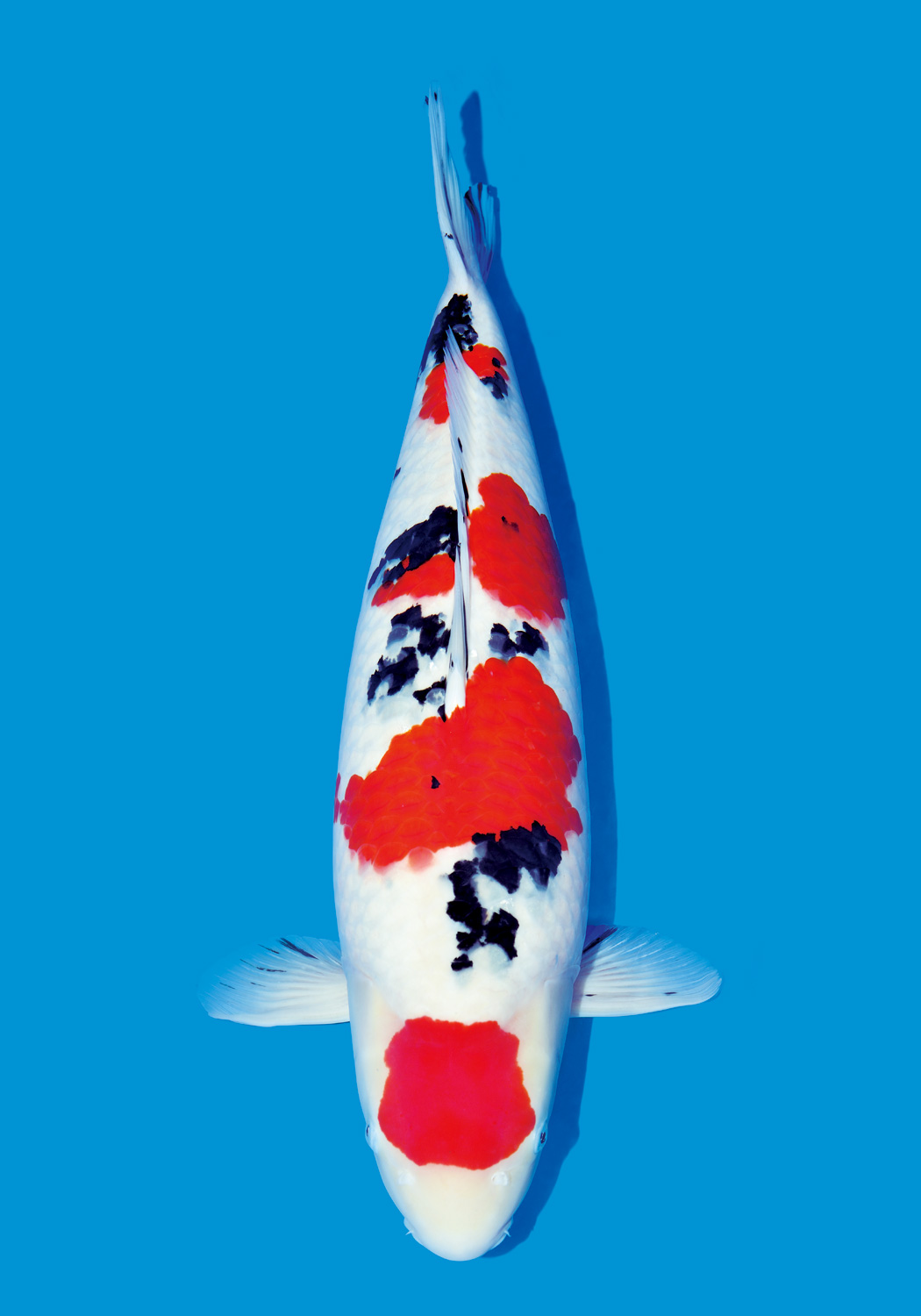
A Detailed Guide to the Breeding Techniques of Maruten Taisho Sanke Koi
Introduction to the Maruten Taisho Sanke Koi The Maruten Taisho Sanke first has an independent round dumpling-shaped red-and-white marking in the center of the head, and from just past the shoulder to the tail it displays two types of pattern states, namely red patches and black patches. Generally, red patches appear more than black patches, and black patches appear...
The Maruten Taisho Sanke first has an independent round dumpling-shaped red-and-white marking in the center of the head, and from just past the shoulder to the tail it displays two types of pattern states, namely red patches and black patches. Generally, red patches appear more than black patches, and black patches appear rarely and are very small. In some cases, the red patches and black patches appear in equal measure, evenly distributed over the snow-white base color of the fish body, with the patterns presenting a graceful and natural design. But as long as there is a round red patch on top of the head and the trunk has two different red and black patterns, it belongs to the Maruten Taisho.
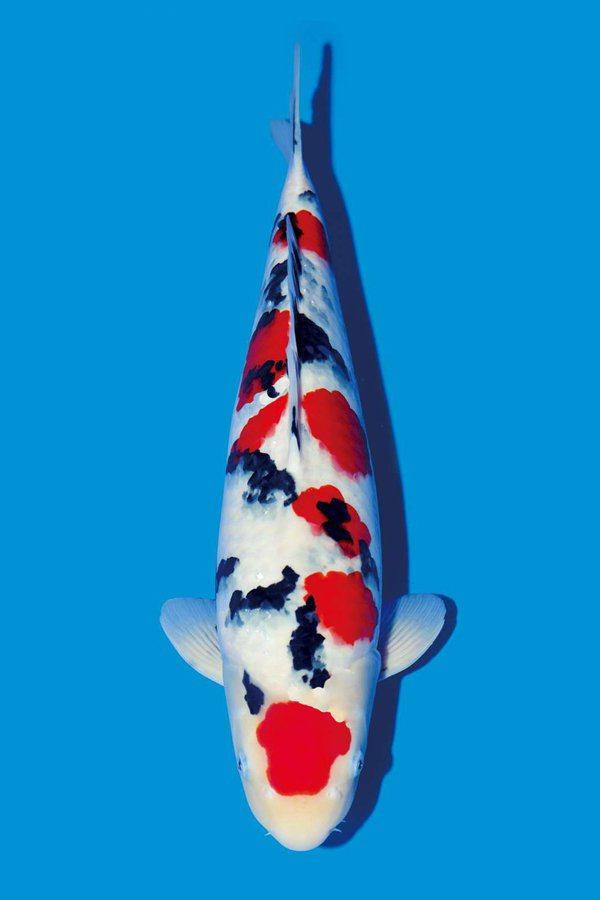
The most eye-catching feature of all is the "Maruten red patch." The Maruten red patch is best located in the center of the head, and the rounder the better, and it must be independently formed.
The round red patch must not extend to the eyes, nose, or cheeks. Apart from the Maruten red patch, it is best that no other blemishes appear on the head, such as red spots or black spots. The color of the red patch is also required to be bright red and deep.
Next, observe the pattern on the trunk. The pattern should be left-right symmetrical, and the white base should be as white as snow, with no "yellowing" appearing. The red patches must be deep and even, with clear edges, and it is best that the rear part of the body has a white base and a tail stop.
For the appearance of black patches, "hole black" is preferred. A small number of solid black patches distributed left and right on the white base is best. It is best that no black patches appear on the rear half of the body, as this will make the overall color of the rear half of the fish too heavy and reduce its ornamental value. On the pectoral fins and other fins, 2-3 black stripes are ideal, not too many, and it is best that no red stripes appear.
Finally, there is the body shape. The body shape is required to be streamlined, slender and full, dignified and elegant.