Are Kikusui koi easier to keep than Hakutsuru koi? A comparison of their keeping difficulty
Kikusui koi introduction The Kikusui koi belongs to the German-system Yamabuki Hariwake or orange Hariwake group, with the entire body base pattern being pure white throughout, and the body predominantly white, especially the head and back where the silvery white is particularly striking. Because it is a type of patterned metallic koi, its body surface...
The Kikusui koi belongs to the German-system Yamabuki Hariwake or orange Hariwake group, with the entire body base pattern being pure white throughout, and the body predominantly white, especially the head and back where the silvery white is particularly striking.
Because it is a type of patterned metallic koi, its body surface is smooth and shiny, and because the markings covering its body are chrysanthemum yellow or orange-yellow, and the sides of its belly have beautiful wave-shaped patterns or patchy markings, it is called "Kikusui". There is also a Kikusui whose back scales have particularly bright overlapping scales, called "Hyakunen-zakura" (Hundred-Year Cherry Blossom).
At present, the concept of "Kikusui" has become confused, because some people, whether for the sake of convenient distinction or memory, have already called any German Yamabuki Hariwake or German orange Hariwake, or even German platinum Kohaku, "Kikusui".
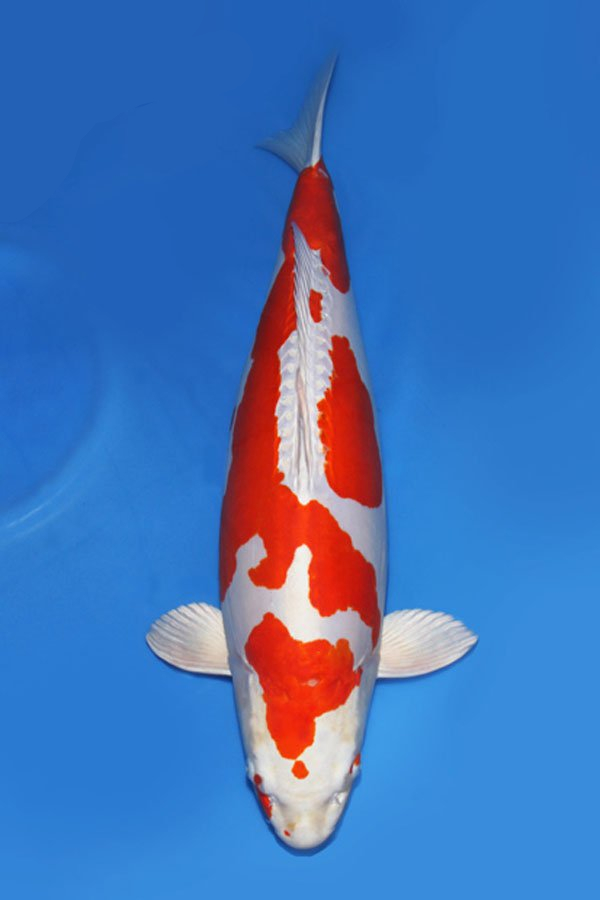
As for what people now collectively call "Kikusui", we will tentatively call it "postmodern Kikusui" here. They have the white base pattern of Kikusui, the bright and clean physique of metallic koi, oval pectoral fins, short and shallow tail fins, and other such basic characteristics. Generally, pectoral fins, dorsal fins and tail fins that are unstained are considered top grade.