Treatment methods for skin diseases such as vertical scale disease in koi
Vertical scale disease, also known as pine scale disease or scale erection disease. It is a disease mainly prevalent in still-water fish ponds, primarily affectingkoiand other cyprinid fish. After onset, it can cause mass mortality of diseased fish.
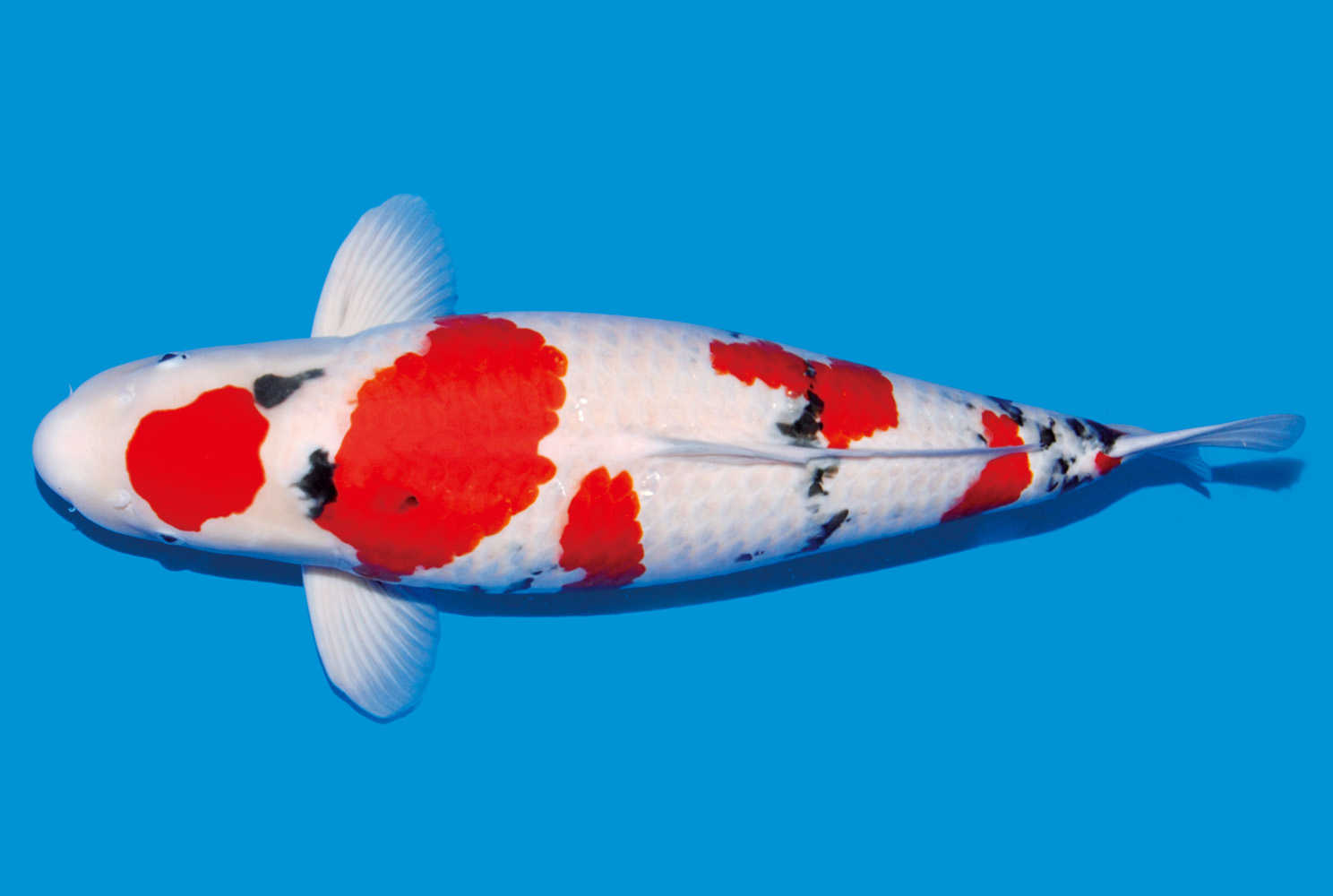
Hane-shirokoi image(female fish 61 cm)
Symptom identification: The body surface of diseased koi is rough, with some or all scales erected like a pinecone. The scale bases are edematous, with translucent or blood-containing exudate accumulating inside, causing the scales to stand up. When slight pressure is applied to the scales, liquid squirts out from the scale bases. Some diseased fish have congested fin bases, mild skin congestion, and protruding eyeballs. Diseased fish swim slowly away from the group, and in severe cases have difficulty breathing, are slow to react, and float at the water surface.
Cause of onset: Caused by infection with Pseudomonas punctata (water type). This bacterium is an opportunistic pathogen, infecting through the skin when water quality is turbid and the fish body is injured.
Prevalence and harm: The prevalent season for this disease is late autumn and spring each year when water temperature is relatively low. Water temperature of 17-22C is the peak prevalence period, and it sometimes also occurs in the late overwintering period. It mainly affects larger individual koi; after overwintering, koi resistance weakens, making them most susceptible to this disease. This disease commonly occurs in Northeast China, North China, Central China and East China, and is more prevalent in Northeast China and North China.
Tools/materials
Salt, nitrofurazone, streptomycin
Method/steps
Strengthen the fattening work for koi before overwintering, shorten the fasting period as much as possible, and after water temperature rises in early spring, feed live baits such as water fleas and tubifex; enhancing fish body resistance can effectively prevent the occurrence of this disease.
Soak the fish body in 2% concentration salt solution for 5-15 minutes, once a day, for 3-5 consecutive soakings.
Soak the fish body with nitrofurazone. When water temperature is below 20°C, the concentration is 15-20 mg/L.
Intraperitoneal injection with streptomycin, 50,000-100,000 international units per koi.
。