What should you do if the Kumonryu koi shows symptoms of disease?
Introduction to the Kumonryu koi: The Kumonryu koi was once thought to be a variety found only in German carp, but it is actually a by-product of the "Utsuri" koi system, and appears to refer to a variant koi of the Magoi. Its snow-white base is elegant, and the sharply defined edges of its ink-black markings are eye-catching. However, when the ink-black is first emerging...
The Kumonryu koi was once thought to be a variety found only in German carp, but it is actually a by-product of the "Utsuri" koi system, and appears to refer to a variant koi of the Magoi.
Its snow-white base is elegant, and the sharply defined edges of its ink-black markings are eye-catching. However, when the ink-black is first emerging or fading, some parts may appear blurred; this temporary shading of the ink-black also has its own charm, so enjoy it in appreciation.
The pattern resembles the left-right symmetrical flowing-water form of the popular Shusui koi, but it should originally have the imposing air of a "flood dragon rising to heaven", meaning the Inazuma (lightning) pattern is its basic form. However, tastes in patterns differ from person to person, so slight variations are fine too.
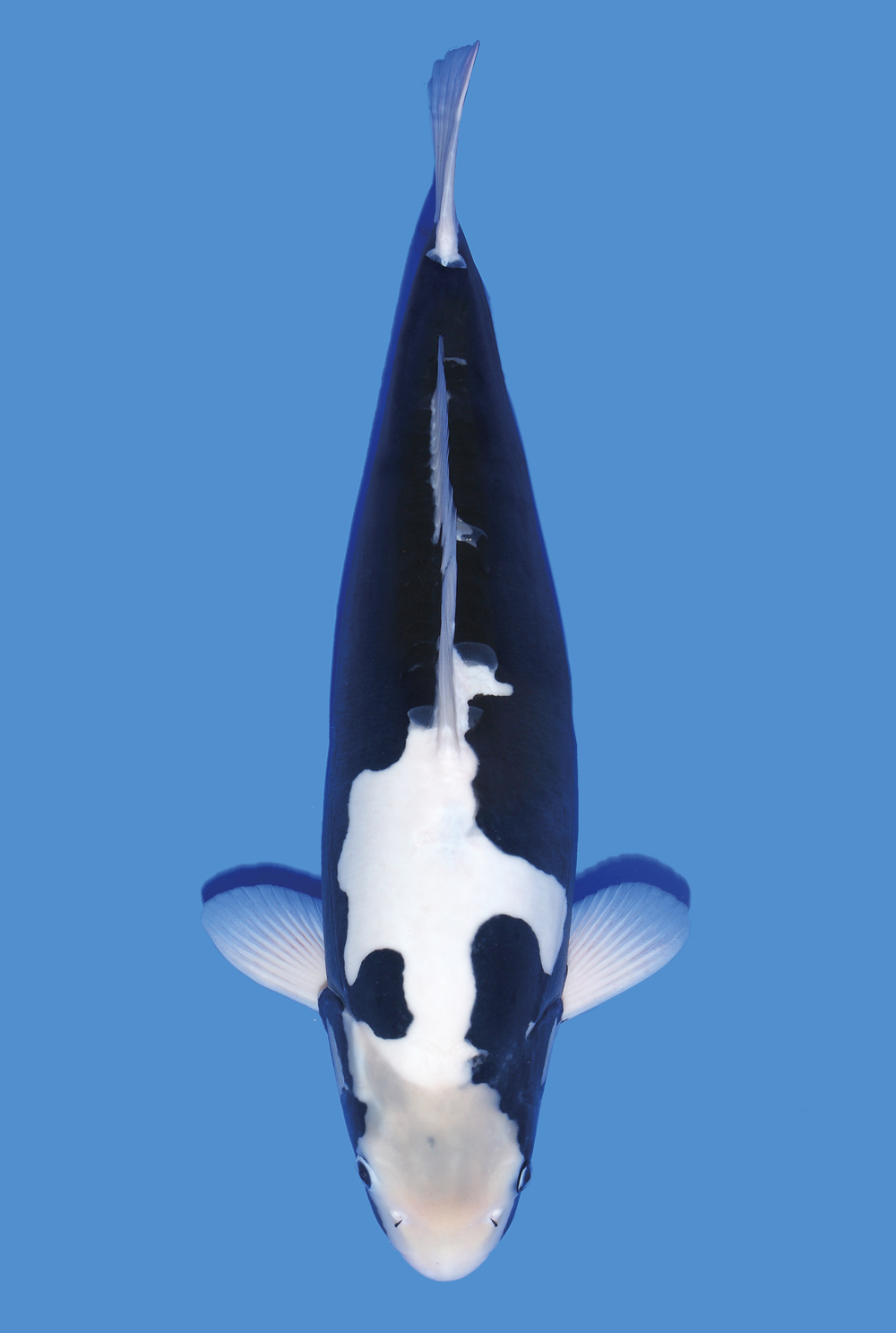
⟧ Body features: The ink-black surging like dark clouds makes it seem as if you are admiring an ink-wash painting of a dragon; this is the "Kumonryu".
1. Strong contrast between the ink color and the body color
2. The ink color on the body surface changes dramatically
3. The ink color changes unpredictably
The Kumonryu's distinguishing feature is a dramatic pattern change unmatched by other varieties. In the Kumonryu, regardless of whether there is later ink, ink will emerge and sink anywhere on the body, and is unpredictable. It is strongly affected by water quality and water temperature: when the water temperature is high it whitens, and when the water temperature is low it blackens.
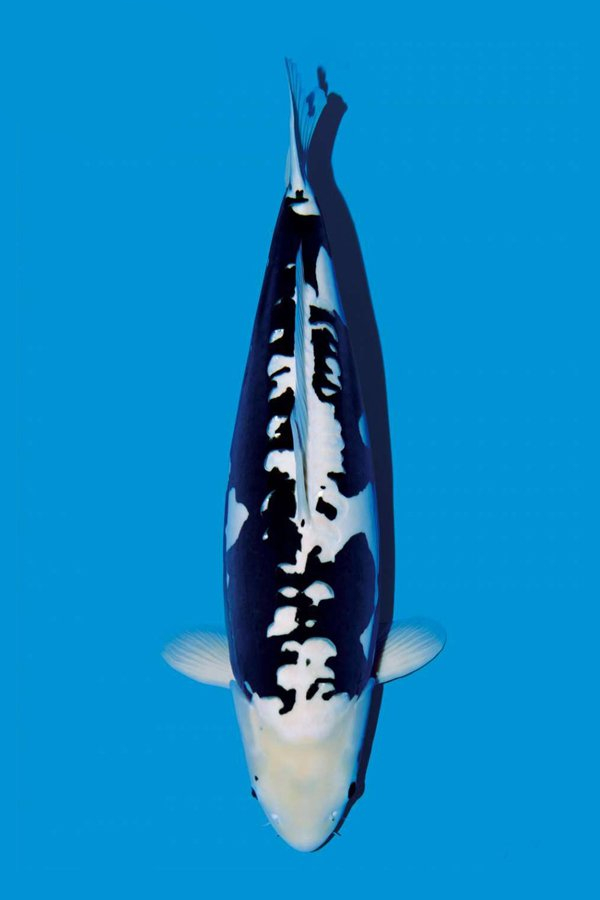
The white markings on the Kumonryu's body are shaped like lightning, while the black markings shroud it like black clouds, and the ink-colored markings are different from those of the Showa Sanshoku andTaisho Sanshoku; its ink color will emerge and sink anywhere and is completely unpredictable, regardless of whether ink is about to appear.
The markings all over its body are not only affected by water quality and water temperature - when the water temperature is high it whitens, and when the water temperature is low it blackens - but also, as the seasons change, the ink color changes dramatically, which further adds to the Kumonryu's mysterious character.
When the ink color is first emerging or when the ink color is fading, some parts may appear blurred; at such times the shading of the ink-black has an especially distinctive charm, and the left-right symmetrical flowing-water form further enhances the Kumonryu's appeal.