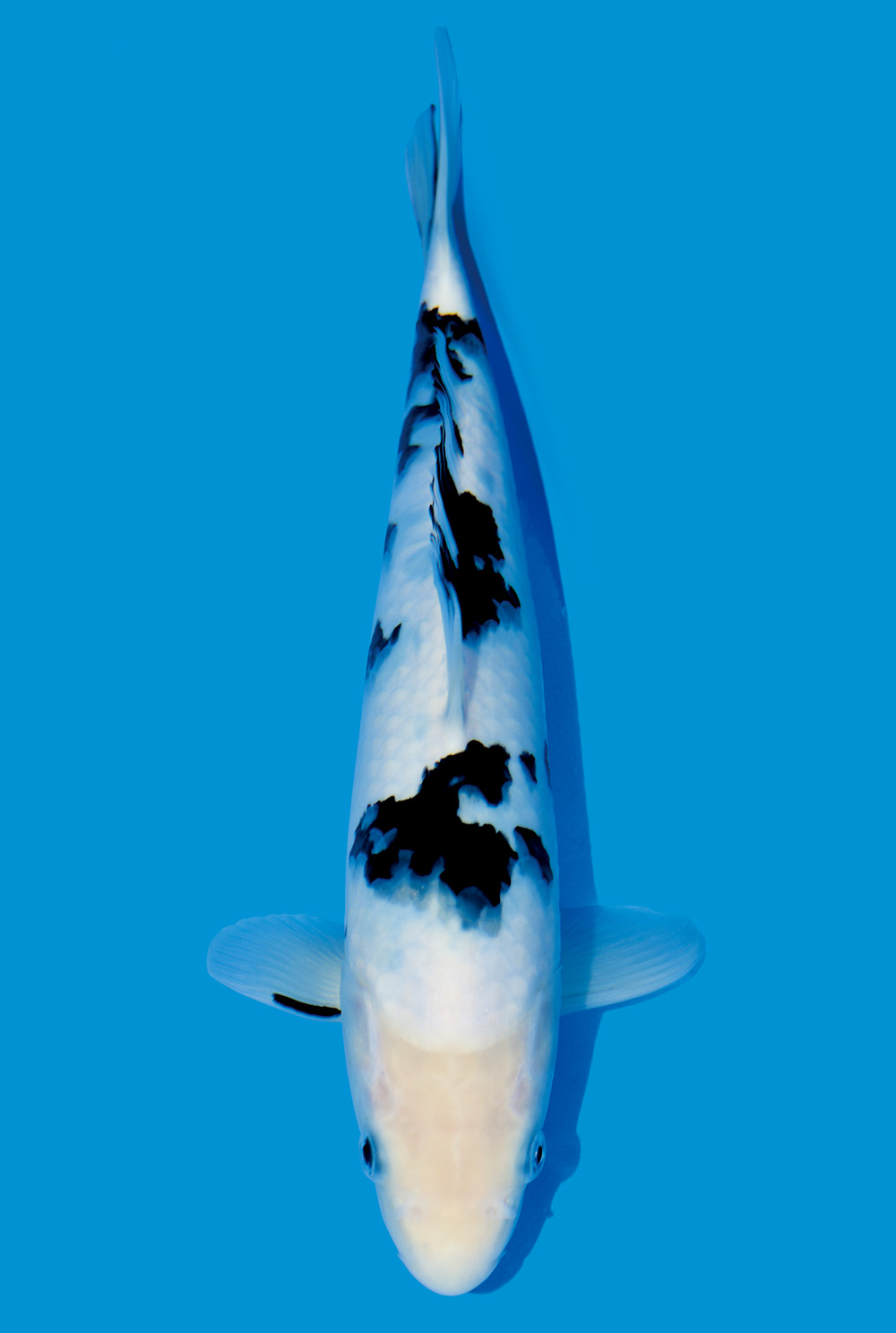
What are the characteristics of Shiro Bekko koi? Let this article give you an overview
Introduction to Shiro Bekko koi. Bekko refers to koi with a white or red base color, covered on the back with black patches of various shapes and sizes. Because the black patches are relatively small in area and contrast sharply with the base color, they look like plates of armor, hence the name Bekko. Bekko is also called Bekko...
Bekko refers to koi with a white or red base color, covered on the back with black patches of various shapes and sizeskoi, because their black patches are relatively small in area and contrast sharply with the base color, looking like plates of armor, hence the name "Bekko." Bekko is also called "Bekko," and belongs to theTaisho Sankelineage.
In appearance, Bekko differs from Taisho Sanke and Showa Sanke in that it lacks one color. It differs from the Utsuri type in that Utsuri has an especially large area of black patches on the body, as if a large block of ink had been stamped onto it. The difference between these two is also very similar to the difference between Taisho Sanke and Showa Sanke, both being distinguished by whether the size of the black patches occupies the main visual area on the fish's body.
Its pattern is generally distributed as follows: first, there are no large black patches on the head, which is also proof that it is a branch of Taisho Sanke; there is a large black patch on each side of the shoulders; the pectoral fins sometimes have black stripes and sometimes do not, appearing pure white; radiating lines generally appear at the hand fins.
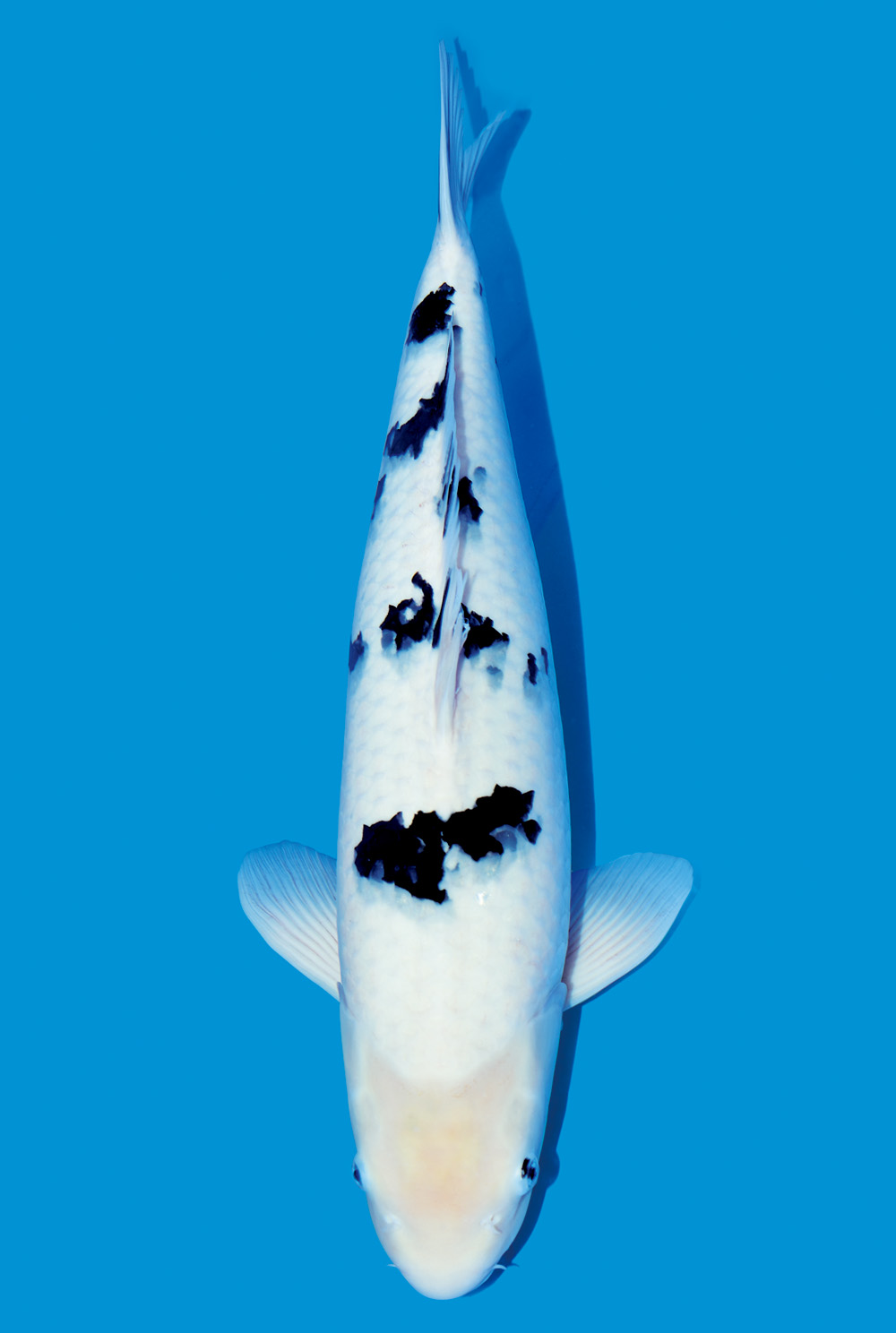
The appreciation of Shiro Bekko is similar to but different from that of Shiro Utsuri. The similarity lies in the fact that the contrast between black and white is still required to be strong and vivid; the white is required to be pure white, preferably a natural snow-white color, and the black is required to be black as lacquer and glossy. Only fish with such colors can become candidates for meito.
In addition, whether black patches or white patches, they all need to be arranged reasonably, symmetrically, and pleasing to the eye. If the distribution of the patches is poor, it may also affect and damage the originally fine skin and beautiful quality.
For the Utsuri type, black is the main event and the focus of appreciation; but for Shiro Bekko, black only plays a decorative role. Although this sparse black is by no means dispensable, its status appears relatively minor compared with white.
For Shiro Utsuri, the most critical point lies in how its white ground is. Especially the head: Shiro Bekko requires that there be no stray colors and that it must not appear amber-yellow. In other words, when appreciating Shiro Bekko, one can refer to Taisho Sanke and Shiro Utsuri. Their connection is very great, and we can often gain inspiration from the differences among them.