Koi Mixed-Stocking Pairing Tips and Methods for Selecting Toshi Koi
1. Male koi have better body shape than female koi: Althoughkoiare more robust and aesthetically pleasing as females in the adult stage. However, at the toshi stage, it is actually male fish that have a higher probability of being thick-bodied! Female fish only start sprinting again after reaching one year of age and entering their second or third year. Male koi, on the contrary, easily begin to experience growth stagnation.
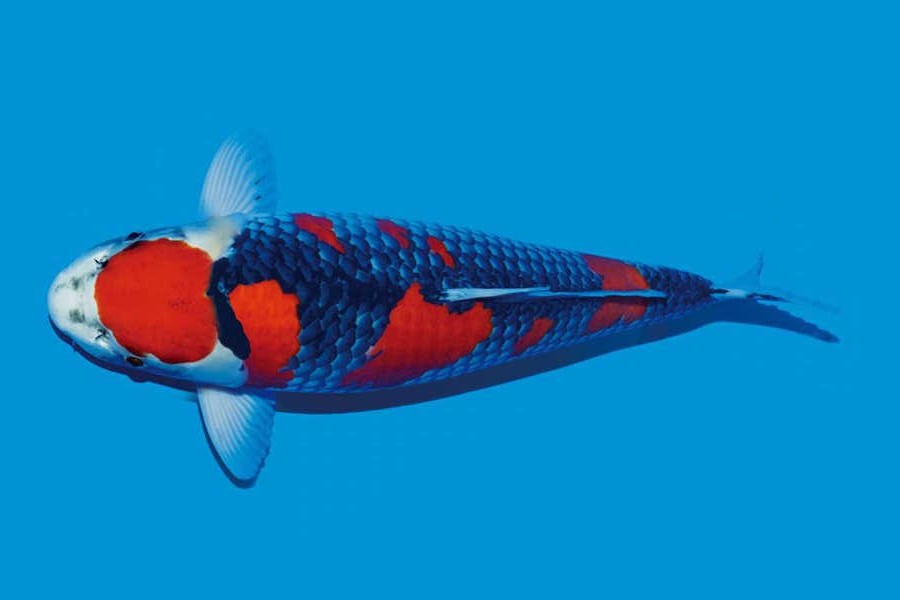
2. A well-fed toshi koi does not necessarily mean it is a giant koi: Some breeders may boast that their toshi koi have already reached a certain centimeter length at this stage (with a lead). This absolutely does not mean that this breeder's toshi koi will definitely become giant koi in the future. Being raised thick and fat does not mean it can be raised long. What are the hidden factors? We need to truly understand. It could be earlier spawning, it could be feeding large amounts over many meals, it could be a loose rearing environment in mud ponds. This phenomenon is not true systematic genetics but rather a false impression and misleading created by artificial manipulation. After all, a breeder's business reputation is not built by boasting! It is suggested that hobbyists refer more to the koi growth examples of that fish farm over various years as a basis for judgment. Otherwise, even if there are excellent parent koi used as promotional gimmicks, it may just be a commercial false impression of selling dog meat under a sheep's head. Those familiar with koi breeding operations know that koi do not necessarily breed successfully just because you try to breed them. Even if a pairing produces eggs, they may not all survive healthily and grow to be shown to the world. Therefore, understanding a breeder's long-term credit and reputation is another layer of self-protection.
3. Fat does not equal sturdy, and does not equal will grow and will get big: I myself made mistakes as a beginner, seeing a chubby koi and thinking this koi was great and sturdy. This is absolutely a huge mistake! What determines a koi's length growth, besides genetics, is another key point: the koi's "skeleton" rather than its flesh. Additionally, after verifying on actual fish from several national annual judging competitions' grand prize giant koi, it is indeed true that a true giant koi must have a good skeleton and length-to-body ratio. A good skeleton can support the koi's growth without excessive burden. Therefore, the sturdiness of the skeleton represents the supporting capacity for the flesh. The correct length-to-body ratio represents the probability of length extension. The so-called ratio refers only to the overall ratio of head to body. A long-bodied koi has at least a visual impression of 1:5 or more up to 1:6. From visual judgment, there is a certain degree of sleekness (like seeing the slender and well-proportioned figure of a supermodel).
What is a skeleton? It includes: mouth width, head width, dorsal spine, tail height and width, etc. What is a good skeleton? Simply put, it means starting from the mouth width, connecting to eye width, gill width, chest width, belly width, and to the tail tube being wide with a sense of solidity, but without particularly protruding areas, having a curved-line feel that is well-proportioned and smooth. The highest point of the dorsal spine must be one to two plates in front of the dorsal fin. If that area is lower or sunken, it is a sign of a poor skeleton. And the golden ratio that should be there must still be there, otherwise no matter how thick it is, it becomes a shortened "short and compact little cannon."
。