Common Koi Diseases and Spring Fish Disease Prevention Methods
What are the prevention methods for koi fish diseases in spring? If you want koi to stay disease-free, we must do a good job of maintaining the water quality for raising koi. Most common koi diseases are caused by water quality. Suitable water quality environment for koi breeding: the water temperature is best at 23-25°C, the pH of the water...
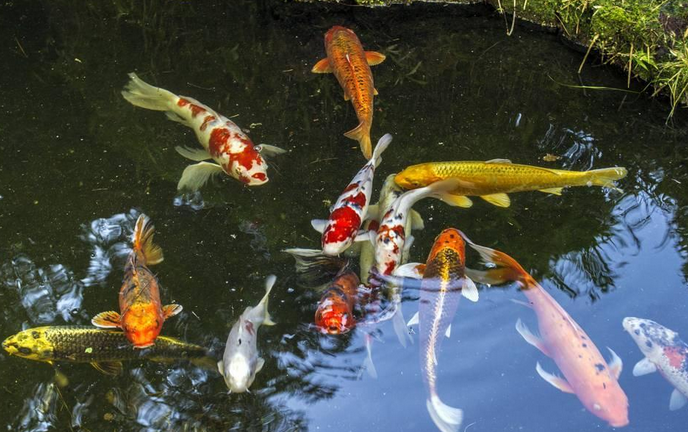
In breeding, the principle of "prevent before disease occurs, treat early when disease occurs, prevention is more important than treatment" should be followed, paying attention to improving the breeding water environment, so as to eliminate the source of disease, cut off the transmission route, and improve the disease resistance of the fish.
1. Disinfection of fish ponds and tanks: regular cleaning and disinfection should be carried out. For disinfection, a 2 ppm potassium permanganate solution can be used to soak the fish tank or fish pond for about 5 minutes, then rinse with clean water, and soak in clean water for a long time before use.
2. Water body disinfection: whether it isaquariumor the water body of a fish pond, after raising koi for a period of time, a lot of organic matter and suspended particles will accumulate, causing deterioration of water quality and an increase in pathogens. Therefore, the water body must be disinfected regularly, especially during the season when fish diseases are prevalent. At present, the commonly used bactericide is bleaching powder (1 ppm), and the insecticide is trichlorfon (0.2 ppm).
3. Fish body disinfection: newly purchased koi may carry some bacteria and parasites. If not removed in time, they will infect other healthy fish. Therefore, new fish must undergo a medicated bath and isolation before being placed into the breeding water body. The specific method is: use 5% salt water for a medicated bath for 5-10 minutes. During the medicated bath, always pay attention to observing the state of the koi. If there are phenomena such as floating head, difficulty breathing, suffocation, loss of balance, or shock, the medicated bath should be stopped immediately, and the fish should be put back into the pond water.
4. Tool disinfection: all tools used for fish keeping, such as dip nets, water ladles, filters, etc., need to be cleaned, disinfected, and dried regularly. The simplest method is to scald them with boiling water, or expose them to sunlight. For utensils that are not suitable for high-temperature or sunlight disinfection, the fish tank disinfection method can be used for soaking disinfection.
5. Bait hygiene: live bait should be rinsed repeatedly to wash away impurities and ensure freshness. If necessary, it should be frozen. Artificial bait should be stored in a dry and ventilated place to prevent mold and deterioration.
6. Cut off the transmission route: koi found to have infectious diseases should be taken out in time and treated separately to avoid large-scale infection, and the original pond should also be disinfected. Tools used by sick fish must not be used for healthy fish, so as to avoid cross-infection. In addition, if the breeding density is too high and the water quality is turbid, koi are also prone to illness.