Which is better, the Chagoi or the Ginrin Kohaku?
Introduction to the Chagoi. Among variant koi, the Chagoi is a relatively ordinary type. Although the Chagoi's tone is that of a single-colored koi, its colors are also rich and varied, including brownish tea with red, tea color with a slight blue-green tint, tea color with yellow, and even chocolate-colored tea...
Among variant koi, the Chagoi is a relatively ordinary type. Although the Chagoi's tone is that of a single-colored koi, its colors are also rich and varied, including brownish tea with red, tea color with a slight blue-green tint, tea color with yellow, and even chocolate-colored tea, and so on; the range of these colors is also very wide.
As akoivariety, the Chagoi is judged not only by its color; in terms of the brightness of its hues, there is vivid tea color, relatively muddy tea color, gray, and dull tones. Although it is a single tea color, the range of tea colors is also very broad.
The Chagoi not only grows easily, but also becomes tame with people very easily, and its swimming posture is leisurely and comfortable. It is deeply loved by people, and it also makes people feel calm, peaceful and relaxed when viewing the fish.
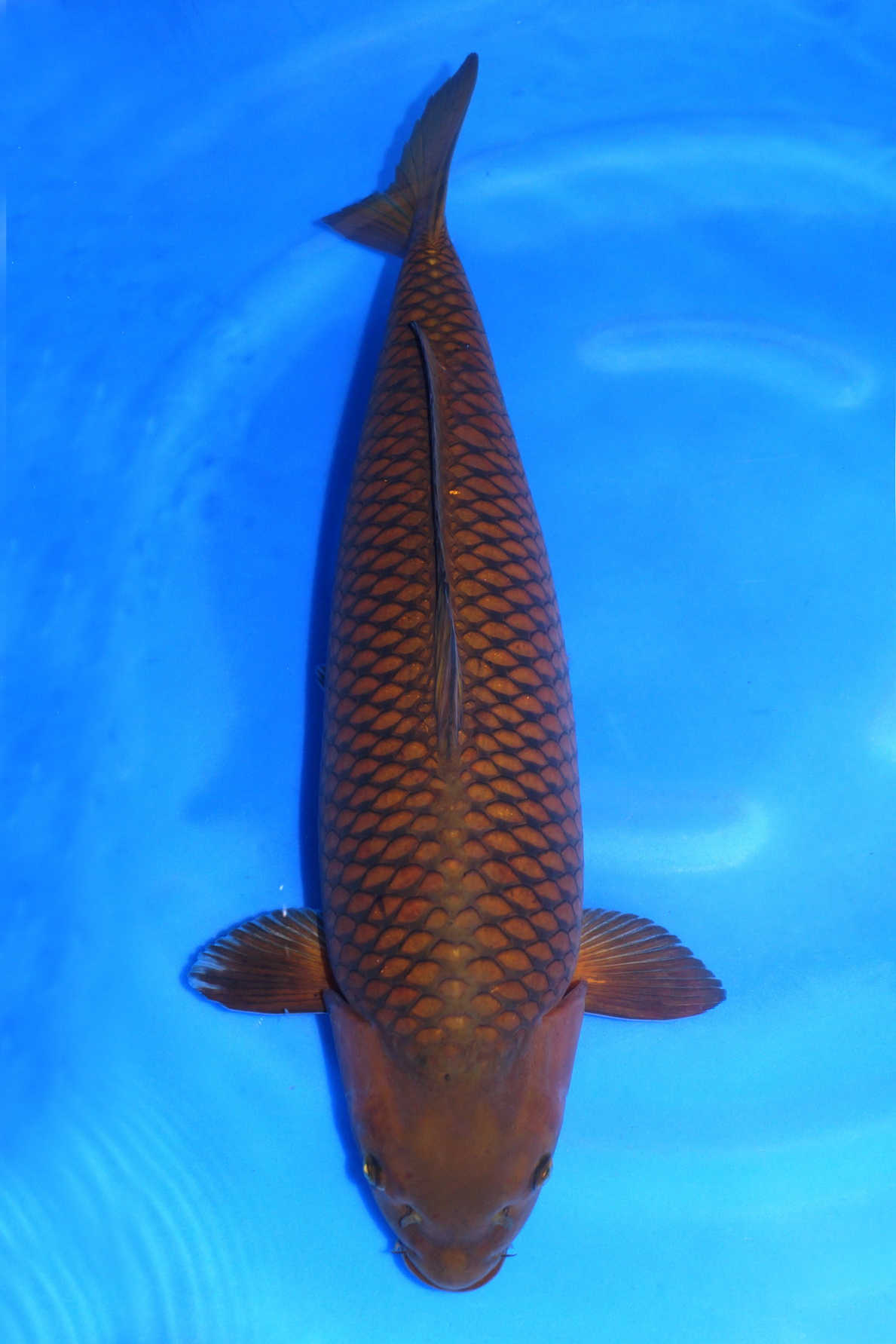
The Chagoi shares characteristics with the Ogon: as the seasons change, the Chagoi's color also changes with the water temperature. For example, a koi whose tone is relatively dull in summer will turn into a vivid tone after autumn arrives. This also increases the Chagoi's ornamental value and further enhances its charm as an ornamental koi.
In addition, as a large koi, the Chagoi's vitality is also very strong. When an overwintering fish pond breached, the Chagoi lay on its side in the mud underwater for several hours and survived. For a beginner raising koi, as long as the environment and equipment are properly arranged, the Chagoi can also be raised well and grown large, making it attain a large size.