Symptoms, causes, and treatment methods of white head and white mouth disease in koi
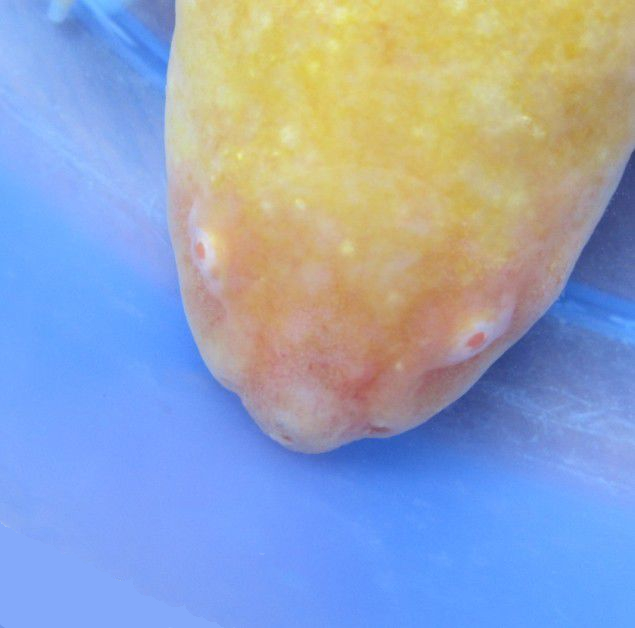
Causes of white head and white mouth disease in koi. White head and white mouth disease can also be caused by a massive invasion of Trichodina. Symptoms: sick fish move slowly, body color is slightly dark, and the top of the head and area around the mouth turn white. Taking tissue from the affected area to make a slide and examining it under a microscope, you can see clusters of parasitic flower bacteria constantly swinging, or you can see groups of Trichodina moving. The pigment in the skin of the forehead and around the mouth of the sick fish disappears, appearing white.
White head and white mouth disease can also be caused by a massive invasion of Trichodina.
Sick fish move slowly, body color is slightly dark, and the top of the head and area around the mouth turn white. Taking tissue from the affected area to make a slide and examining it under a microscope, you can see clusters of parasitic flower bacteria constantly swinging, or you can see groups of Trichodina moving. The pigment in the skin of the forehead and around the mouth of the sick fish disappears, appearing white.
When the condition is severe, ulceration occurs on the head and around the mouth, and some fish show congestion on the head. Sick fish are thin and dark, gather and swim near the shore, and soon die in large numbers.
Usually, the epidemic period of this disease is from April to July each year. This disease is likely to occur about 1 week after fry are stocked into the pond. After the fry are stocked and raised for a period (15 to 20 days), if they are not thinned and divided into ponds in time, this disease is likely to occur.
( 1 ) Thoroughly clear the pond and disinfect it, and do not apply unfermented fertilizer.
( 2 ) The density for raising fry to the flowering stage should be moderate, and they should be divided into ponds in time to ensure the fry have sufficient suitable food.
( 3 ) For treatment, splash chlorine dioxide over the whole pond for 2 consecutive days.
( 4 ) For treatment, splash bleaching powder over the whole pond.
( 5 ) Mash the used gallnut, soak it in hot water, and splash the residue and liquid together over the whole pond.
( 6 ) Use 15 to 20 kg of quicklime per mu, mix it evenly with water, and splash it over the whole pond.
( 7 ) Splash furazolidone in ponds with sick fish.
( 8 ) In ponds where the disease occurs, splash “Strong Chlorine” once a day for two consecutive days.