Detailed Explanation of Black-Spotted Frog Breeding Techniques and Management Key Points
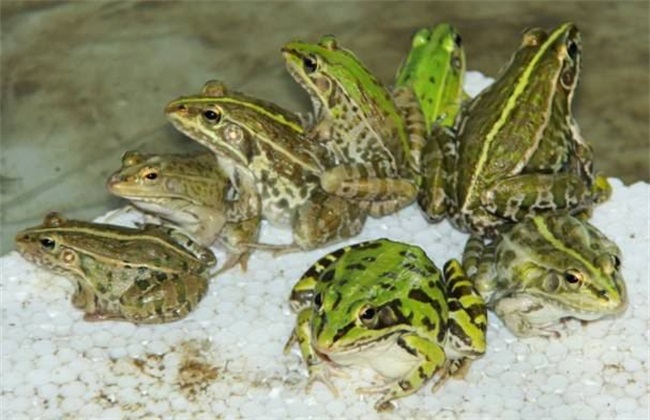
The black-spotted frog (Pelophylax nigromaculatus) is an animal of the Ranidae family and has a very wide distribution range in China. Its meat is very tender and rich in nutritional value, but because it is currently in a near-threatened state, catching wild specimens is not permitted. Therefore, artificial breeding of the black-spotted frog has gradually begun, and the breeding area is also very large. So how should black-spotted frogs be bred? Below, the editor will give everyone a brief introduction. Let's take a look together!
1. Site Selection
The breeding site for black-spotted frogs must be guaranteed to be at a certain elevation, and breeding must not be carried out in low-lying areas to avoid flooding. Then there must be a sufficient and clean water source around it. The site is generally best chosen as paddy fields at high, flat terrain and far from noisy areas such as urban districts. After choosing the site, it should be disinfected to remove natural enemies in the paddy field, such as leeches and crayfish. This prevents harm during the tadpole stage and improves the hatching rate of the seedlings. Then do a good job of pre-embedding pipes to prevent water leakage, lay ground nets to prevent the black-spotted frogs from escaping, and then do a good job of bird prevention to create a safe growing environment for the black-spotted frogs.
2. Artificial Seedling Rearing
First, we need to place black-spotted frogs with a male-to-female ratio of 1:1 into the seedling pond. The water level in the pond should be maintained at about 40 cm, and several foam boards should be placed as feeding sites and resting places for the black-spotted frogs. After entering October, because the temperature drops, the work of building an insulation shed should be done well. And because the temperature difference between day and night is relatively large, attention should also be paid at night to raising the water temperature. Through these methods, the hibernation time of the black-spotted frogs can be shortened, the development period can be extended, the gonadal development of the black-spotted frogs can be promoted, and the breeding time can be advanced. Then control the breeding method well according to the actual situation, mainly natural breeding and artificial induced spawning. April to June each year is the main breeding time for black-spotted frogs.
3. Cultivating Tadpoles
After successful mating, tadpoles can hatch in about 3 days. Newly born tadpoles should be appropriately fed rotifers, egg yolk, and other feed, which should be sprinkled into the water. Then after about one week, feed them special feed for tadpoles, or make your own feed with fish meal, soybean meal, and so on. Control the cultivation density well: in the early stage, stock about 800 tails per sq m; after two weeks, reduce it to about 400 tails per sq m; and for the final large tadpoles, maintain about 200 tails per sq m. Then feed at least twice a day, and control the feeding amount well according to the tadpole body weight, maintaining it at about 8%. After about one month, the tadpoles enter the metamorphosis stage; at this time, some plants such as water hyacinth should be placed in the water to make it easier for the tadpoles to come ashore. Finally, attention should be paid to changing the water regularly to ensure water quality, with the water level controlled at about 30 cm.
4. Adult Frog Breeding
At present, the main method of breeding adult frogs is mainly paddy field breeding. Because adult frogs can feed on pests that harm rice growth, and the excrement produced by black-spotted frogs can in turn provide nutrients as fertilizer for rice. Therefore, the amount of chemical fertilizer and pesticide applied can be reduced, and environmental pollution can be reduced. Rice and black-spotted frogs both belong to natural green foods. However, attention should be paid to doing a good job of anti-escape measures, and then frog ditches should be dug well to facilitate the growth of black-spotted frogs. For rice, varieties with strong fertilizer tolerance and resistance to lodging should be selected. The time for releasing adult frogs should be controlled to about half a month after the rice seedlings turn green, with about 3,500 adult frogs of about 15 grams released per mu.
The above is a brief introduction to black-spotted frog breeding techniques. Because black-spotted frogs are active at night, and summer temperatures are relatively high, in summer they should be fed about twice, in the morning and evening respectively. That is all for today's introduction. This article is for reference only, and I hope it can help everyone!