What to Do When a Ewe Won't Let Her Lamb Nurse? Causes and Solutions
After birth, a lamb's main nutritional needs come from its mother's milk, but some ewes refuse to let their lambs nurse, which gives farmers a real headache. If a lamb cannot get enough milk from the ewe, its normal growth and health will be seriously affected, and it is very likely to become ill and die. So what causes a ewe to refuse to let her lamb nurse? What should be done? Let's take a look.
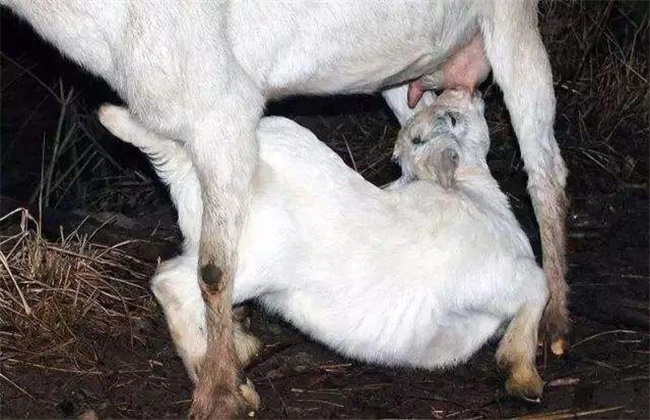
1. Insufficient milk
A ewe will refuse to nurse her lamb because she has no milk or insufficient milk. Generally, a ewe with no milk or insufficient milk shows a thin body condition, a shrunken or hardened udder, and little or no milk when the udder is squeezed by hand. The lamb, unable to get milk, shows signs of hunger and keeps pestering the ewe to nurse, and over time the ewe will also refuse to nurse.
Solution: For a ewe with no milk or insufficient milk, improve the ewe's feeding management. If conditions allow, she can be kept in a pen to reduce grazing and egg production as much as possible, while adjusting the daily ration, feeding as much protein-rich and easily digestible concentrate and green, juicy feed as possible. For the lamb, introduce feed and supplement feed early, and strengthen water supply to reduce the ewe's nursing burden.
2. A timid temperament in the ewe
A ewe with a timid temperament will also refuse to nurse her lamb. Generally, such a ewe is highly alert, with flexible ears, and is quite sensitive to sounds. At the slightest disturbance she becomes restless and nervous, shrinking away and hiding, especially when in contact with people.
Solution: For this kind of ewe, take active measures during the birthing period. Be gentle with her, and do not whip or frighten her at will. Give her special treatment when feeding, and often stroke her head and body during rearing so that she feels closeness and loses her fear. If she refuses to nurse after giving birth, at the time of delivery, collect the fetal water and feed it to the ewe, and let the newborn lamb be licked by the ewe to build the bond between mother and young.
3. Mastitis in the ewe ⟧11⟧When a ewe has mastitis, with local redness, swelling, heat and pain in the udder, she will also refuse to nurse her lamb, showing local redness and swelling of the udder, a marked decrease in milk volume, thinner milk, flocculent clots in the milk, sometimes pus, and even blood. In severe cases, besides the local symptoms, there are also symptoms of elevated body temperature and reduced appetite.
If a ewe has mastitis, the udder will be red, swollen, hot and painful in the affected area, and she will also refuse to nurse her lambs. This shows as localized redness and swelling of the udder, a marked drop in milk yield, and thinner, more watery milk. The milk contains flocculent clots, sometimes pus, and even blood. In severe cases, besides the local symptoms, the ewe will also run a fever and show reduced appetite.
Solution: When a ewe has mastitis, treat it promptly. First squeeze the milk out completely, then inject penicillin and streptomycin through the teat orifice into each affected quarter. If the squeezed-out milk contains a lot of pus, a low-concentration disinfectant solution can be injected, and after squeezing clean, a mixed solution of penicillin and streptomycin is injected, until the inflammation disappears and the milk returns to normal.
4. Mixed grazing and mixed pens
When ewes at different birthing stages are kept together in one pen, older lambs snatch and suck the milk of the mothers of younger lambs, and over time the ewes will refuse to nurse the lambs.
Solution: This situation is caused by improper management. Farmers should have a dedicated lambing room, and lambs of different ages should be raised separately to strictly prevent older lambs from snatching the milk of the mothers of younger lambs. Once this is discovered, stop it promptly. For older lambs that keep doing it despite repeated prohibitions, separate them into different pens and grazing groups to break this bad habit.
The above is an introduction to the causes and solutions for a ewe refusing to let her lamb nurse. We hope it helps you. To learn more related knowledge, please stay tuned to us.