What to Do When a Ewe Does Not Come into Heat? Cause Analysis and Solutions
When a ewe still fails to come into heat after reaching sexual maturity, or takes a long time to come into heat after lambing, this can seriously affect the ewe's reproductive capacity and means a loss for farmers. So what are the causes of ewes not coming into heat? How can it be solved? Let's take a look.
1. Nutritional deficiency
Sheep themselves cannot synthesize vitamin A and can only obtain it from external sources. It must be supplied through feed or by grazing on green grass, which provides more vitamin A. However, for flocks kept mainly in barns, with silage and rice straw as the main feed, sheep are highly prone to vitamin A deficiency. When a ewe is deficient in vitamin A, she will show return to estrus and the lambs born will show neurological symptoms, or even blindness. When zinc is deficient, miscarriage and deformity can also occur. When manganese is deficient, absent estrus and infertility clearly appear; even if pregnancy occurs, the gestation period is prolonged, and the lambs born will be congenitally deficient. During feeding, attention should be paid to the proportion of trace elements to ensure the diet is nutritionally balanced and meets the ewe's comprehensive nutritional needs.
2. Management mistakes
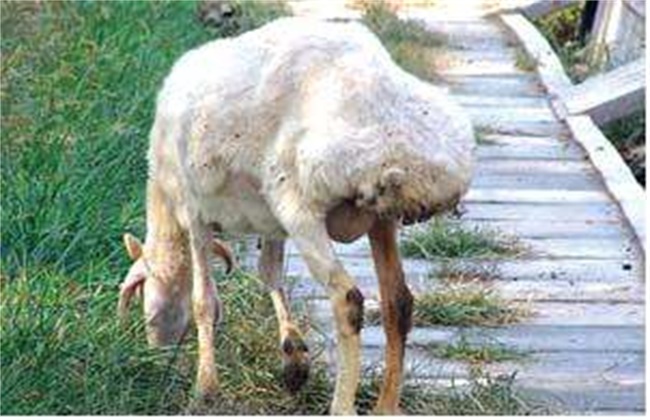
During breeding, whether the ewe's body condition is emaciated or obese, infertility can be caused. If the ewe's body is too thin and malnourished, follicles will atrophy after developing to a certain extent, forming a persistent corpus luteum and causing infertility. Meanwhile, many farmers, in pursuit of body fat condition, feed large amounts of fattening concentrated feed, causing a large amount of fat to accumulate near the ovaries, affecting follicle development and leading to infertility. It is recommended that ewes be fed as little fattening concentrated fertilizer as possible. When body condition is poor, puffed soybean meal and roasted yellow soybeans can be added to the feed to achieve a fattening effect. For infertility caused by both emaciation and obesity, a luteolytic agent can be used to promote corpus luteum dissolution, and the affected ewe can then come into heat and conceive again.
3. Endocrine and nutritional disorders
Animal reproduction is directly regulated by endocrine function. Once endocrine disorders occur, such as insufficient estrogen secretion, hypothyroidism, aging, ovarian insufficiency, etc., they will directly or indirectly affect reproductive performance, causing ewes not to come into heat or to be infertile. Therefore, regular examinations should be carried out. A rectal examination can check whether the ovarian follicles are developing well. If no follicles are found, it may be caused by insufficient estrogen secretion or ovarian insufficiency, and corresponding measures should be taken to prevent it. If the ovaries are atrophied, hard in texture, or have hard nodular lesions of varying sizes on the surface, it should be treated as insufficient estrogen secretion.
4. Artificial estrus induction
For young ewes that do not come into heat, a small dose of gonadotropin can be injected intramuscularly to promote the development and maturation of the reproductive organs and induce estrus. However, when using gonadotropin to induce estrus, the dose must not be too large, so as to avoid reducing gonadotropin secretion and causing more serious reproductive disorders later; it may also cause the ewe never to come into heat again after the first estrus.
The above is an introduction to the causes and solutions for ewes not coming into heat. We hope it can help you. To learn more related knowledge, please stay tuned to us.