What are the common prevention and treatment methods for sheep parasitic diseases?
Sheep parasitic disease is one of the common diseases in the breeding process. Unlike other infectious diseases, this disease does not spread over a wide area; it is a chronic disease with extremely strong concealment. Parasites mainly live on sheep, obtaining nutrients, and in severe cases they can be accompanied by bacterial and viral infections, leading to the death of sheep. So what common parasitic diseases do sheep have? And how should they be prevented and treated? Let us learn about them together.
1. Types of parasites
Sheep parasites can be divided into external parasites and internal parasites. External parasites mainly affect the skin of sheep, causing hair loss, ringworm and skin decay. Internal parasites mainly live in the internal organs of sheep, such as the spleen, digestive tract and various other organs. When they occur, because the symptoms are not obvious and are difficult to detect, they eventually lead to serious complications in sheep, and in severe cases cause the death of sheep. They may also be transmitted to humans, seriously threatening human health.
2. Prevention of parasitic diseases
For parasite prevention work in sheep, targeted prevention should first be carried out according to the local characteristics of parasitic disease occurrence; this is the main method for effectively preventing parasitic diseases. For external parasites, medicated bathing should be carried out regularly every year for prevention. Prevention of internal parasites mainly takes place in winter and spring, ensuring that sheep regain condition and safely overwinter. Water sources are where parasites are active and are also the main cause of the spread of parasitic diseases. It is necessary to ensure that drinking water is hygienic and clean to eliminate parasites. In order to ensure the deworming effect, sheep excrement should be treated in a harmless manner, especially for sheep suffering from parasitic diseases, to kill the parasites and eggs in it. Feeding management should be strengthened to enhance the resistance of sheep, keep feed clean and hygienic, and regularly supplement minerals, vitamins and trace elements to improve disease resistance and reduce the harm of parasitic diseases.
3. Treatment of external parasites
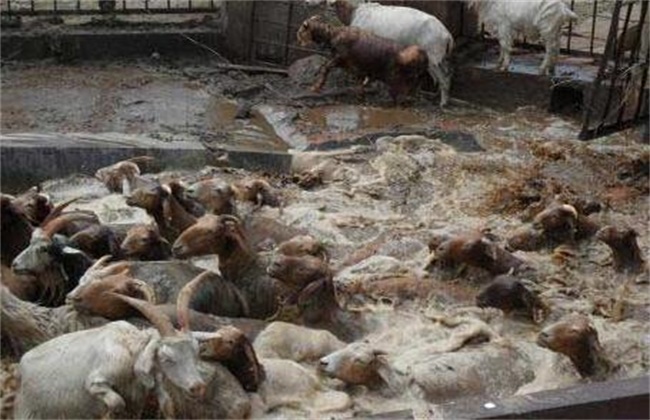
Medicated bathing is an effective method for treating external parasites in sheep. According to different methods, it can be divided into pool bathing, shower bathing and basin bathing, among which pool bathing is the most common in sheep farms. After adding deworming medicine that submerges the sheep body into a dedicated bath pool, the sheep flock is driven in to soak for deworming. Feeding should be stopped for at least 8 hours before medicated bathing, and sufficient drinking water should be ensured for the flock 2 hours before medicated bathing, so that sheep do not drink the deworming medicine. After medicated bathing, let the medicinal liquid drip dry in a designated place before driving them back to the pen, avoid direct sunlight, and feed them after 7 hours. It should be noted that pregnant ewes are prohibited from medicated bathing.
4. Treatment of internal parasites
There are many types of drugs for internal parasites, and appropriate drugs should be selected according to the parasitic condition of the sheep flock. Common drugs include levamisole types, albendazole types, avermectin tablets, trichlorfon, etc. Levamisole types are mainly used for digestive tract nematode disease and can be taken orally or by subcutaneous and intramuscular injection; bendazole types are mainly used for cysticercus, nematodes, liver flukes and tapeworms, etc., and can be treated by oral administration and intramuscular injection; avermectin types mainly target the adults and larvae of various nematodes and can be administered by oral administration and subcutaneous injection; trichlorfon is a widely used broad-spectrum deworming drug that can be used externally or taken orally.
The above is an introduction to the prevention and treatment methods for common sheep parasitic diseases. We hope it helps you. To learn more related knowledge, please follow us.