How to prevent heatstroke and cool down a pig farm in summer? A detailed explanation of practical measures
As temperatures gradually rise, the high-temperature season of the year has arrived again. The high-temperature, high-humidity environment of summer is a strict test for pig farms, and it can easily cause stress reactions and heatstroke in the pig herd, leading to reduced resistance in summer, the occurrence of diseases, threats to pig herd health and the pig farm, and huge economic losses for the pig farm. So how can a pig farm be cooled and protected from heat in summer? Let's take a look together.
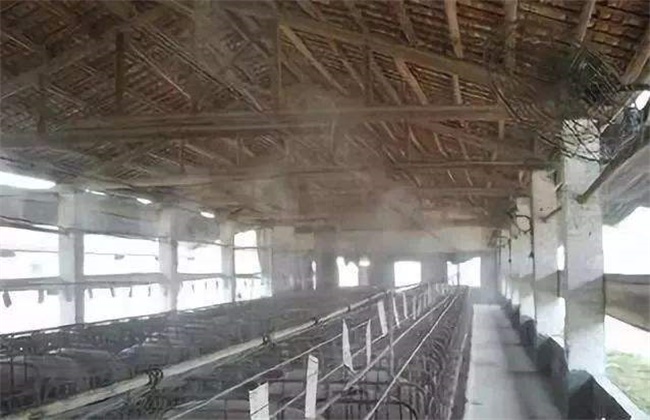
1. Pig house insulation
Generally, pig houses are built with asbestos tiles or earth bricks, which have poor thermal insulation, and most rural pig farming uses open-style pig houses, where the indoor temperature is even harder to control. So before high temperatures arrive, a layer of straw, crop stalks, and other insulating material can be added on top of the pig house, while open-air pig houses can have a shade shed built, and some vine-type plants can be planted beside the pen walls to improve thermal insulation. Trees can also be planted around the pens to improve the surrounding microclimate, or a layer of lime milk can be applied to the outer walls of the pig house, using reflection to reduce solar radiation.
2. Ventilation and cooling
Ventilation is one of the important measures for cooling pig houses. When the weather is cool in the morning and evening, open the doors and windows to create air convection, but when the temperature inside the house is lower than the outside environment, ventilation cooling is not suitable. At that time, artificial cooling should be carried out to form a suitable airflow and promote heat dissipation from the pigs' bodies. In addition to natural ventilation cooling, exhaust fans can also be installed in the pig house for mechanical cooling, and water curtains can also be installed. If an exhaust fan is installed to exhaust air outward, air can enter through the water curtain, so that cool air enters the room and lowers the temperature.
3. Spraying and sprinkling water
Spray water out in the form of mist. During the falling process, the mist will continuously evaporate, absorb heat from the air, and reduce air humidity. This cooling method is also good. Water can also be sprinkled directly onto the pigs, which will speed up heat dissipation from the pigs' bodies and play an important role in cooling. In addition, it can also lower the air temperature.
4. Strengthen feeding management
In hot summer, the pig herd dissipates heat slowly, so the stocking density should be appropriately reduced to facilitate heat dissipation by the pig herd. At the same time, anti-stress agents and electrolytes should be added to the feed, and adding electrolytes to drinking water can reduce heat stress reactions. An appropriate amount of drugs for clearing heat and detoxifying, and promoting fluid production and quenching thirst can be added to the feed, such as plantain decocted in water and mixed into the feed, or mung beans boiled into porridge and fed after cooling, and feeding fresh watermelon rind all have a good heatstroke prevention effect.
The above is an introduction to heatstroke prevention and cooling measures for pig farms in summer. We hope it can help you. To learn more related knowledge, please keep following us.