Detailed Explanation of Boer Goat Breeding Methods and Technical Key Points
The Boer goat originated in South Africa and is known as the king of meat goats. It is a high-quality lean meat goat breed, large in size, with extremely strong growth and reproductive capacity, producing many lambs per year, good meat quality, strong adaptability and disease resistance, and stable genetic characteristics. It is a rare and excellent breed that basically meets all the market demands for raising goats, and is the first choice for many farmers.
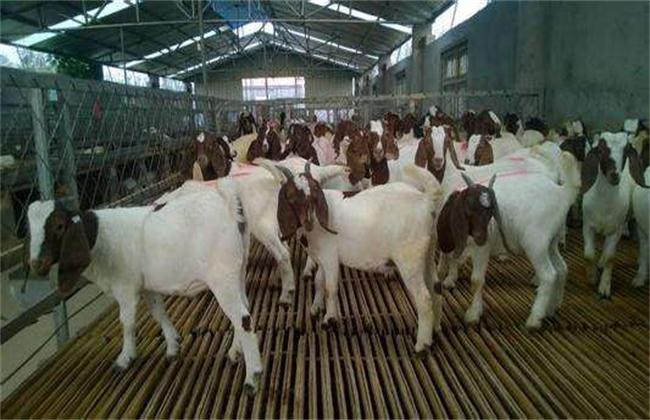
II. Site Selection
First, choose the breeding area, which must have enough living space for the grazing flock. Within a one-kilometer radius there should be no pollution sources, and the location should have good air, fertile soil, clean water, a quiet environment, and good ventilation, creating a good ecological environment for pollution-free Boer goat breeding. When building the goat shed, necessary equipment such as cleaning supplies should be prepared. The goat shed should be built with ventilation, automatically adjustable temperature and humidity, and complete infrastructure, as long as it meets the good growth and development needs of the flock.
II. Seed Selection
When purchasing, choose a reputable breeder and trace back several generations to check their condition. The Boer goat is characterized by a white face, a straight back, a slightly sloping loin, a clear distinction between leg hair and body hair, well-developed muscles, and horns that curve outward in males. Choose strong and healthy young goats with good quality and strong resistance to disease and parasites. When producing meat goats, due to long-term unplanned feeding and breeding of goats and chaotic mating, many local breeds are genetically mixed and individuals are severely degraded. Therefore, crossbreeding is needed to revitalize local goats. Cross high-quality Boer goats with local purebred does, and use the hybrid vigor of the first-generation crossbred goats to increase body weight, lambing rate, and slaughter rate.
III. Feeding
The most abundant and lowest-cost feed is dry feed made from hay and rice straw, which is low in cost and widely used. Concentrated feed is a nutrient-rich feed processed from grain crops and is the main feed for goats. Succulent feed is made from plant tubers; it is rich in crude fiber, easy to digest, and is the best feed in spring. Animal feed mainly refers to high-protein animal feed, which is costly and used only when necessary. Micro-feed refers to mineral components present in natural feed, used in small amounts.
IV. Precautions
Throughout the entire feeding process, it is best to use pollution-free "green" feed. Concentrated feed needs to be formulated according to specific conditions; roughage must be finely processed; green feed must be green plants with a fixed place of origin, and the production base must meet green plant production standards. Choose perennial grass species with strong adaptability, good growth, and high cold and drought tolerance and yield, such as broadleaf ryegrass, alfalfa, or intercropping red and white clover with Mexican corn and other crops to ensure a year-round supply of green feed. Micro-feed must be supplemented on time.
The main content of Boer goat breeding technology is as described above. As long as the environment is suitable, the goat breed is high-quality, and suitable feeding methods are used, Boer goats can certainly be raised well, and both quality and yield can be greatly improved. Farmers with breeding needs can take a good look at the above knowledge.