Detailed Explanation of Broiler Farming Methods and Technical Key Points
In the farming industry, broilers have an extremely high feed conversion ratio and grow quickly, generally at a ratio of two to one, and about 60%-70% of the total cost is feed cost. Therefore, based on this situation, when arranging broiler production and marketing, external factors such as the market demand at the time and feed market prices should be comprehensively considered in order to maximize economic benefits.
I. Site Selection
It is advisable to choose a place with high terrain, a dry environment, shelter from wind and exposure to sunlight, and a slope that facilitates drainage and transportation. It must be far from residential areas, and it is best not to have other farms nearby. It can be chosen in a shelterbelt or a mountain-ringed isolation zone to facilitate epidemic prevention and control. There should be a water source of good quality nearby for convenience.
II. Chicken House Construction
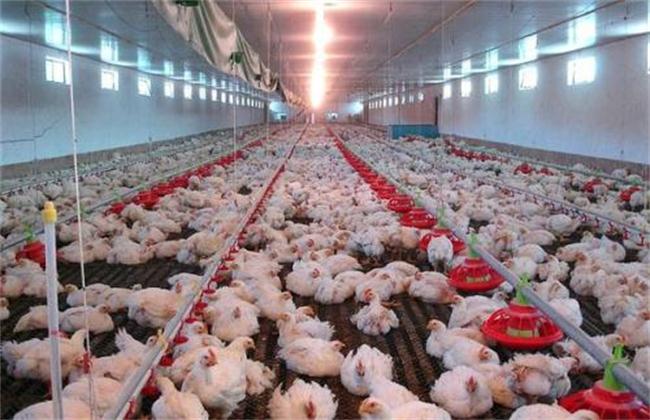
Broilers are generally marketed in a unified batch, so the number of chicken houses to build can be decided according to one's own farming scale. The roof of the chicken house should be a pitched roof, an insulation layer needs to be added, and a layer of plastic sheeting should be laid on the inner side of the roof to facilitate heat preservation and washing and disinfection. In addition, skylights should be installed at intervals of 5 to 6 m for ventilation, but the skylights must be fitted with rain caps. Fixed walls should be built around the chicken house, with a window 1 m long and 0.9 m wide every 3 m. Exhaust fans can also be installed at a height at both ends. Between the net enclosure and the ground, a wing window of about 40 by 40 cm should be set every 3 to 4 m. Alternatively, an underground ventilation duct can be built for ventilation. The chicken house should preferably use a concrete floor to prevent other animals from entering. At the entrance, a foot-operated disinfection pool as wide as the door must be built.
III. Feeding Management.
1. Close off the farming area, restrict visitors, and prevent people from carrying pathogens. Visitors should be disinfected and enter wearing work clothes.
2. Drinking and feeding equipment should be sufficient to meet the drinking and feeding needs of every chicken. During the chick stage, the chicken house net bed can be separated with plastic sheeting into individual chicken houses, using only part of the net bed, and more of the net bed can be used after the chicks gradually grow. Reasonably adjusting the farming density is beneficial to the development of the flock.
3. The growth of the flock requires receiving a large amount of light. In addition to natural light every day, they must also receive artificial light for a certain period. Therefore, lighting circuits should be installed in the chicken house according to the area, with 1 lamp holder installed every 3 m, roughly one light bulb per ten-plus sq m, and incandescent lamps should be used to ensure all chickens can receive enough light.
5. Use feed with 30 percent moisture, roughly in a state where it forms a ball when squeezed in the hand and loosens when released, adding about 25 jin of water to 100 jin of feed. Although the feed itself contains some moisture, due to evaporation into the air, a measured amount of water should still be sprinkled once every hour to maintain humidity.
6. Cage rearing density is lower than net rearing, generally 6 to 8 chickens per cage, and a looser density is beneficial for disease control.
7. During the brooding period, the temperature should be maintained at around 35 degrees, and it is more appropriate when half of the chicks have their mouths open. In cold weather, a stove can be used for heating. To prevent gas poisoning, a chimney should be installed, and the chimney can be reasonably extended to facilitate heat dissipation and save resources. Equipment for cleaning the chicken house should be prepared, such as a high-pressure washer and a disinfection sprayer.
Various practical problems will arise during the farming process, but it is hoped that the content described above can provide some effective help to farmers who want to raise broilers. In real situations, the problems encountered in farming should also be handled according to the actual conditions.