Detailed Explanation of Sansui Duck Breeding Methods and Technical Points
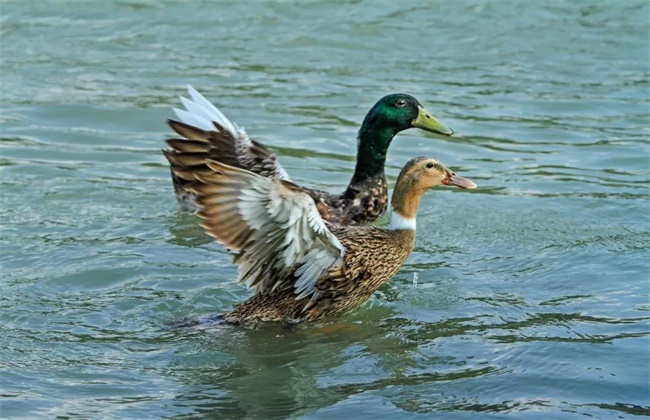
The Sansui duck is a specialty of Qiandongnan Prefecture, Guizhou Province. It has the advantages of early maturity, wide adaptability, and high egg production, and it is also tolerant of coarse feed. It can lay as many as 260 eggs per year, making it a fine local dual-purpose breed for both meat and eggs in China. So how should Sansui ducks be raised? Let's find out together.
1. Duck House Construction
To raise ducks, the first thing is to build a duck house. The duck house needs to be built on a sunny slope with flat, relatively high ground, sufficient sunlight, and close to a water source. The top of the duck house should be high, and the surrounding walls should be 1.7 or more in height to prevent the Sansui ducks from flying and jumping out. Outside the duck house there should be an activity area, with fencing built around it, and inside there should also be feeding troughs and equipment. Pay attention to stocking density; the area of the shed is determined by the number of ducks raised, generally 6-7 ducks per sq m.
2. Feeding of Ducklings
For brooding ducklings, there must be good ventilation and insulation, as well as disinfection and rearing equipment. In addition, precautions must be taken against birds of prey and rats. The temperature of the brooding room must be well controlled. During the first week after hatching, the suitable temperature for ducklings is between 32-35°C; in the second week it can be appropriately lowered by 2-3°C; after the third week it can be reduced to between 24-27°C; and after the fourth week it can return to normal temperature. However, note that the temperature difference between morning and evening should not exceed 2°C. Ducklings can begin eating within 1-2 days after hatching. Before they start eating, they must first be given water, and then fed feed. The feed should first be soaked in clean water for several hours before feeding. Feed them until they are about 60% full, and as the ducklings grow, increase the feeding amount. When they are raised to 1-2 weeks, start raising them in groups, generally controlling about 30 ducklings per sq m; by three weeks of age, raise 15-20 per sq m.
3. Feeding of Growing and Adult Ducks
For growing and adult ducks to grow quickly, the feed formulation must be done well. The nutrition of all feed should be comprehensive, and there should be no deficiency or excess. Especially during the laying period, sufficient nutrition must be ensured to increase egg production. Generally, feed three times a day, namely in the early morning, mid-morning, afternoon, and evening. Generally feed 120-150 grams of feed per day, and during the laying period the protein ratio of the feed can be increased. After feeding in summer, drive the ducks to the river for grazing. This can save feed costs, give the flock some activity, and make the meat taste better. To increase the laying rate, in small-scale farming, pair one drake with every 100 female ducks, while in large-scale farming, one drake with 200 female ducks is sufficient.
The above is an introduction to Sansui duck breeding methods. We hope it can help you. If you want to learn more related knowledge, please stay tuned to us.