What should be noted during the process of hilsa herring farming?
The hilsa herring (Tenualosa reevesii) is a very rare and valuable economic food fish in China, and it is also known as a treasured delicacy of the waters of Jiangnan. The hilsa herring is mainly distributed in China's South China Sea, East China Sea, as well as the Yangtze River, Pearl River, Qiantang River and other areas. The hilsa herring has already been listed as an endangered animal in China, which means that the hilsa herring we see on the market is basically all artificially farmed. So in the process of farming hilsa herring, what issues must we pay attention to in order to farm them well? Below are several notes on hilsa herring farming that the editor has compiled; you can briefly take a look.
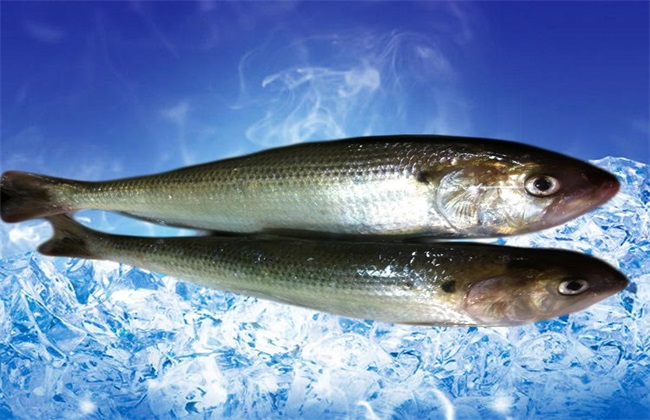
1. Pond disinfection
For hilsa herring farming, we first need to choose a suitable farming site, and then build the farming pond. After the farming pond is built, many people will directly release the fry for farming, but this is wrong. Generally, before releasing the fry, we need to disinfect and sterilize the farming pond with bleaching powder or quicklime. After disinfection, drain the old water, inject new water, add biological bait into the farming pond, then carry out a trial culture, and only after that can the fry be stocked.
2. Density
The density of hilsa herring farming is an issue we need to pay attention to when stocking the fry. Many people do not know how many hilsa herring can be farmed in one mu of pond. A reasonable stocking density is what ensures the survival rate of hilsa herring farming. Generally, we need to equip an aerator and appropriately increase some oxygen during stocking. The number of hilsa herring fry stocked per mu is about one thousand five hundred.
3. Water depth
When the hilsa herring fry have just been stocked, the water depth in the pond is best adjusted to about one meter five. After the hilsa herring fry have slightly adapted to the environment, the water depth can be raised to about one meter seven; and in our final farming stage, the water depth in the farming pond is generally two meters to two meters, especially in summer and winter, we must pay even more attention to the water level in the pond, otherwise in summer it is very easy for oxygen deficiency and death to occur, while in winter they are easily frozen to death because the temperature is too low.
4. Water temperature
Hilsa herring are extremely sensitive to water temperature; too low or too high a temperature will affect the normal growth of hilsa herring. When we stock the fry, the water temperature must reach at least seventeen degrees or above, and the best stocking temperature is twenty to twenty-five degrees. During the growth period of hilsa herring, we had best keep the water temperature in the farming pond between twenty-two and thirty-two degrees. When the water temperature is at fifteen degrees, the activity of hilsa herring will slow down; when the temperature reaches thirteen degrees, hilsa herring will die, which means the lowest temperature cannot be lower than fourteen degrees.
5. Water quality
When farming hilsa herring, we also need to pay attention to the regulation and management of water quality. After feeding, promptly clean up the leftover feed residue to avoid polluting the water quality. Next, change the water once every half month, and each water change should retain one third of the old water. In addition, some other aquatic animals can be placed in the farming pond and aquatic plants such as water caltrop and lotus root can be planted, which can also achieve the effect of purifying water quality.
6. Feeding
The hilsa herring is an omnivorous fish, but it mainly feeds on plant-based feed, followed by some plankton in the water and small fish and shrimp and the like. When farming, we should carry out nutritional feeding with plant-based feed as the main component and animal feed as a supplement. There is one more point we need to pay attention to when feeding: the hilsa herring feeds in stages. In spring, the amount of food intake is generally very large, so the feed amount should be large, and feed needs to be continuously supplemented; by summer, the feed amount can be gradually reduced; in autumn, feed only needs to be given during the day; and in winter, even less.
In the future, when farming hilsa herring, we must pay attention to the points mentioned above. Of course, there are also daily management, disease prevention and control, and so on that the editor did not mention, and these also need attention.