Detailed Explanation of the Key Technical Points for Raising and Managing Small-Tailed Han Sheep
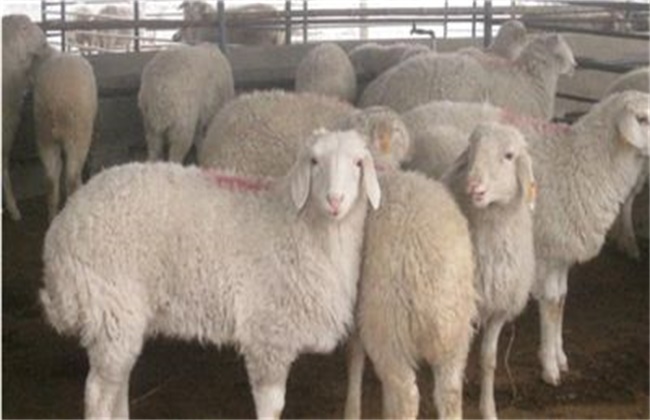
The Small-Tailed Han sheep is a breed of sheep in China. It has such farming advantages as strong adaptability, fast growth, early sexual maturity, strong reproductive capacity and stable genes. It is also a dual-purpose breed for both meat and fur, one of the famous fine livestock breeds, and a good farming project for getting rich and achieving moderate prosperity. So how should Small-Tailed Han sheep be raised and managed? Let's take a look below at the raising and management techniques for Small-Tailed Han sheep.
1. Timely castration
Except for those kept as breeding rams, lambs used for fattening should usually be castrated after 1-3 weeks. Castration helps improve meat quality, making the meat tender, reducing the mutton smell, and also makes the sheep docile and easier to manage, with relatively fast fattening. There are two common castration methods. One is the castration clamp method, using a specially made castration clamp to clamp tightly at the upper end of the scrotum to crush and sever the lamb's spermatic cord; over time the lamb's testicles gradually atrophy. Because this method leaves no wound, it reduces the risk of wound infection. When the male lamb is 1 week old, the testicles are pushed into the scrotum, and a rubber band or thin cord is tied tightly at the upper end of the scrotum, at the position of the spermatic cord, to block blood circulation; generally after about 20-30 days the testicles will fall off. Another method is to directly cut out the lamb's testicles with a knife, which requires an experienced person to perform, so as to avoid failed operation leading to infection in the lamb.
2. Early weaning
The traditional weaning time for Small-Tailed Han sheep is generally at 3-4 months of age. According to practical experience, lambs weaned at 3 months and 4 months of age, when fattened under the same standards up to 6 months of age, show consistent progress in their live weight and daily weight gain. This indicates that early weaning at 2 months of age can be implemented. Weaning and fattening at 2 months of age is also beneficial for the ewes to mate earlier, raising the breeding sheep from 3 births in 2 years to 2 births in 1 year, thereby increasing the reproductive rate, slaughter rate and meat production of Small-Tailed Han sheep, and effectively improving economic returns.
3. Timely deworming
Fattening lambs should each be dewormed 1-2 times after weaning and at the beginning of autumn. Common deworming drugs include: nitroxynil, bithionol, albendazole, etc., administered orally at 4 mg, 35 mg-75 mg, and 2.5 mg-3 mg per 1 kg of live weight respectively.
4. Reasonable feeding
When fattening Small-Tailed Han sheep, coarse and concentrated feeds should be reasonably matched so that the lambs can be sent to market within half a year, which can significantly increase economic returns. When feeding, the feed can be matched in the proportion of 35% green hay, 37% corn stalk powder, 5% soybean cake, 4% cottonseed cake and 14% corn. For weaned lambs fattened to 5-6 months of age, the body weight reaches about 40 kg, with an average daily weight gain of about 200 grams. This not only gives a high meat production rate and a short fattening period, but is also suitable for large-scale raising.
The above is an introduction to the raising and management techniques for Small-Tailed Han sheep. We hope it can help you. To learn more related knowledge, please stay tuned to us.