What are the precautions for free-range Boer goat farming?
Boer goats are generally best raised by grazing, as goats raised this way are of better quality. Although free-range Boer goat farming has its benefits, improper free-range management can also affect the normal growth of Boer goats. So do you know how to raise Boer goats free-range? Do you know what issues to pay attention to when free-ranging Boer goats? Below we will take a look at the precautions for free-range farming.
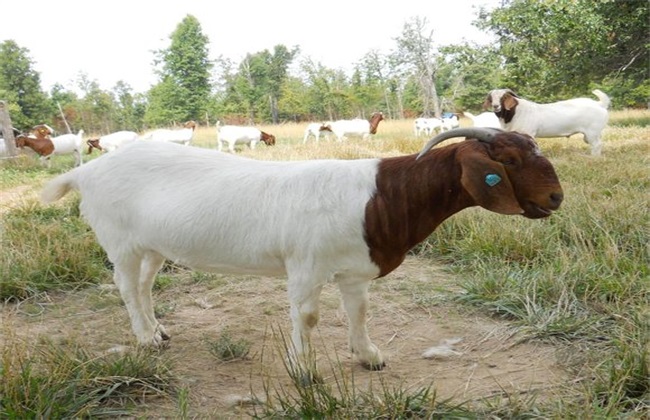
1. Free-range site
To raise Boer goats free-range, you need a vast free-range site. Generally, we should make reasonable use of the various usable resources near the farm, seize the right timing, and carry out free-range grazing. The free-range site should generally not be too far from the farm, because excessive exercise also affects the growth of Boer goats. Secondly, there should be drinking water near the Boer goat farm for the goats to drink. Finally, it is best not to spray pesticides around the farm during grazing, because residual pesticides may cause serious harm to Boer goats.
2. Free-range time
Boer goats can be raised free-range in all four seasons: spring, summer, autumn, and winter, but the free-range time differs for each season. First, we must note that Boer goats cannot eat forage with dew on it, so it is best not to graze in the morning when there is dew. If you want to graze them, it is best to wait until the dew has dried, around eight to ten o'clock. Secondly, the weather at noon is too harsh and the temperature is too high, which may easily cause goats to suffer heatstroke, so we generally should not graze too early, and it is best to wait until after five in the afternoon before grazing. Also, rainy and cloudy days in winter are not suitable for grazing, and you must wait until the sun comes out before grazing.
3. Free-range methods
The free-range method for Boer goats is the most critical point. In fact, it covers a lot of content, but here the editor will only briefly introduce some of it. Before noon, grazing is generally done on pastures with poorer forage, while after noon you should choose pastures with better grass quality; on sunny days and when the weather is relatively hot, choose well-ventilated places with shade for grazing, while on rainy days choose flat areas for grazing; also, when grazing, adhere to the principle of grazing high in the morning and low in the evening; before each grazing session, first supplement the Boer goats with salt and water, which can preserve the goats' strength; the grazing distance should preferably not exceed five kilometers, do not rest in damp places, and do not let them casually drink unclean water from outside.
4. Pay attention to deworming
Another point to note when raising Boer goats free-range is to do a good job of deworming and immunization. Especially in unventilated, dark, and damp places, there are very many pests, mosquitoes, and flies, which will affect the health of Boer goats. Another point is that there may be many parasitic eggs and the like on the forage. After such forage is consumed by goats, it becomes very difficult for them to fatten up, so deworming work must be done well.
The aspects above are the issues we need to pay attention to when raising Boer goats free-range. Although the description above is relatively simple, there is still quite a lot of content. If you have any other unclear points, remember to leave a comment below for consultation.