Key Technical Points and Feeding Management Methods for White-Feathered Broiler Chicken Farming
The white-feathered broiler is an important breed among meat chickens and is fairly commonly farmed in China, with extremely high farming value and economic value. During farming, daily feeding management affects the yield and quality of the broilers and is directly related to the economic returns of farmers. Below, let's take a look at the farming techniques for white-feathered broilers with the editor.
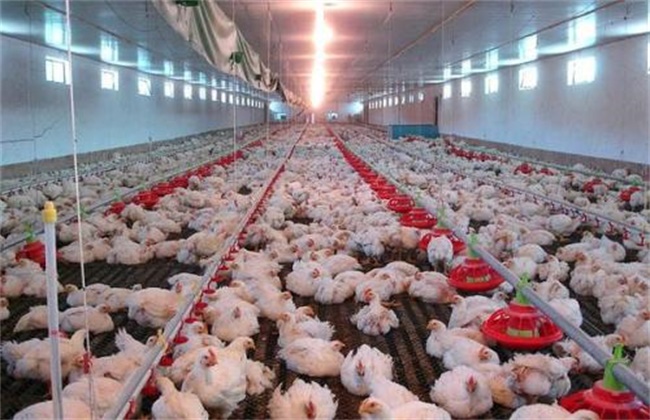
1. Farming density
Broiler chickens are suitable for high-density farming, but the specific farming density should be based mainly on the actual conditions. If it is floor rearing, the stocking density should be lower, while for cage rearing on wire netting, the density can be higher; where there are good ventilation conditions, the farming density can also be higher. In summer during high temperatures, the farming density should be appropriately reduced to avoid difficulty in heat dissipation for the flock and poor growth and development of the flock. Generally, at most 15 broilers per sq m can be raised; under normal circumstances, 6-8 are raised.
2. Temperature
The most important thing in broiler rearing is temperature, and farmers also pay relatively more attention to temperature control. When farming density is relatively high and the temperature is too high, the flock will suffer from difficulty in heat dissipation, infection with disease, or death. During brooding, start feeding at a temperature of 31-33°C, then lower it by 1-2°C each week until it reaches normal temperature. The temperature in the brooding room should be lowered in a timely manner as the chicks' warm water needs change, which is very important but is often overlooked. During brooding, temperature changes must be recorded every day, and the temperature should be flexibly controlled according to the season and the performance of the chicks. In summer it is hot and in winter the climate is severely cold; the temperature in these two seasons must be well controlled to create a suitable temperature environment for the growth and development of broilers.
3. Humidity
During the first week of brooding, the air humidity should be maintained at about 60%-65%. This is because chicks have a high water content, but the temperature in the brooding room is also high; if the humidity is too low, the chicks will become dehydrated, affecting their growth and health. After the chicks have grown for two weeks, their body weight increases, respiration increases, and the temperature has also dropped. At this time, the coop should be kept dry, ventilation should be strengthened, and attention should also be paid to leaking drinking water equipment to prevent the bedding from becoming damp and breeding bacteria.
4. Lighting
Lighting during broiler growth requires extreme attention. When the light duration is longer, the broilers' feeding time can be extended, increasing feed intake and promoting growth, while under low-light conditions, the excitability of the broilers can be reduced, allowing the flock to remain quiet. With this characteristic, both the growth rate and feed utilization rate of broilers will increase.
5. Ventilation
Because of the farming density of broilers, ventilation is extremely important. The purpose of ventilation is to expel harmful gases such as ammonia and carbon dioxide produced by broiler respiration and excretion, as well as dust and pathogens in the air. Good ventilation conditions can keep the chickens healthy, their feathers clean, and their growth rapid. Therefore, during rearing, ventilation should be increased as much as possible without affecting the coop temperature, to promote healthy growth of the flock.
The above is an introduction to white-feathered broiler chicken farming techniques. We hope it can help you. If you want to learn more related knowledge, please keep following us.