What are the precautions for raising Partridge chickens?
Partridge chickens have high nutritional value and are suitable for patients, pregnant women, and other people who need nourishment. The price of Partridge chickens on the market is also relatively high now; the general wholesale price is seven to ten yuan per jin, the retail price is fifteen or sixteen yuan per jin, and one Partridge chicken can generally sell for about fifty to one hundred fifty yuan. Because raising Partridge chickens is fairly profitable, the scale of breeding is also constantly expanding, so how should Partridge chickens be raised? What issues need attention during breeding? Now let the editor introduce them to everyone below.
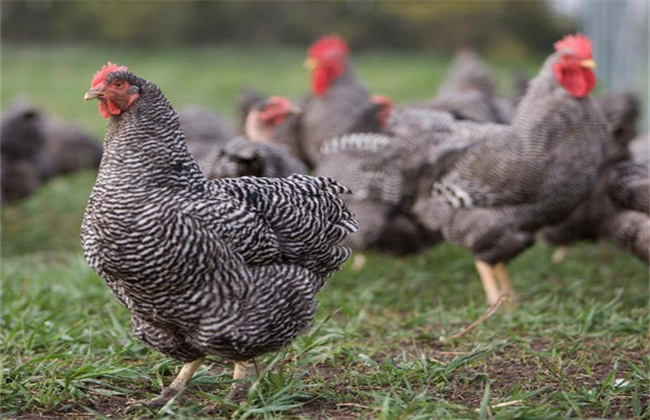
1. Chick selection
To raise Partridge chickens well, the selection of chicks is the most basic condition. Choose high-quality Partridge chicken breeds, then select relatively strong, energetic, vigorous chicks with a good appetite for breeding; such chicks have a high survival rate. Another point is to choose breeds nearby, and at the same time make purchases at regular sales bases; do not buy chicks from outside stalls, as there is no guarantee that way.
2. Breeding environment
Partridge chickens are an ecological breeding project, but in ordinary times if we want to improve the quality of Partridge chickens, we generally use free-range farming. Actually it is also very simple: there should be broad grassland, woodland, and so on around the farm, so that it is convenient for releasing the Partridge chickens. Next, the surrounding environment of the farm should be pollution-free, with good water source conditions and convenient transportation; also, it should be far away from the noisy areas of the city, at the same time far from residential areas, and do not raise them in prohibited breeding areas.
3. Temperature and light
Partridge chickens adapt to different temperatures at different growth stages. Generally speaking, for newly hatched chicks the temperature should be controlled at around thirty degrees, the humidity controlled at around sixty-five percent, and the light duration at twenty-four hours; when the chicks are fifteen days old, the temperature can be appropriately lowered to around twenty-eight to twenty-nine degrees, the humidity can also be correspondingly lowered and controlled at sixty percent, and the light duration can be reduced to eighteen hours; after the Partridge chickens are thirty days old, we can adjust the temperature to twenty to twenty-five degrees, then as the Partridge chickens grow, slowly lower the room temperature until it returns to normal room temperature, but the light duration must be maintained at six to eight hours per day.
4. Nutrition and feeding
In the process of raising Partridge chickens, we should pay attention to balanced nutritional matching; we cannot feed them entirely with concentrated feed, and must appropriately feed some green feed and coarse feed; at the same time, we should also pay attention to diversifying the feed to improve its palatability. For Partridge chicken feed, we should choose some easily digestible, nutrient-rich feed for feeding, which can improve the feed conversion rate. During the free-range process of young Partridge chickens, we generally feed them once at a fixed time every noon, and then give a supplementary feeding in the evening, which can achieve the purpose of fattening. Finally, note that the feed should not be changed frequently, otherwise it can easily cause problems such as indigestion and gastrointestinal discomfort.
5. Vaccine prevention and control
Although Partridge chickens have strong resistance and are not easily infected with diseases, we still need to pay attention to disease prevention, because some infectious diseases or highly harmful diseases can still affect Partridge chickens. So first, we need to carry out vaccine injections according to a scientific immunization schedule; in ordinary times, we can also appropriately feed some nutrients, antibiotics, and so on to enhance the physique of the Partridge chickens; also, regularly feed deworming medicine to expel internal parasites, roundworms, and so on; finally, regularly clean and disinfect the farm to avoid bacterial and viral infections.
The above points are the places that need attention in the process of raising Partridge chickens. I hope everyone will not ignore these issues in future breeding. Most of them are very ordinary matters, so the key is still whether you are careful in the breeding process.