What are the crucian carp farming models? An analysis of common farming methods
Crucian carp is a common freshwater fish, and wherever there is freshwater in our country, it is farmed. Through later artificial farming and breeding, many new high-quality crucian carp varieties have also been produced. If we want to farm crucian carp with high yield and high quality and obtain higher economic benefits, then in addition to variety and farming techniques, we also need to pay attention to its farming model. What are the common farming models for crucian carp now? How is each one carried out? Then please see the introduction below.
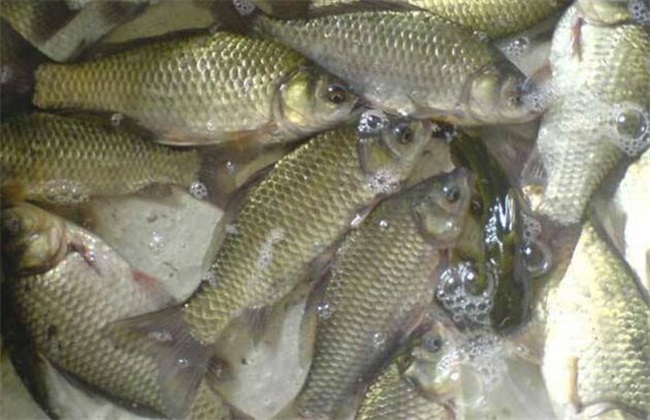
1. Main culture in ponds
The main culture model in ponds is also monoculture, farming only crucian carp alone. This is actually one of the most traditional farming models, but it is also a farming model used by many professional farmers to breed broodstock. When carrying out main culture in ponds, for pond water quality management, feed, water temperature, stocking density, dissolved oxygen content in the water, and daily management, we only need to focus on the living habits of crucian carp. In addition, when carrying out main culture in ponds, we must prevent other miscellaneous fish from entering the pond and damaging the farming environment, so a filter screen should be set up at the water inlet. Crucian carp produced through main culture in ponds is of very high quality, and the proportion of high-quality fish is very large, and the farming profit is also quite good.
2. Mixed culture in fish ponds
The mixed culture model for crucian carp is also very common, and it is also a farming model commonly used in many rural areas nowadays to improve farming economic benefits. Crucian carp mixed culture can mix one species to multiple species, but the main mixed culture fish are black carp, grass carp, silver carp, bream, common carp, bighead carp, etc. When carrying out mixed culture in fish ponds, we should choose large-sized fingerlings and stock them as early as possible. The stocking density of crucian carp per mu is generally 150 to 250 fish, and the stocking number of other species depends on the specific size.
3. Supplementary culture of crucian carp
Supplementary culture of crucian carp is actually divided into many types, such as supplementary culture in fish ponds, supplementary culture in lotus root ponds, supplementary culture in water caltrop ponds, supplementary culture in broodstock breeding ponds, supplementary culture in rice fields, etc. At present, the most common supplementary culture models are supplementary culture in lotus root ponds and supplementary culture in rice fields, which are also the most popular farming models at present. Their economic benefits are actually quite good, which means that during the planting process, the economic income from farming can also be harvested, and for farmers it is also a very good farming method to improve economic benefits. However, when carrying out supplementary culture, what we need to pay attention to is strict use of chemicals to avoid chemical damage.
4. Cage culture
Cage culture is mainly used in intensive farming production. It is also a new farming model, usually carried out on the water surface of large reservoirs, lakes, etc. In this way, during the farming process we do not need to change the water, and there is also plenty of food in the water, so we only need to feed appropriate feed, which can also reduce certain farming costs. However, when using cage culture, we must carry out scientific cage division management, and at the same time clean and disinfect the cages irregularly. Finally, what must be noted is that we must understand weather changes and prevent natural disasters in a timely manner.
In fact, whether it is crucian carp farming or other aquaculture, basically the common farming models are these few, so while learning about and understanding crucian carp farming models, we are also equivalent to understanding most aquaculture models. However, as for the specific farming techniques, everyone still needs to learn and master them.