Detailed Explanation of Earthworm Farming Methods and Daily Management Key Points
The food for artificially farmed earthworms can be plant residue fragments, humus, decaying animals, and various waste materials. Except for glass, metal, rubber, plastic, bricks, tiles, stones, etc., materials such as the feces of pigeons, chickens, ducks, geese, rabbits, pigs, cattle, sheep, horses, and humans, as well as dead branches, fallen leaves, weeds, straw, grain husks, rice straw, fruit peels, wood shavings, waste paper, sawdust, various fertile muds, waste paper pulp liquid, food industry scraps, and various household garbage are all good food for earthworms and can be digested and utilized by them. Therefore, wherever there is fertile soil rich in humus, the number of earthworms is also relatively high. Artificial earthworm farming means using artificial methods to simulate the living requirements of earthworms in soil, artificially creating good living and breeding conditions for them, and letting them grow and reproduce in artificially built farming environments.
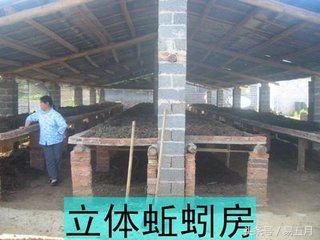
Farming earthworms requires a temperature of 20 °C to 25 °C, the soil must be moist, and the environment must be quiet, dark, and avoid direct light. There are many rearing methods, including basin farming, box and basket farming, indoor brick pool farming, farmland farming, compost farming, trench farming, and mixed farming of earthworms and snails.
Here only a few applicable methods are introduced:
① Basin farming: washbasins, flower pots, discarded pottery, and other containers can all be used. The feed put into the basin should not exceed 3/4 of the basin depth. For ordinary flower pots, each pot can rear 10 to 70 earthworms; for washbasins, each basin can rear 40-150 earthworms.
Because the basin area is small, the temperature and humidity inside the basin are greatly affected by changes in the external environment, and the surface soil and feed are likely to dry out. Therefore, special attention should be paid during farming. On the premise of ensuring ventilation, try to maintain suitable temperature and humidity for the soil and feed in the basin. Reed curtains, rice straw, plastic film, etc. can be used as covers, and water should be sprayed frequently to maintain sufficient humidity.
② Box and basket farming: discarded packing boxes, wicker baskets, bamboo baskets, etc. can be used, and specially made earthworm farming boxes can also be processed. The farming box is a square bottomless wooden box or plastic box, 20-35 cm deep, any size, with convenience for transport as the criterion. The bottom and sides of the farming box should all have drainage and ventilation holes drilled in them. The total area of the box holes is generally suitable at 20%-35% of the box wall area. Handles are installed on both sides of the box to facilitate transport.
Box farming usually also requires multi-layer rearing beds. Stacking the farming boxes on the rearing beds can fully utilize limited space and increase output. Multi-layer rearing beds can be welded from steel bars and angle iron, or built with bamboo or wood frames, and can also be built with materials such as bricks and cement boards. The farming boxes are placed on the rearing beds, generally 4-5 layers is suitable; too high is inconvenient for handling and sorting. Between two rows of bed frames, passages should be left for farming personnel to pass through. In addition, there should also be tools such as thermometers and hygrometers, sprayers, bamboo clips, tungsten lamps or halogen lamps, mesh screens, and tooth rakes.
Spread about 15 cm of feed inside the farming box, and place 4,000-9,000 earthworms per sq m. To prevent water evaporation, the box can be covered with reed curtains, rice straw, plastic film, etc.
During the farming period, the room should be ventilated frequently, the temperature should be kept above 18 °C, and the humidity of the feed pile should be 70%-80%. Pay attention to heat preservation in winter, and frequently use a sprayer to spray cool water to lower the temperature in summer. As the earthworms gradually grow, the density of earthworms in the box should also be reduced.
③ Indoor brick pool farming: build 2-3 rows of square pools indoors with bricks, each pool having an area of 5-10 sq m and a depth of about 40 cm, with passages reserved between rows for workers. Spread fermented feed 20-30 cm thick in the pool, and place 4,000-6,000 earthworms per sq m; small earthworms can be placed at 20,000. To prevent water evaporation, the pool can be covered with reed curtains, rice straw, plastic film, etc.; it can also be left uncovered, but attention should be paid to the humidity of the feed and water should be sprayed in time to add moisture.
During the farming period, the room should be ventilated frequently, the temperature should be kept above 18 °C, and the humidity of the feed should be 70%-80%. Pay attention to heat preservation in winter, and frequently use a sprayer to spray cool water to lower the temperature in summer.
④ Farmland farming: combining indoor and outdoor earthworm farming gives better results. In spring, summer, and autumn, move earthworm farming outdoors, and move it indoors in late autumn and early winter. Outdoors, old gardens or farmland can be used, and inter-row ditches 35-40 cm wide and 15-20 cm deep can be dug in them, then filled with livestock and poultry manure, household garbage, etc., and then covered with soil. Place about 1,000 earthworms per sq m. It is also possible not to stock them specially and directly use natural earthworms for farming. The ditch should often remain moist, but must not accumulate water. This method has low cost, but is greatly affected by natural conditions and has low output.
⑤ Compost farming: this is a relatively economical and effective outdoor farming method:
Specific method: take 50% farmyard manure and 50% soil, mix the two, or spread one layer of fertilizer and one layer of soil, each layer 10 cm thick, alternating layer by layer to make a pile; the pile width is 1-2 m, height 50 cm, and length is unlimited. Generally after the pile is left for 1 day, a small number of earthworms can be attracted into the fertilizer pile. Earthworm seeds can also be put into the fertilizer pile for artificial farming. During the farming period, frequently spray water onto the fertilizer pile. It is necessary to maintain the humidity of the fertilizer pile, but there must not be too much water, which would make the fertilizer pile collapse.
Daily management should pay attention to the following points:
① Test feeding before adding material: before adding material, test feeding should be carried out, and only after it is qualified can it be fed to earthworms. If the pH value of the manure material is relatively high, a small amount of vinegar can be added before feeding.
② Add feed at the appropriate time: when it is found that the surface of the earthworm breeding material is flat, the material is fine like rice bran, or the earthworms are crawling outside, feed should be added in time. To prevent the material from fermenting and heating up, causing earthworm death, an interval feeding method can be adopted: add feed over a width of 20 cm, leave a width of 10-20 cm without adding feed, and when the earthworms begin to crawl into the new material, add feed to the remaining places. If earthworms are found escaping at night, this can be controlled by turning on an electric light or scattering a ring of plant ash or lime powder around them.
③ Pay attention to watering and moisture retention: once the surface of the material is found to be dry, water should be applied in time (using 1:300 EM liquid) to maintain 70%-80% humidity. In winter, the humidity can be slightly reduced.
④ Separate cocoons at the appropriate time: when the temperature is above 25 °C, separate the egg cocoons from the breeding earthworms once about every 15 days; as the temperature decreases, the separation interval gradually lengthens. Each time the separated cocoons are piled separately for hatching and rearing. At the same time, purification and rejuvenation of breeding earthworms should be done well to maintain stable and high yield of breeding earthworms. Rearing of hatched young earthworms: once they grow to 40-50, the "light separation method" can be used to take them out and feed them to yellow eels.
The light separation method: place a sieve with holes large enough for earthworms to pass through on top of a plastic basin, first add water to the earthworm cast material and mix it wet, then pour it into the sieve, with the thickness not exceeding 2 cm. Place it in sunlight. Because earthworms have the habit of fearing light, they will desperately drill downward and fall into the basin below.
(Image source from the internet, reproduction prohibited)