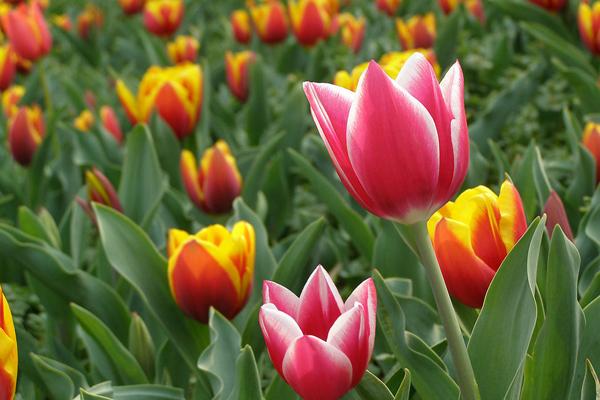
Tulip flower meanings are diverse, and the growing method is simple and easy to learn
Tulips are a flower that many people like, because they carry a noble air, and they are a flower commonly used at many weddings or banquet venues. Tulips are also called grass musk, and belong to the lily family. Not only is the name beautiful, the flower itself is also very beautiful, and tulip pictures can be seen at many photography and painting exhibitions. The tulip planting method is also relatively simple, so quite a few households choose to plant such a beautiful patch of flowers in their courtyards. Among tulips, the Dutch varieties are the most prized, and the Netherlands is also its famous commercial production area.
Tulip flower meanings
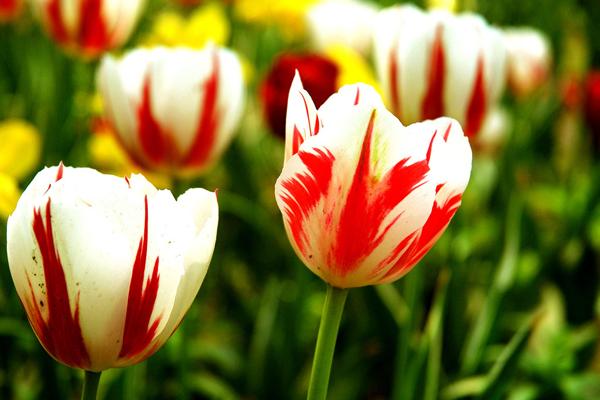
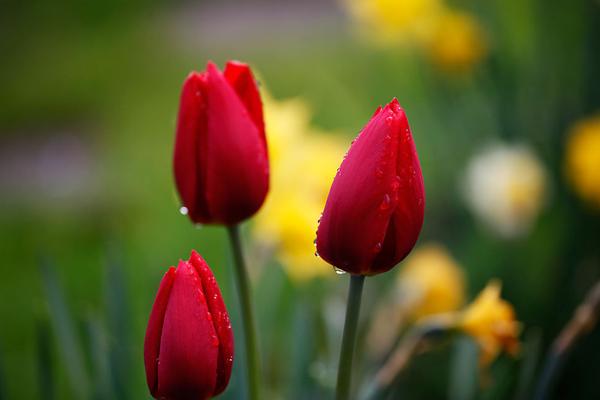
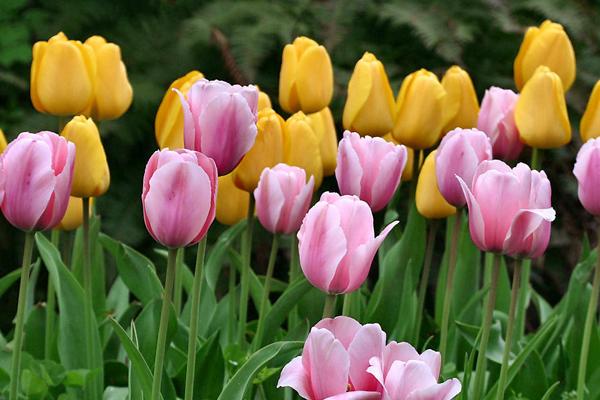
Tulip flower meanings are very rich, and tulips of different colors have different flower meanings. White tulips represent pure affection and purity, yellow tulips represent elegance and preciousness, and black tulips represent mystery. The original tulip flower meanings are the crown of honor, eternal blessing and a declaration of love. From tulip pictures we can see that both the leaves and the flowers are very unique and beautiful, and the reason tulips can have so many flower meanings is also because of this.
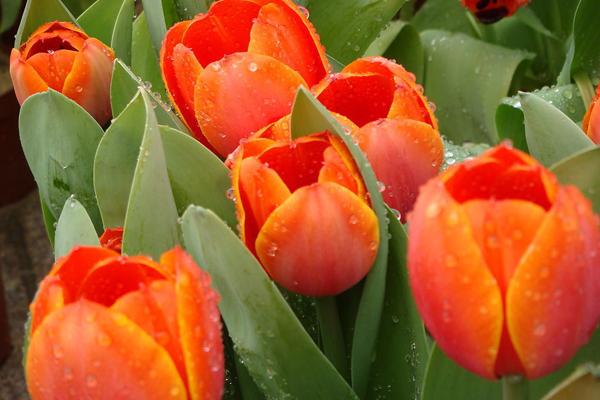
According to legend, in ancient Europe, three handsome knights all declared their love to a beautiful maiden at the same time. One of them gave the girl a sword, one gave her a crown, and another gave her gold. All three knights were outstanding, and the maiden did not know how to choose, so she asked the flower god for help. With the help of the flower god, the maiden transformed into a tulip, the sword became the leaves, the crown became the flower bud, and the gold became the bulb.
Tulip growing methods
1. Light and soil
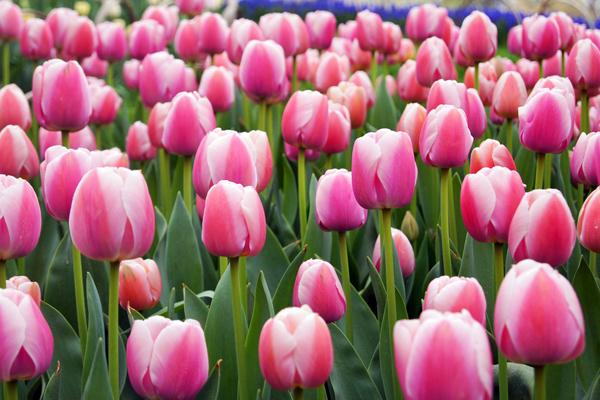
Tulips like sunlight, and usually you should make sure they get plenty of light, but do not leave them exposed to the sun for long periods. When the light is strong, appropriate shading is needed, as this helps the bulbs grow new roots. When light is insufficient, conditions such as poor new root growth from the bulbs, bud drop, paler leaf color, and a shortened flowering period are likely to occur. From most of the tulip pictures we see, it is easy to observe that their planting sites are generally fairly open places, so that sufficient light can be guaranteed. Tulips do not have high requirements for planting soil; just keep it loose and moist.
2. Watering and fertilizing
Newly planted tulips should be watered promptly and thoroughly, so that the soil and bulbs combine closely and fully, which helps rooting. After sprouting, the amount of watering should be reduced. After the leaves grow out, water can be sprayed on the leaf surface to increase air humidity. During the flower stalk stage and the bud stage, watering should be increased; only sufficient water can promote full flower development. After flowering, watering should be controlled. Tulips do not have high fertilizer requirements; just pay attention to supplementing organic fertilizer before and after flowering. If growth is weak, some nitrogen fertilizer can be applied, and it is best to fertilize after the root system has developed well.
3. Pest and disease prevention
Tulip bulbs easily carry pathogens, so they are also relatively prone to damage from pests. From some tulip pictures we can see speckles on their leaves, and some flowers also have messy colors. In fact, these may all be caused by pests, such as color-breaking disease, blind buds, soft rot, and so on. Therefore, in tulip growing methods, pest prevention is essential. During the growth process, a fungicide can be applied 1~2 times a month, and 3% natural pyrethrin can be diluted 800 times and then sprayed.