How Aquaculture Eliminates the Nervous Sensitivity of Discus Fish
Keeping or breeding discus fish is a very interesting, very challenging and very rewarding hobby. But before reaching the realm of success, there are many problems and difficulties. Once you truly break through these obstacles, another successful discus has been born.
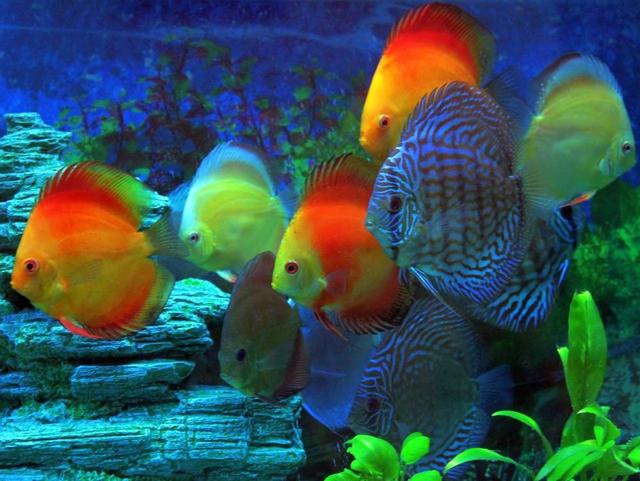
Of course there are too many problems and topics yet to be explored, but what we are discussing here is an obscure and generally greatly overlooked important issue among discus enthusiasts -- the nervous sensitivity of discus fish.
If a group of vibrant discus fish slowly swims back and forth among aquatic plants and driftwood, radiating a striking fluorescent sheen, isn't that wonderful and interesting? If your figure approaches the aquarium, the discus will quickly swim over and stare at you eye to eye, or even beg for food, isn't that fascinating? And when you have visitors and show off the intimate relationship of discus taking food directly from your hand, how glorious and fulfilling that would be! Have you always wished for this kind of interesting and rewarding way of keeping fish?
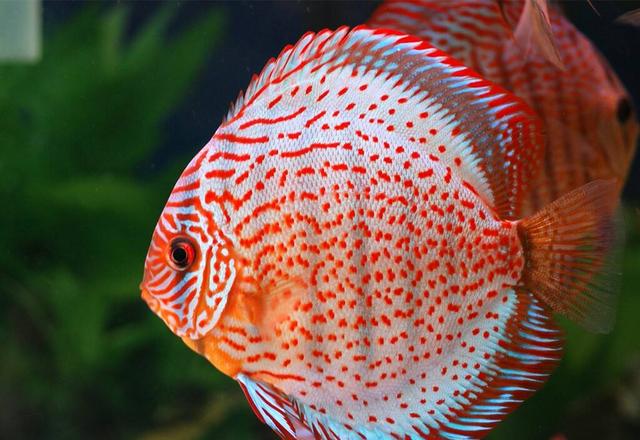
In fact, most discus enthusiasts find that things turn out contrary to their wishes. For example: at an extremely tiny disturbance, the discus will be startled and dash madly into hiding in the dark corner of the aquarium, with dorsal fins erect, and the black vertical stripes on the fish's body surface clearly visible, so clear that you can even count exactly how many stripe lines there are. If your discus is always this nervous and panic-stricken in protecting itself, then this ailment will cause both you and the fish to "fall in battle" at the same time -- the fish keeper feels this hobby has no fun or entertainment value at all, the minds of person and fish cannot communicate, no emotional bond is cultivated, and very soon the hobby is abandoned; furthermore, the fish being in a state of stress for a long time means dull colors, poor appetite, inability to mature and spawn and breed, and even worse, frequent illness and even death; of course, once all the fish are dead, the aquarium is packed away and the hobby is over...
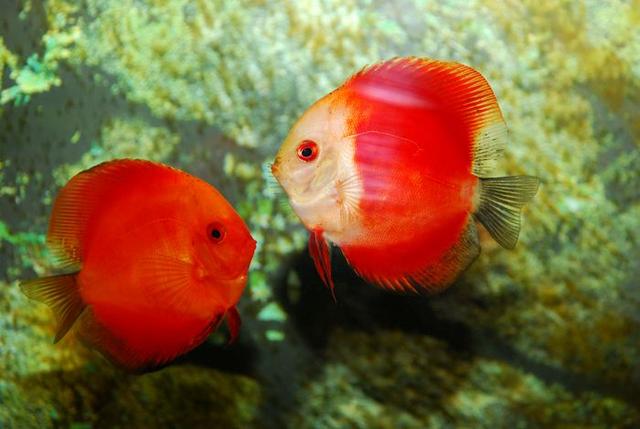
So, when your discus is also this shy and easily startled, what should you do? First, you must understand the behavioral expressions of discus. Among all tropical ornamental fish, the discus ranks as the gentlest and most peaceable large cichlid, its stability is quite high, and it likes to "form small cliques" and swim in schools with discus of the same species; scenes of fighting each other and getting injured rarely occur, their swimming posture and movements are calm and elegant, and when danger approaches, they always frightfully dodge into dark places. Therefore, cultivating familiarity and trust between person and fish is essential. Once a trusting intimate relationship is established, you will find the discus is no longer sensitive and easily startled; they are so friendly and warm toward their surroundings and their owner. Many aquarists have said that the reason red arowanas are so popular, besides the Chinese love of dragons psychologically, is most importantly that arowanas very easily build affection with their owner and can be trained to take food directly from the owner's hand. In fact, discus also have this trait; it just depends on the taming methods, and the most important work is eliminating the environmental conditions that make discus stressed, uneasy and nervously sensitive.
Illness and unsuitable water quality conditions are the main triggers causing discus to be sensitive and stressed. According to personal long-term tracking, the behavior shown in the early stages when discus are infected with protozoan disease or gill fluke disease is being sensitive and easily startled; unsuitable water quality conditions or excessive accumulation of toxins in the water also lead to nervous sensitivity. So, once you discover such behavior in discus, you should treat it as a warning indicator, quickly test the water quality and observe whether the discus is sick.
Maintaining good water quality is the most important work in keeping discus, because discus have a very weak tolerance for ammonia and nitrate; once toxins in the water are too high, the discus's body color begins to darken, and then it becomes ill. Therefore, regular water changes, good filtration equipment, correct pH value, appropriate amounts of feeding, a constant temperature of 28°C and other conditions are all detailed tasks that must be paid attention to.
In addition, the setup and arrangement of the aquarium being appropriate and tasteful is also an important detail. For example: a display tank or breeding tank must be at least 40 cm deep; aquariums viewed from two sides or used as a screen or partition are not suitable for keeping discus, unless this aquarium is very, very wide; and, the side, back and bottom of the breeding tank are best covered with dark brown paper (not blue or black), which can give the discus a strong sense of concealment and security. Dazzling bright lighting is also not suitable for discus; it merely causes the discus to be nervously sensitive, and the beautiful body colors on the discus will fade to a pale color; however, too low brightness or even no lighting is also unsuitable. In addition, a densely planted Dutch-style aquatic plant aquascape is also not suitable for keeping discus; it will only cause the discus to hide away without a trace. The best way to arrange aquatic plants is to use various "wave plants" in the background, such as: large twisted waves, wave plants, and water orchids, twisted orchids and so on; in the middle ground use various Amazon swords, medium fountain plants, small fountain plants or cryptocorynes and so on; in the foreground use carpet plants, mini Amazon swords, Monosolenium tenerum or dwarf pearl grass and so on; of course, appropriately choosing aquatic plants to arrange the scenery according to personal preference, and setting up some driftwood, is completely fine, and for the bottom sand it is suitable to choose black or dark color tones.
The "cohabiting" companions of discus must be small to medium-sized, peaceful in temperament and slow-swimming fish, for example: a group of neon tetras, a few Corydoras catfish, dwarf cichlids or various South American dwarf cichlids are all very good neighbors.