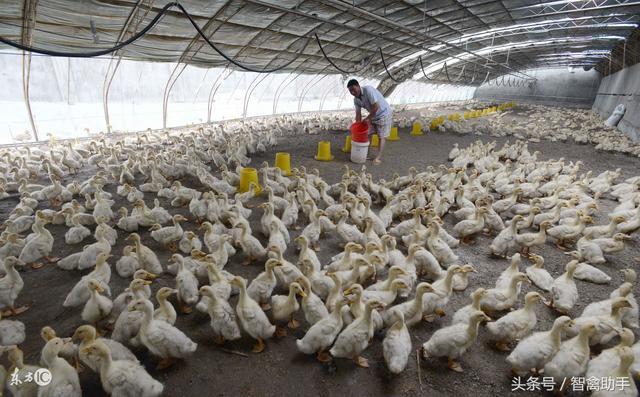
Analysis of Investment Cost and Profit for Laying Duck Farming: Taking 3,000 Ducks as an Example
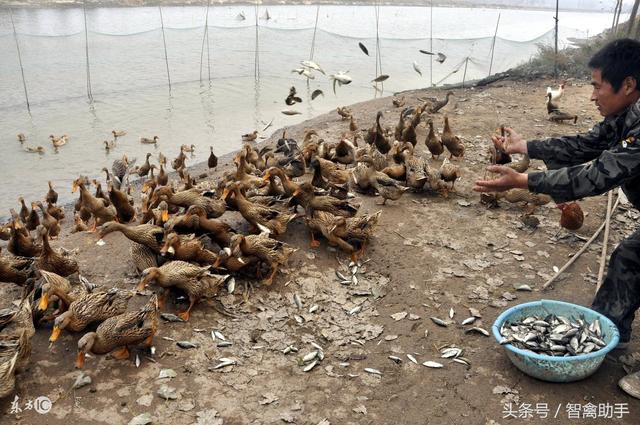
Laying ducks not only have strong stress resistance, simple housing facility requirements, good flocking behavior, easy management, and suitability for large-scale farming, but can also make full use of aquatic and water surface resources and improve feed conversion. Generally, the feed-to-egg ratio of laying ducks is around 2.8:1. Raising one improved-breed laying duck can yield an annual profit of more than 10 yuan. Therefore, raising laying ducks is a wealth-building industry with low investment, quick returns, high benefits, and great potential, suitable for the vast number of farmers, especially those in poverty-stricken areas, to escape poverty and become prosperous. The suitable scale for laying duck farmers is generally 3,000-5,000 birds, raised by 2 people. Such a scale requires little investment, does not waste labor, and is easy to manage, making it relatively economical and moderate. Farmers planning to engage in laying duck production first need to understand the benefits of laying duck farming. Below, taking the farming of 3,000 laying ducks as an example, we will calculate the required costs and benefits.
How much space is needed to raise 3,000 laying ducks
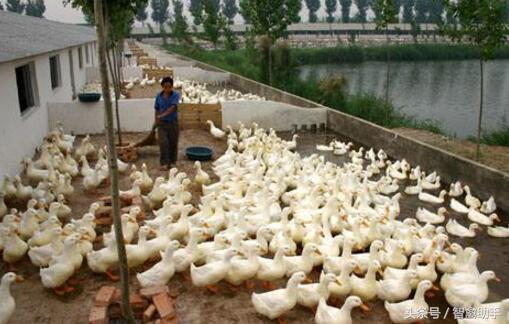
The overall requirements for duck house construction are spaciousness, ventilation, warmth in winter, coolness in summer, and a north-south orientation. Traditional simple duck house construction mainly consists of a duck shed, exercise yard, duck beach, and water enclosure. The duck shed is built with moso bamboo and rice straw, featuring low investment, fast construction, economy and practicality, and good thermal insulation. The size of the duck house depends on the farming scale. Taking the raising of 3,000 young laying ducks as an example, a duck shed of about 400 sq m needs to be built, 34 m long, 12 m wide, with an eave height of 2 m and a roof height of 5.5 m. The ratio of the exercise yard area to the duck house area should be kept at 1.2-1.5:1.
Taking the phased semi-open housing method for raising 3,000 laying ducks as an example, the farming benefits are:
(1) Output budget:
① For 3,000 laying ducks raised for one year, calculated at 280 eggs per bird, the total egg production is 60,000 kg. At a selling price of 7.5/kg, the total output value is 60,000 x 7.5 = 450,000 yuan.
② Culled laying ducks calculated at 18 yuan/bird, 3,000 x 18 = 54,000 yuan.
Total: 504,000 yuan.
(2) Investment budget:
① Young ducks at 14 yuan/bird x 3,000 birds = 42,000 yuan. (Young ducks refer to laying ducks around 100 days old before laying begins.)
② Feed cost: 0.2 kg/day per bird x 1.75 yuan/kg x 360 days x 3,000 birds = 378,000 yuan. ③ Wages, water, electricity, and disease prevention: 25,000 yuan.
④ Duck shed construction: 25,000 yuan.
The total investment for the above items is 470,000 yuan.
(3) Net profit: 504,000 yuan - 470,000 yuan = 34,000 yuan.