African jasmine is suitable for growing at home, the ninth article in the series
African jasmine, originally named hui li, also known by the aliases li yu dan, hui ci mu, qing huang guo, and xiao huang guo, Latin name: Fagraea ceilanica. It is native to southern China and Southeast Asian countries. Its original name is hua hui li mu (Chinese ash jasmine). Its only similarities to jasmine of the Oleaceae family are its opposite leaves and fragrant flowers. Because the homophone of hui li mu is similar to jasmine, and also to make the name sound nicer and easier to sell, florists gave it the new name "African jasmine." It is distributed in southern China and Southeast Asian countries.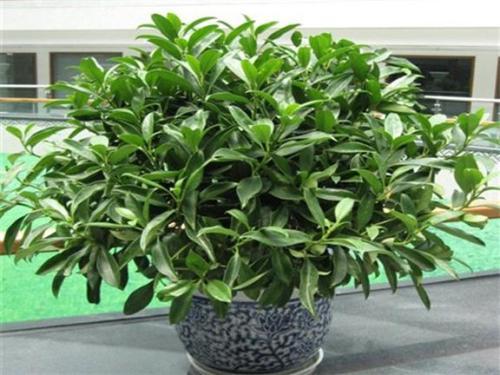 The leaves of African jasmine are relatively thick and emerald green, giving people a pleasant feeling visually. The volatile oils produced by African jasmine have a significant bactericidal effect, can help people relax, are conducive to sleep, and can also improve work efficiency. Moreover, African jasmine flowers have a bactericidal and detoxifying effect in medicinal use. On the other hand, these volatile oils can regulate the body's hormone balance. The fragrance of African jasmine is also light, feeling very fresh, and has a good effect on improving the home environment.
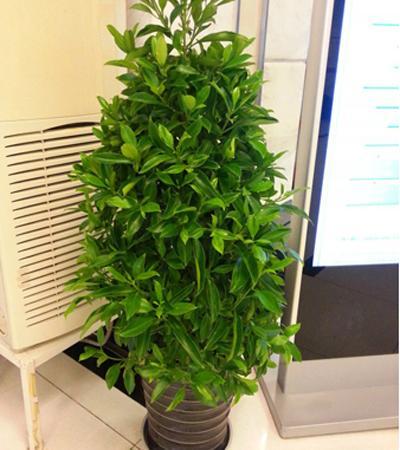 African jasmine cannot be kept indoors for a long time, especially when it blooms, as the floral fragrance fills the air. The components of this fragrance are relatively complex, and different people react differently to the same scent. If the environment is very large and the number of plants is very small, there may not be much of a problem. However, being in an environment with a strong floral fragrance for a long time can easily cause adverse reactions such as difficulty breathing, dizziness, nausea, and chest tightness.
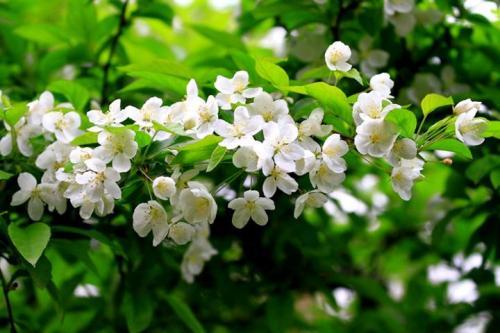
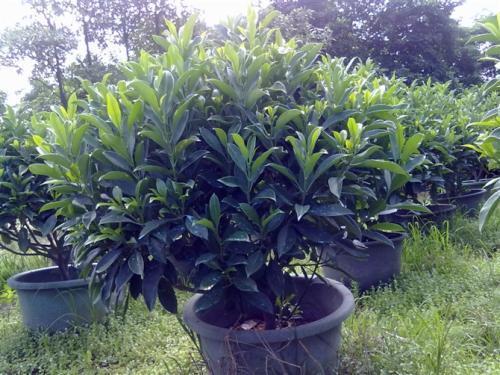 African jasmine can bloom. The flowering period is from May to June. The flowers are terminal, and the corolla is white or yellowish-white. The inflorescence is upright and terminal, with 1 to 3 flowers, and a very short peduncle. The corolla is white, funnel-shaped, fragrant, with 5 lobes on the upper part, and the entire corolla is shaped like a small trumpet. However, African jasmine takes a long time to reach flowering age, at least 5 years, or more than a decade, and ordinary flower enthusiasts can hardly hold out until the moment it blooms.
 African jasmine also has the effect of warding off evil. There is a saying that goes like this: darker-colored plants generally have quite good evil-warding functions. African jasmine is relatively dark in color, leaning toward black, so its evil-warding effect should be quite good.