How to Grow Potted Chrysanthemums? A Detailed Guide to Chrysanthemum Uses, Symbolic Meanings, and Pest and Disease Control
How to Grow Potted Chrysanthemums, Chrysanthemum Uses, Symbolic Meanings, and Pest and Disease Control
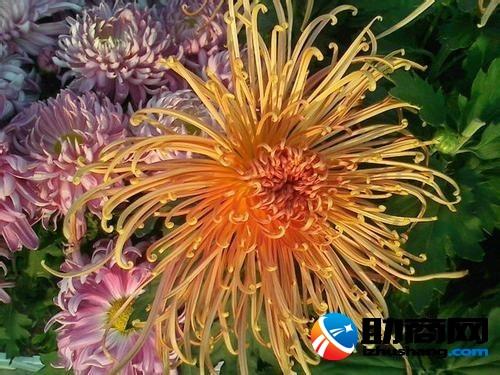
The chrysanthemum is a flower everyone knows and loves. After long-term cultivation and development, there are now more than 3,000 varieties of chrysanthemum. Chinese people love chrysanthemums, so almost everyone grows a few pots of chrysanthemums at home to improve the home environment. How exactly do you grow chrysanthemums? Let's take a look together.
The chrysanthemum ranks third among China's ten famous flowers, is one of the Four Gentlemen of flowers (plum blossom, orchid, bamboo, chrysanthemum), and is also one of the world's four major cut flowers (chrysanthemum, rose, carnation, gladiolus), with the highest production volume. Because the chrysanthemum has the character of enduring cold and defying snow, Tao Yuanming wrote the famous line "Picking chrysanthemums by the eastern hedge, I gaze serenely at the southern hills." Chinese people have the custom of viewing chrysanthemums and drinking chrysanthemum wine on the Double Ninth Festival. Tang dynasty poet Meng Haoran's "Visiting an Old Friend's Farm" says: "When the Double Ninth Festival comes, I will come back for the chrysanthemums." In ancient mythology and legends, the chrysanthemum was also endowed with meanings of good fortune and longevity.
The chrysanthemum is a precious ornamental flower developed through long-term artificial selection and cultivation. Around the 8th century AD, the chrysanthemum was introduced from China to Japan as an ornamental flower. In the late 17th century, Dutch merchants introduced Chinese chrysanthemums to Europe, in the 18th century they were introduced to France, and in the mid-19th century to North America. Since then, Chinese chrysanthemums have spread throughout the world.
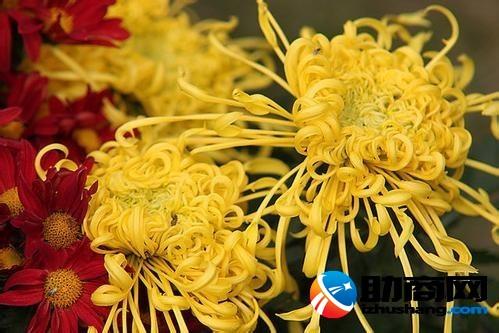
Potted chrysanthemums (pot chrysanthemums)
Single-stem chrysanthemum (variety chrysanthemum, specimen chrysanthemum): Grown from large chrysanthemums, one plant per pot, bearing a single flower, standing alone in beauty. It best fully displays the characteristics and traits of the variety. Besides being ornamental, it can be used for variety identification, hence it is also called variety chrysanthemum or specimen chrysanthemum.
Multi-stem chrysanthemum (multi-head chrysanthemum, multi-head variety chrysanthemum): Grown from large-flowered chrysanthemums, one plant per pot with multiple stems, bearing from several to more than ten flowers. Used for display and viewing in gardens, meeting halls, and similar venues.
Desk chrysanthemum: Large chrysanthemums planted in small pots, one plant per pot, one flower per plant, with upright stems and elegant leaves, the skirt leaves covering the pot, a small plant with a large flower, less than a chi in height, suitable for placing on a small table or desk, and can be used to decorate halls, bedrooms, and studies.
Tile-tube chrysanthemum: Chrysanthemum seedlings are collected and planted in tile tubes. After buds appear, the tile tube is removed and the plant is moved into a pot for viewing.
Sleeve-pot chrysanthemum: Chrysanthemum seedlings are first planted in the ground. When the plants have grown to a certain size, they are sleeved into clay pots through the drainage hole for cultivation. After the color shows, the roots at the bottom of the pot are cut off and the pot is lifted for viewing.
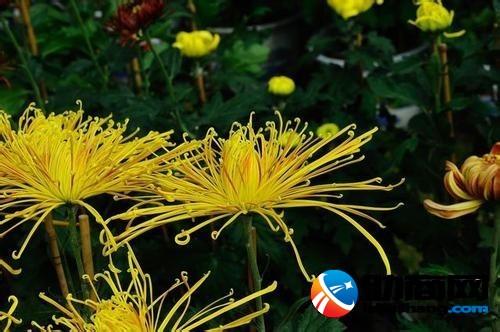
Chrysanthemum uses:
[Chrysanthemum wine]: Made by fermenting chrysanthemums with glutinous rice and distiller's yeast. In ancient times it was called "longevity wine." It tastes cool and sweet, and has effects such as nourishing the liver, improving eyesight, benefiting the brain, and delaying aging.
[Chrysanthemum porridge]: Chrysanthemums are cooked together with japonica rice to make porridge. It is soft, glutinous, and refreshing, and can clear the heart, relieve irritability, please the eyes, and remove dryness.
[Chrysanthemum tea]: Chrysanthemums are brewed as tea. It is fragrant and can relieve summer heat, promote salivation, dispel wind, soothe the throat, nourish the eyes, and sober one up from alcohol.
[Chrysanthemum cake]: Chrysanthemums are mixed into rice paste and steamed into cakes, or made into cakes with mung bean flour and chrysanthemums. It has a cooling and fire-clearing dietary therapeutic effect.
[Chrysanthemum dishes]: "Chrysanthemum meat slices" made by stir-frying chrysanthemums with pork or snake meat, or cooking them with fish or chicken. It combines meat with vegetables, is nourishing without being greasy, clears the heart, and is refreshing. It can be used to treat symptoms such as dizziness and blurred vision caused by upward disturbance of wind-heat.
[Chrysanthemum soup]: Chrysanthemums are boiled or steamed with silver ear fungus or lotus seeds to make soup. Adding a little rock sugar can relieve restlessness and heat, benefit the five internal organs, and treat symptoms such as dizziness and blurred vision. Chrysanthemum pictures (20 photos)
[Chrysanthemum paste]: Fresh chrysanthemums are boiled with water, the medicinal liquid is filtered and concentrated, and prepared honey is added to make a paste. It has the effects of dispelling wind and clearing heat, and improving eyesight.
[Chrysanthemum pillow]: Chrysanthemum petals are dried in the shade and put into a pillow. It has a relatively good therapeutic effect on high blood pressure, dizziness, insomnia, and red eyes.
[Chrysanthemum knee pads]: Chrysanthemums and aged mugwort leaves are pounded into coarse powder and put into gauze bags to make knee pads. They can dispel wind and remove dampness, reduce swelling and relieve pain, and treat arthritis such as crane-knee wind.
[Chrysanthemum fragrance]: It has the effects of dispelling wind and calming the liver. Smelling it has an auxiliary therapeutic effect on colds and headaches.
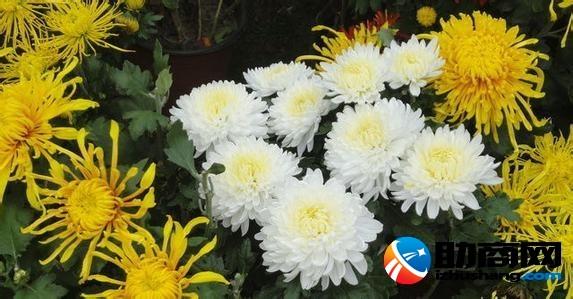
Literary symbolic meanings of the chrysanthemum
1. Symbolizes where the way of heaven lies
During the Three Kingdoms period, Zhong Hui, son of the painter Zhong Yao, wrote "Rhapsody on the Chrysanthemum," believing that the chrysanthemum is born from the interaction of the qi of heaven and earth, making people feel where the way of heaven lies. Therefore, the chrysanthemum is a symbol of the way of heaven.
2. Symbolizes integrity and unyieldingness
The chrysanthemum is also called "yellow flower." In ancient times, the Chinese nation regarded the yellow earth as central, so yellow was also considered the central and orthodox color. The chrysanthemum blooms in defiance of frost, proud and unyielding, symbolizing the integrity and unyieldingness of the Chinese nation.
3. Symbolizes good fortune and longevity
The chrysanthemum has the effect of "a superior medicine for nourishing one's nature, able to lighten the body and prolong life," and is praised as the "longevity guest" among the "twelve guests." People pair chrysanthemums with other flowers, plants, objects, and words with the same sounds to form various richly connoted "auspicious phrase" patterns, to adorn life and seek happiness and longevity.
4. Symbolizes elegance and purity
Qu Yuan's "Li Sao" contains "the fallen petals of autumn chrysanthemums for the western meal." Bai Juyi's "Ode to the Chrysanthemum" contains "Only the eastern hedge chrysanthemum endures the cold; its golden grains first open, clearer at dawn." Both use the chrysanthemum as a metaphor for people of noble conduct, not flowing with worldly ways, a symbol of elegance and purity.
5. Symbolizes the leisure of reclusion
Tao Yuanming's "Drinking Wine" says, "Picking chrysanthemums by the eastern hedge, I gaze serenely at the southern hills." It depicts the carefree contentment of a hermit living in the countryside and was often used by later generations, so the chrysanthemum also symbolizes the tranquil and pleasant life of a hermit returning to the fields.
6. Symbolizes a fighter
Huang Chao wrote, "In the rustling west wind they are planted all over the courtyard; their stamens are cold and their fragrance chilled, so butterflies find it hard to come. If in some year I become the Azure Emperor, I will report that they should bloom together with the peach blossoms." And, "Wait until autumn comes, the eighth day of the ninth month; after my flowers bloom, all other flowers are killed. A soaring fragrance pierces Chang'an, and the whole city is clad in golden armor." In his poems with obvious allegory and inclination, the chrysanthemum becomes a weather-beaten, brave, and strong fighter, pleading for the people and acting on behalf of heaven. At the same time, Tang dynasty poet Cen Shen's "Thinking of Chang'an's Old Garden on the Ninth Day of the March" says, "I force myself to climb high, but no one brings wine; from afar I pity the chrysanthemums of the old garden, which should be blooming by the battlefield." The chrysanthemum also becomes a representative of soldiers.
7. Symbolizes sorrow
Li Qingzhao's "Drunk in the Shade of Flowers" says, "After dusk with wine by the eastern hedge, a hidden fragrance fills my sleeves. Do not say it does not overwhelm the soul; the west wind rolls up the curtain, and the person is thinner than the yellow flower." Li Qingzhao was a female lyricist of the Song dynasty, and in her writing the chrysanthemum became an object for expressing emotions. She used the word "thin" to express her inner sorrow over being long separated from her husband.
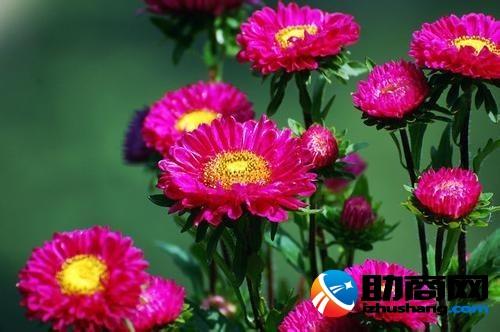
Pest and disease control
Spot blight, also called leaf blight. It begins in mid-to-late April and harms the leaves. Control methods: After harvesting the flowers, cut off the aboveground plants and burn them in a centralized manner; in the early stage of the disease, remove diseased leaves and alternately spray 1:1:100 Bordeaux mixture and 50% thiophanate 1000-fold solution.
Fusarium wilt begins from early June to early July, and the disease is severe after flowering, harming the whole plant and rotting the roots. Control methods: Select disease-free old roots for seed stock; practice crop rotation; make high beds and dig deep furrows to reduce humidity; pull out diseased plants, and scatter lime powder in the diseased holes or drench with 50% carbendazim 1000-fold solution.
Pests: Chrysanthemums are planted throughout the year, providing abundant food and habitat for insect pests and mites. Therefore, whether chrysanthemums are cultivated in net houses or in the open field, they cannot escape damage from insect pests or mites. Important pests on chrysanthemums include aphids, thrips, cotton leafworm, beet armyworm, tomato moth, and two-spotted spider mite. Secondary pests include cutworms, geometer moths, leafminers, whiteflies, tussock moths, mealybugs, and small mites, so the variety can be said to be quite numerous. For chrysanthemums supplied to the domestic market (cut flowers or potted flowers), as long as the quality of the flowers is not affected, a small amount of pest occurrence can be tolerated.
Weeds: Chrysanthemum cultivation mostly belongs to open-field cultivation and is rotated with paddy fields. Generally, dryland weeds common in paddy-dryland rotation fields can all occur in chrysanthemum fields. The competitive harm of weeds is related to the cultivation method of chrysanthemums, weed species, density, competition period, and environmental factors. The competition of weeds for water, nutrients, light, and so on can directly cause poor growth and reduced quality of chrysanthemums, and is unfavorable for field management operations.
What has been introduced above is how to grow potted chrysanthemums, chrysanthemum uses, symbolic meanings, and pest and disease control. I hope it can help everyone.