How to grow succulents? A detailed guide to care methods for beginners
SucculentplantsAs the name suggests, they are called succulents because the plants are full of water and juice. Being full of water and juice means the plant itself holds a lot of moisture, and succulents themselves store a great deal of water. When it comes to growing succulents, although every experienced flower lover has their own set of methods, the core is much the same. For beginners, succulent growing methods are not limited to the question of how to water and care for them; you should also understand how to buy succulents, how to raise seedlings, and other follow-up issues.
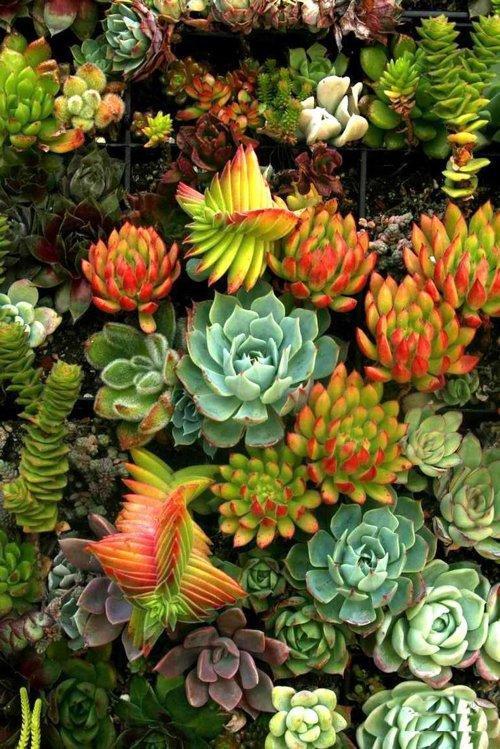
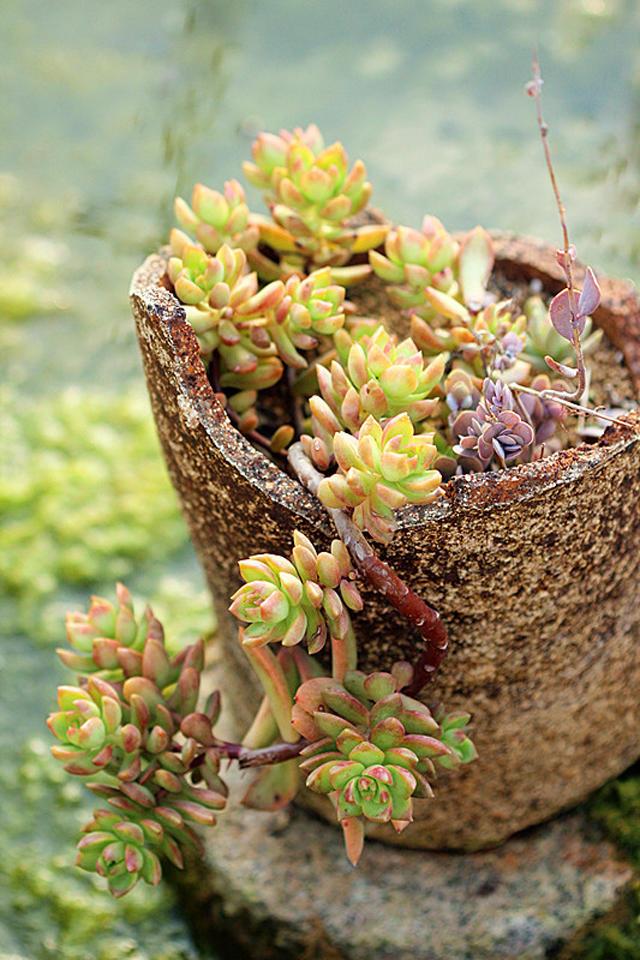
I. Getting started
I once saw a flower lover ask on a forum, what counts as getting started? This is actually a very interesting question. Because the word "getting started" cannot be quantified. Does raising twenty pots count as getting started? Does raising thirty varieties count as getting started? Does raising them for a year and going through spring, summer, autumn and winter count as getting started? My answer is, getting started depends on whether you are growing succulents or buying succulents. Some flower lovers persevere with their succulents, shown by fighting and losing repeatedly, then fighting again after each loss. When they buy them back the condition is very good, but after growing them for a while they deteriorate or die, so they throw them out and swap in a new batch. So at every stage, the succulents in their home are glossy and beautiful, and new varieties keep appearing endlessly. I think that even if such a flower lover grows succulents for ten years, they still cannot count as getting started. This also gives us a way to judge a flower lover's level: the condition seen at a glance does not mean they grow them well, because a temporary condition can be bought. Maintaining that condition cannot be bought. The condition you grow yourself is the real standard; the condition you buy is just money thrown at it.
II. Growing succulents
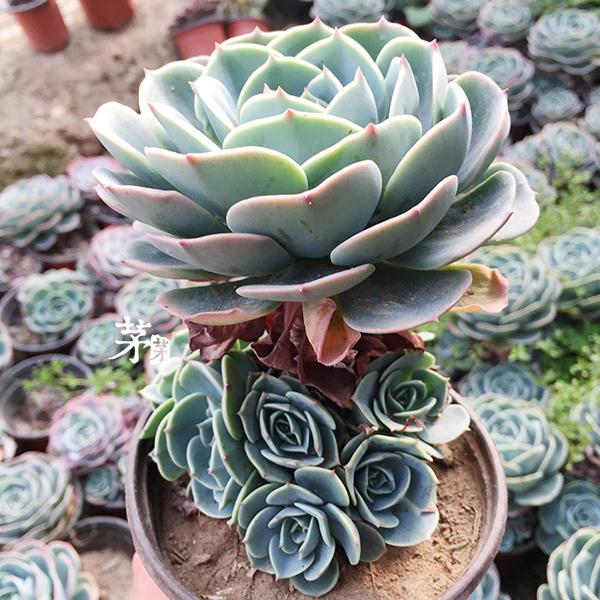
I have a view: if a plant grows well, that must be a gift from nature; if it grows poorly, that must be man-made damage. There is a saying, "All things grow relying on sunlight." I think the sunlight in this saying is a collective noun, and its meaning is not only sunlight, but also environmental factors such as soil, air and water. If a plant grows well, it must be growing in the environment it finds most comfortable. Why do plants in greenhouses grow well? Because the environment in a greenhouse is good: long sunshine hours, high humidity, air circulation, and specially formulated soil. I once went with a friend to a greenhouse to choose succulents, and she chose an unusually plump Angel's Tears. I said this one is very beautiful, but if you take it home it will become ugly in two weeks at most. The environment in a greenhouse is very hard to simulate on an ordinary home balcony. So when we grow succulents, we are simply trying to provide a comfortable environment for the plants as much as possible: sunlight and air circulation, watering when it is time to water, keeping them warm when it is time to keep them warm. If you find your home does not have a suitable natural environment, then it is best to give up growing succulents. "Liking something does not mean you must possess it." Provide what you can provide, and do not force what you cannot provide. For example, if you love a person, and you cannot provide what she hopes for, then forcibly possessing her is meaningless, and the result is only ruining her. If your children are abroad, do not think that bringing the elderly out to live there is enjoying happiness; on the contrary, it is abuse. In growing succulents, what we need to do is provide a good environment. Growing is the plant's own business. If the environment provided is good, the plant will naturally show its condition in return; if there is a problem with the environment, growing poorly is inevitable.
III. Watering
In my view, watering is the thing that most tests so-called "growing skill." Because once the soil is mixed well and the pot is planted, there is usually no special situation that requires digging it out again for at least a year, and the only thing left that can be done repeatedly is watering. Friends who have just fallen into the hobby easily water too much and drown the succulents, because their hands are itchy. Growing succulents is a long-term process; some succulents live longer than people. Although some plants are relatively sensitive to moisture, it is impossible for them to react an hour after watering. So when dealing with plants, patience is essential. I remember when I first fell into the hobby, I bought Er Mu's book and strictly followed the water requirements of each variety in different seasons, set watering times, and even recorded every watering. And the result? Some died, some were damaged. So watering, like people drinking water, will not have good results if you set a fixed time each day, because neither people nor plants are machines. Many flower lovers ask, how should I water? My answer is, I do not know either. We can learn the characteristics of a plant's habits by consulting materials and roughly understand whether the plant likes more water or less water. Then, according to your own growing environment, summarize a set of growing experience that belongs to you; that is what is truly useful. Other people's experience only applies in their environment, and at most has reference value. If you copy it completely, you will also not get good results.
Under some posts asking about watering, there will be replies like "I water every day and they grow especially well," "I use lots of water and lots of sun here, and there is no problem at all." If the original poster lacks experience and follows this, they will know the consequences themselves. A question like how to water is actually almost impossible to answer. It is related to the growing environment, which means it is related to multiple factors. For example, what material the pot is made of, and how breathable and water-retentive it is; what the local temperature is; what the local sunlight situation is; what the humidity is; what soil is used, and how breathable and water-retentive it is, and so on. Even if these parameters can be provided precisely, it still involves the micro-environment of the growing space, the owner's watering habits, and everyone's definitions of different words. For example, "I only watered a little." What counts as "a little"? So I think, to be precise, one should not ask how to water, but ask roughly what a certain plant's water needs are. And those who answer should also try to explain the environmental factors clearly, rather than saying harmful things like "I water this every day and it grows especially well." Those who get the answer must absolutely not copy it without thinking. They should consider how their growing environment differs from the other person's, and then how to adapt the other person's growing experience into experience suitable for themselves!
IV. Purpose
Some people grow succulents to make the succulents comfortable, and after the succulents are comfortable they show their condition in return. Some people grow succulents to make themselves comfortable, and after they are comfortable, what happens to the succulents is not so important. In the end, growing succulents is a kind of play, similar to keeping birds or fish. Everyone can have their own way of playing; the key is to be clear about your own purpose. I believe that people who want to make themselves comfortable only need enough silver to support it; while people who want to make the succulents comfortable have many things to learn. Compared with mature plants, I prefer small seedlings and seeds. Because I hope to have a succulent that shows its condition under my care, although in fact it is not my credit (it is the credit of "sunlight").
V. Common goods and expensive goods
This originally has no clear definition. For the wealthy, there is no such thing as expensive goods in the world. Originally all kinds of plants are equal in nature; people have divided them into different grades. This also involves market factors: things are precious when they are rare, so scarce ones sell for more; ** ones sell for more; this year's greenhouse output is low, so they sell for more. Whether a succulent is good or bad does not lie in whether the price is high or low. As long as it can be grown well, a common good is equally beautiful.
VI. Raising seedlings
As the saying goes: taking a kingdom is easy, holding a kingdom is hard. Sowing seeds is the same principle: sprouting is easy, raising the seedlings to maturity is hard. Moreover, the care of seedlings will differ somewhat at different stages, and different species will need special attention during particular periods (for example, Lithops must not be watered during molting). I know a flower lover who has grown succulents for several years. I asked him why he never sows seeds. He said: do you think raising seedlings to maturity is so easy? Wanting to become a big grower is not that simple. For seedlings to become mature plants, with only home conditions, even if they can grow, their condition will not be as good as bought ones. So he chooses to buy mature plants or semi-mature plants, and then provide them with the best possible environment so they show their condition. This is also a way of playing.
VII. Buying succulents
I believe many flower lovers, like me, initially bought succulents at flower and bird markets or on a certain treasure platform. Flower and bird markets and a certain treasure platform each have their own strengths, and everyone will make different judgments according to their own situation. But ever since I found the local wholesale market, I have not bought succulents at a flower and bird market again. I have also been to greenhouses. Relatively speaking, the prices are more expensive than at the wholesale market, but the appearance is much better than at the wholesale market. The wholesale market is suitable for buying common goods, while greenhouses are suitable for buying expensive goods. This is my experience; market conditions may differ from place to place. Besides the above, I also have two important channels for reference: one is forums, and the other is boutique shops. This is not to speak well of this forum, but the trading section of Xianzhen is absolutely better than a certain treasure platform. Most sellers are very professional, most prices are more affordable than on a certain treasure platform, and there are also more fine goods than on a certain treasure platform. This is also why buying things on Xianzhen requires grabbing them. Many times the goods are both good and cheap, and as soon as they appear they are instantly snapped up. Missing out really makes one sick with regret!
Then what is the concept of a boutique shop? What I call a boutique shop is a shop opened by some old players themselves, possibly in a flower and bird market, or possibly an independent shop. For example, in the Jiangyin Road flower and bird market in Shanghai there is a shop. The master's surname is shi (I do not know which character it is; anyway, I hear people call him that). He has been playing with succulents for fifteen years. The things there are all very good, mainly cacti, caudiciforms, peonies and twelve, and they are all very expensive. I almost never buy things from him; I only occasionally go there to look and broaden my knowledge, and by the way listen to his conversations with others, from which I can also learn something.
VIII. Adjusting to the pot
Another view of mine: newly bought plants all need to adjust to the pot, whether or not they are repotted. Adjusting to the pot means adjusting to the environment, not just the pot. Since the living environment has changed, there must inevitably be an adaptation period. Adjusting to the pot is crucial to a plant's growth. If it adjusts well, it grows quickly; if it adjusts poorly, it takes a long time to adjust, or even remains in a state of maladjustment all along. It is like a person's sub-health state, neither dead nor alive for a long time. What is the principle of adjusting to the pot? Create as suitable a living environment for the plant as possible, including soil, light, air, pot, and so on. This requires us to have some understanding of the plant's habits and know what to do at what time. Not long after I fell into the hobby, it happened to be summer, and the first thing I did with plants I bought back was repot them. Looking at it now, what I did then was a kind of destruction to the plants. Last summer, various places had consecutive high temperatures above 35°C, and many plants entered dormancy, while I repotted them no matter what. This made things worse for plants already living in deep water and scorching fire, so many plants could not hold on and died.
A friend of mine saw that I grew many succulents and thought they were very cute, and wanted to try a pot himself. I got him a pot of Sempervivum to play with. Last December, he said the plant had grown a bit large, and asked whether he should change it to a bigger pot. I said winter was coming soon, so wait until spring begins and then repot. Looking at it now, that decision was a mistake. I had not expected Shanghai to still be in the twenties of degrees on the first day of the lunar year. Had I known earlier, it should have been repotted into a bigger pot in December.
The above are some reflections from my more than half a year since falling into the hobby. There may be mistakes; corrections and exchanges are welcome.