How to grow Buddhist pine (Podocarpus macrophyllus)? Growing methods and precautions, many people get it wrong
Growing requirements: the soil should be rich in humus, loose and fertile, with good drainage. During the growing season, pay attention to watering frequently. In addition, mist the leaves with water regularly. It can tolerate relatively strong light and can also grow in a shadier environment. Fertilise lightly and often, mainly with nitrogen fertiliser, and a suitable amount of black alum can be added. When the outdoor temperature is below 5°C, it should be brought indoors. During the growing season, pay attention to pruning and pinching out the growing tips of established plants to prevent the branches and leaves from growing excessively.
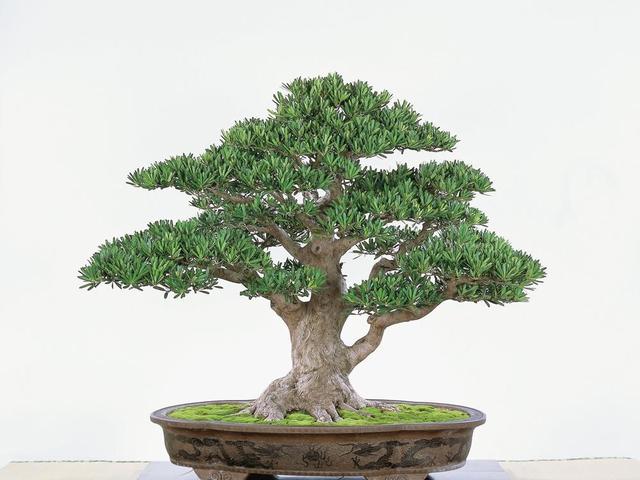
Propagation methods of Buddhist pine
(1) Seed propagation:
After the seeds mature in August, they can be sown as soon as they are collected, or dried in the shade and stored in sand, then sown in March of the following spring. The thousand-seed weight of fresh seeds is 312 grams. Before sowing, loosen the seedbed soil; drilling is mostly used, with a soil cover 2 cm thick. After sowing, build a shade frame. In late April, the seedlings begin to emerge. After one year of cultivation, they can be transplanted.
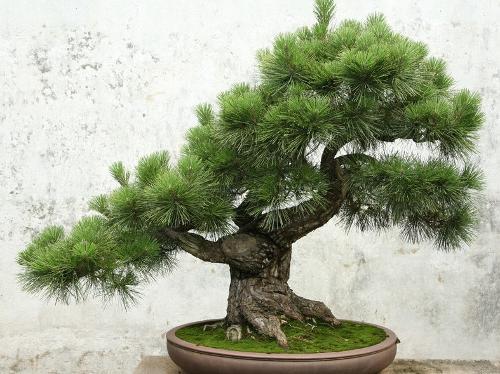
(2) Cutting propagation:
This is mostly done in spring and autumn. If automatic misting and full-light seedling raising are used, softwood cuttings can be taken in June, with a survival rate of more than 80%. The cuttings should be taken with a heel, about 15 cm long, with the leaves removed from the base. Use the usual cutting method, and shade and water promptly after inserting. Spray water once a day, and the soil moisture content should be no less than 70%. Spring cuttings can root by the end of June, and autumn cuttings can root by the end of October. In winter, cover with straw or a plastic arch shed to keep warm, and they can be transplanted in the following spring. For potted plants, use sand mixed with an equal amount of humus soil.
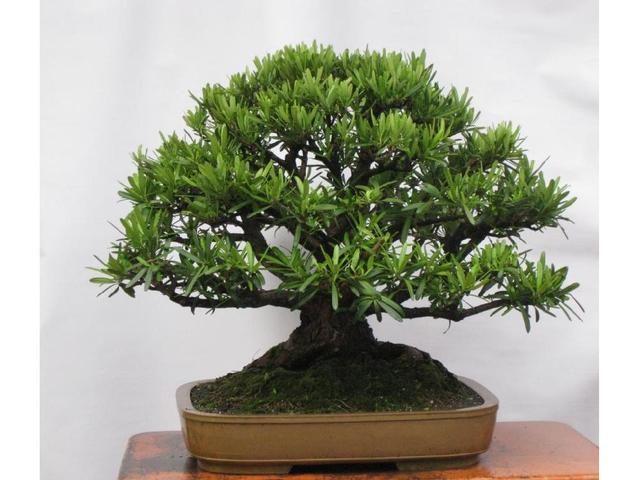
Growing methods for Buddhist pine:
1. Soil:
It requires a slightly acidic growing medium rich in humus, loose and fertile, with good drainage. In alkaline soil, the leaves turn yellow and growth is slow. It is long-lived, reaching several hundred years, or even over a thousand years.
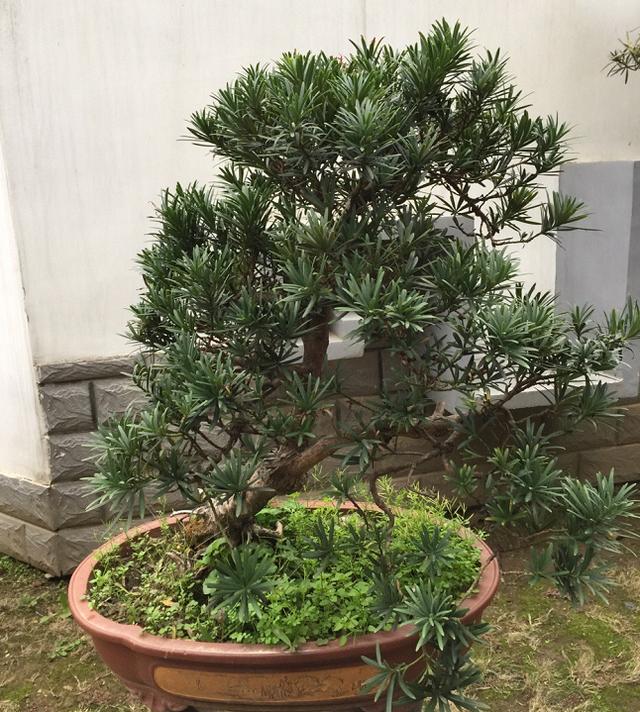
2. Watering:
It is not a member of the pine family (Pinaceae) and is not drought-tolerant. On the contrary, Buddhist pine tolerates shade and moisture. During the growing season, pay attention to watering frequently, but it should not become waterlogged. In the Shunde area, on sunny summer days, pay attention to watering frequently; generally water once in the morning and once in the evening. In addition, mist the leaves with water regularly so that the leaf colour stays fresh green and growth is good. Summer usually brings more rain, and Buddhist pine is not tolerant of waterlogging, so pay attention to preventing prolonged water accumulation.
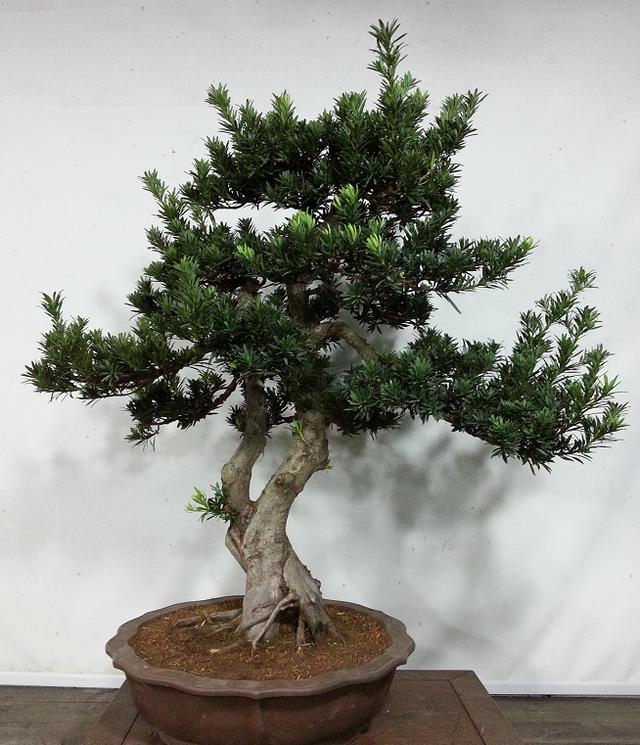
3. Sunlight:
Buddhist pine is a neutrally to shade-leaning tree species. It can tolerate relatively strong light and can also grow in a shadier environment. Although summer temperatures are high and the sunlight is intense, large trees benefit from high temperatures and strong light for maintaining their tree form and leaf shape, so there is no need to shade large trees in summer. However, Buddhist pine seedlings have tender tissues and should not be exposed to strong light for long periods; it is best to keep them under tree shade for care.
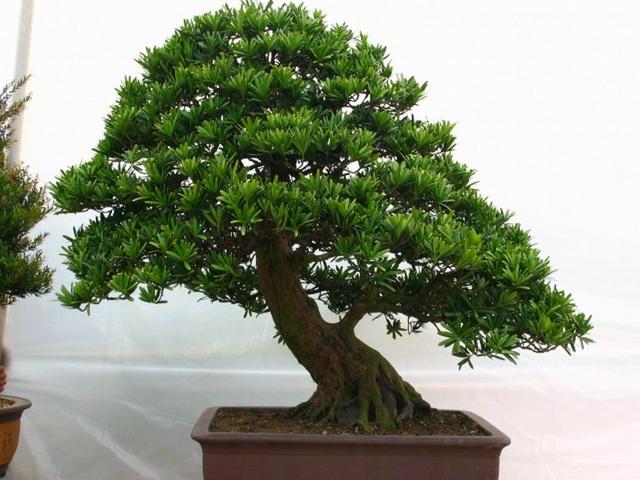
4. Temperature:
For potted plants in northern regions, move them outdoors when the outdoor temperature is stable at around 10°C, and place them in a wind-sheltered, sunny spot for care. After summer arrives, move them to a semi-shaded place. In winter, when the temperature does not drop to 5°C, they should be brought indoors. After bringing them indoors, control watering, and they can overwinter safely as long as conditions do not freeze.
5. Fertilising:
Buddhist pine likes fertiliser, so fertilise lightly and often, mainly with nitrogen fertiliser, and a suitable amount of black alum can be added and composted into alum fertiliser water. During the growing season, fertilise once every 1 to 2 months. Fertilising can be done together with watering (water-to-fertiliser ratio of 9:1).
6. Pests:
The main problems are leaf spot disease and anthracnose, which can be sprayed with a 500-fold dilution of 50% thiophanate-methyl wettable powder. Pests include scale insects, red spider mites and large bagworm moths, which can be killed by spraying with a 1500-fold dilution of 40% omethoate emulsifiable concentrate.
Growing precautions:
(1) During the growing season, it is better for the potting soil to be slightly dry. If watering is excessive and the potting soil stays moist for a long time, it will cause root rot and yellow leaves. In severe cases, a large number of leaves drop and the plant eventually dies. However, in summer the water requirement is greater, so watering should be ample; if the potting soil is too dry, the leaves are prone to scorching.
(2) During the growing period, pay attention to pruning and pinching out the growing tips of established plants to prevent the branches and leaves from growing excessively and to maintain the graceful form of the Buddhist pine. When repotting, pay attention to cutting away excess roots and rotten fibrous roots, and also cut away overly dense branches and excessively vigorous branches.
(3) When the outdoor temperature drops to 5°C in winter, move it indoors. After bringing it indoors, control watering and stop fertilising. Generally, repot once every 2 years; repotting can be done in either spring or autumn. When repotting, pay attention to appropriately cutting away excess roots and decayed fibrous roots, and also cut away overly dense branches, and add fresh growing medium.
(4) For potted Buddhist pine, usually place it on a high platform or stone plinth. This can reduce ants, earthworms and other insects crawling in through the drainage hole at the bottom of the pot and harming the plant.