Successful River Crab Aquaculture Case Study: Pure Practical Value, Worth Saving
Boss Li of Jiangsu has two ponds with a total of 52 mu of aquaculture water surface. At the beginning of the year, he stocked 1200 juveniles per mu. Starting seven days before the Mid-Autumn Festival, he began selling crabs one after another. By the time the ponds were cleared in mid-November, he had sold a total of 14370 jin of crabs, with a yield of 270 jin per mu. The crabs sold for a total of 685,000 yuan; in addition, the mixed-culture mandarin fish and freshwater shrimp also sold for more than 80,000 yuan. Total income was 765,000 yuan, while the total cost was only 180,000 yuan, achieving a profit of 585,000 yuan and a per-mu benefit of 11,250 yuan. The experience of this river crab farmer is introduced as follows:
I. Site Selection and Pond Construction, Supporting Facilities
When selecting a site for the crab pond, the first consideration is an abundant water source with no water pollution. There must be no pollution sources around it that could pose a threat to river crab farming, such as industrial, agricultural, urban domestic, or medical waste. The water quality must be tested and meet the national fishery water standards (Fishery Water Quality Standard GB/T18407.4) and the Environmental Requirements for the Origin of Pollution-Free Food Freshwater Aquaculture NY5361-2010. Newly built crab ponds should be oriented east-west, rectangular, with a single pond area preferably 50-80 mu. The crab pond should have a deep-water zone and a shallow-water zone. Dig trenches around the perimeter (commonly known as a "ring ditch") and build dikes, excavating a water-lifting crab-culture pond with a deep-water zone depth of 1.5 m and a shallow-water zone depth of 1 m. The pond slope ratio should preferably be 1:2.5, the irrigation and drainage system should be complete, and inlet and outlet water should be separated. Anti-escape and anti-theft facilities must be secure. The method is: on the inner side of the pond ridge, use fine-mesh netting plus hard plastic film with an inward overhang to build the first anti-escape net, fix the bottom of the net with stone cages buried in the soil, and make the upper edge 0.5 m above the maximum water level; in the middle of the pond ridge, use calcium-plastic boards to build a second anti-escape wall, with 0.3 m below the soil and 0.5 m above the soil; to prevent outsiders from entering and to prevent theft, a third protective fence also needs to be built on the outer side of the pond ridge. At the same time, equip water pumps and microporous pipeline aeration facilities, and if conditions permit, install an Okdan aquaculture water quality detector or an Internet of Things technology application system.
Okdan Manager Jiang
II. Planting Aquatic Plants and Stocking Snails
Before stocking crab juveniles, enclose 2/3 of the crab pond area with netting and plant three types of aquatic plants in an interspersed manner: Elodea, Hydrilla verticillata, and Vallisneria. At the end of February, plant Elodea in the deep-water zone or ring ditch by cutting stems into sections and inserting them, using 40-50 kg of seed per mu, with a row spacing of 3 m x 4 m; at the end of March, sow Vallisneria in the middle of the crab pond. The grass seeds need to be soaked for 3-5 days, rubbed clean of the outer skin and sprouted until the seeds turn white, then mixed with a small amount of pond mud and water and evenly broadcast along the shallow-water belt, using 0.10-0.25 kg of seed per mu; Hydrilla verticillata is sown in March using its turions, 0.5-1.0 kg per mu, inserting the turions into the mud at a row and plant spacing of 0.5 m, or mixing with mud and broadcasting. Snails are stocked from February to April. After adapting to the crab pond environment, they begin to reproduce from April to May. Young snails are the most suitable food for crab juveniles at their first molt, so the earlier snails are stocked, the better. Before stocking, wash the snails clean and use drugs such as strong chlorinated lime or dibromohydantoin to kill bacteria and protozoa on the snail bodies. Stock 250-300 kg of live snails per mu, evenly scattered in the shallow-water zone. They can also be stocked in two batches, with an additional 150-250 kg stocked from June to August. Two stockings can prevent a large single stocking from causing clear and lean water quality in the early stage and massive growth of cyanobacteria, which would affect the growth of river crabs.
III. Selecting and Stocking Crab Juveniles, Mixed Culture of Fish and Shrimp
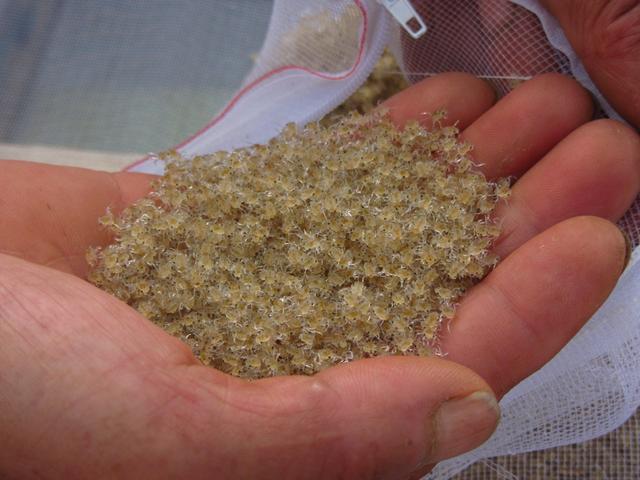
To prevent the specifications and quality of purchased crab juveniles from being unreliable, crab juveniles should preferably be self-bred and self-raised. Crab larvae should be purchased from improved seed farms with authentic parent crab sources and larger specifications (female parent crabs 150 g each, male crabs above 200 g each). During the rearing period, operating procedures must be strictly followed, and drugs must never be abused, as this can damage organs such as the hepatopancreas of crab juveniles. Crab juveniles are stocked from February to March, and the best specification is 140-160 individuals per kg. During stocking, strict sorting is required. Crab juveniles stocked in the same pond must have consistent specifications. If crab juveniles with greatly different specifications are placed in the same pond, molting will be asynchronous, leading to mutual cannibalism and a low recapture rate. The stocking density should be controlled at about 800 individuals per mu. To improve the utilization rate of the crab pond, according to the biological principle of symbiotic mutual benefit, a small number of species such as freshwater shrimp, mandarin fish, silver carp, and bighead carp can be mixed-cultured in the crab pond, which can improve the economic benefits of crab farming and avoid market risks. Generally, from March to May, stock 0.5 kg of egg-bearing freshwater shrimp per mu, 5-15 mandarin fish, and about 50 silver carp and bighead carp.
Okdan Manager Jiang
IV. Precise Feeding and Water Quality Regulation
River crab feed includes natural food such as aquatic animals, snails, and aquatic plants in the pond. Artificial feed is mainly complete formula feed, appropriately supplemented with trash fish, corn, wheat, and so on. Throughout the whole process, feeding must grasp the "degree." The consequences of feeding too finely and too much are reduced crab movement, rotting residual feed, deteriorated water quality, rotten roots of aquatic plants, reduced dissolved oxygen, cyanobacteria outbreaks, and frequent crab diseases. Precise feeding should grasp three key periods: before the first molt, during the high-temperature season, and around the last molt. When the water temperature rises to 8-10 degrees C, use fresh trash fish to feed for the start of feeding, with a feeding amount of 2%-3% of the body weight of the crabs in the pond; starting in May, feed formula feed, gradually increasing the daily feeding amount from 3% to 8%; in the high-temperature season, feed formula feed with a protein content of 32%-38%; in late August, the daily feeding amount is 8%-10%, appropriately supplementing trash fish and corn, with feeding time at 5-6 PM. Water quality regulation includes water level and water quality adjustment. The water level of the crab pond should be controlled at 0.3 m in March, then increased by 0.1 m each month thereafter, reaching 0.9 m in September. If continuous high temperatures occur, the maximum water level can be increased to more than 1.1 m. The water quality of the crab pond should aim to be fresh, lively, tender, and refreshing, maintaining a transparency of 0.3-0.5 m. Use an Okdan aquaculture water quality detector: dissolved oxygen above 5 mg/L, pH 7-8, ammonia nitrogen not exceeding 0.2 mg/L, and nitrite below 0.02 mg/L.
V. Strengthening Management and Controlling Crab Diseases
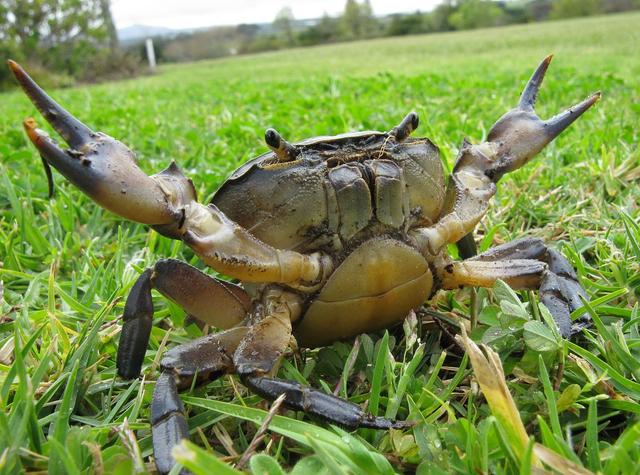
First, the pond must be cleared well. Before stocking crab juveniles, drain the pond water and dry the pond for 15-30 days, then dissolve 100 kg of quicklime per mu and splash it evenly over the whole pond after mixing with water. After 7 days, drain the pond water, then inject new water of about 0.2 m after filtration, and splash 0.5 kg of strong chlorinated lime per mu over the whole pond. Second, water must be managed well. From June to September, apply biological agents once every 10 days to regulate water quality, and apply a substrate improver once every 5 days to improve the substrate, adjusting water and improving the bottom 7-8 times per month on average, to promote the degradation of organic matter in the water body and bottom of the crab pond. Third, aquatic plants must be protected well. According to the growth of aquatic plants, timely mowing should be adopted. From late April to early July, cut off the upper part of Elodea and control it 0.15 m below the water surface. Aquatic plants floating on the water surface should be removed in time. Fourth, insect killing and disinfection should be carried out. From the end of April to the beginning of May, use drugs such as zinc sulfate to kill ciliates once. After an interval of 1-2 days, use bromochlorohydantoin or iodine preparations to disinfect the water body, and use Chinese herbal medicines to make granular medicated bait, continuously feeding for 5-7 days, doing preventive work well to prevent disease occurrence; before the end of the plum rain season and the arrival of high temperatures, use drugs for another round of prevention to control disease occurrence during the high-temperature period; in mid-September, combine water disinfection and oral medicated bait to supplementally kill ciliates. During the farming period, conduct regular sampling inspections. If signs of crab disease are found, take corresponding measures in time to prevent trouble before it occurs.
Okdan Manager Jiang
VI. Grasping the Market and Listing at the Right Time
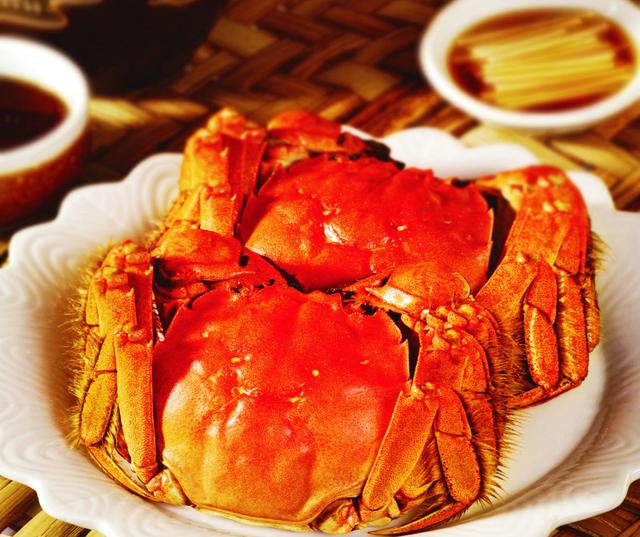
Adult crabs, especially large-specification crabs, have relatively high prices before the Mid-Autumn Festival and National Day. After the "two festivals," there is a price decline process. Therefore, in management and technical measures, the crabs in the pond should reach the standards of rich paste, full roe, and hard shells before the "two festivals," and be listed and sold at the right time and at the right price according to the river crab market conditions.
VII. Input-Output and Benefit Analysis
Inputs: seedlings (130000 crab juveniles, shrimp juveniles, mandarin fish juveniles, silver carp and bighead carp juveniles, grass seeds), feed (formula feed, snails, corn, trash fish), water and electricity fees, drugs, wages, land rent, interest, and others. Output includes adult crabs, freshwater shrimp, mandarin fish, and silver carp and bighead carp.