How to grow air plants? Learn the correct cultivation methods
[Introduction]Air plants are a variety of pineapple, a perennial herbaceous plant that can be grown either in pots or directly in the ground. This is a relatively small plant, some are even less than 10 cm tall. Air plants are generally grown using hydroponics more often, because this method is cleaner than soil cultivation, has better ornamental effects, and is relatively simpler to carry out.
Air plants have graceful flowers, rich and colorful blooms, and flexible leaf shapes, with excellent ornamental effects, and they can also beautify the home and purify the air.
Morphological characteristics of air plants
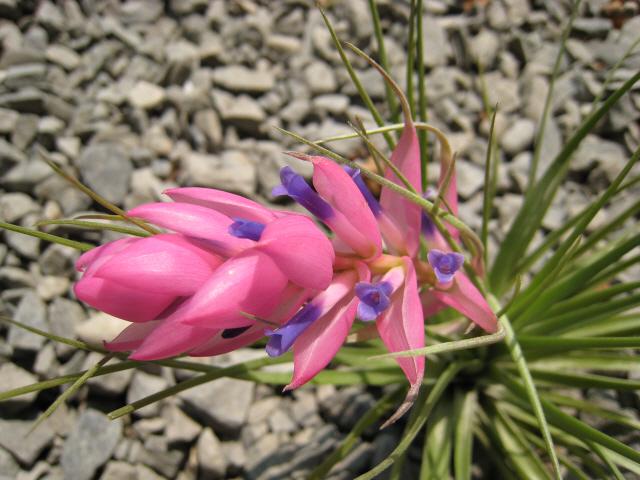
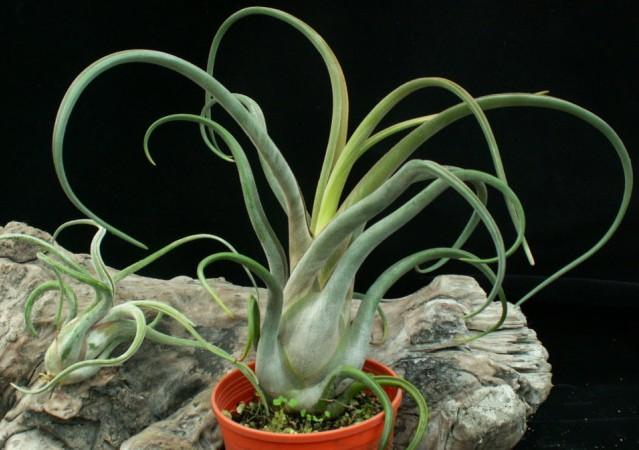
Air plants are perennial herbaceous plants. There are many varieties; some varieties' clumps can reach 2 m in diameter, while others are less than 10 cm. The plants are rosette-shaped, tubular, linear, or radial, with lanceolate or linear leaves that are upright, curved, or curled at the tips. Besides green, leaf colors also include gray-white, blue-gray, and others; some varieties' leaves even turn a beautiful red under conditions of sufficient sunlight. The leaf surface is densely covered with white scales, but the center of the plant has no "water-storing tank."
The spike or compound spike inflorescence of air plants emerges from the center of the leaf rosette. The inflorescence has densely growing and brightly colored bracts or green to silvery-white bracts, with small flowers born inside the bracts, in colors such as green, purple, red, white, yellow, and blue, with 3 petals. The flowering period is mainly concentrated from August to April of the following year. After the capsule matures, it splits open automatically, releasing seeds with plume-like pappi that drift with the wind and spread in all directions.
How to grow air plants
Container: The cultivation containers for air plants mainly include shells, stones, dead wood, tree fern boards, rattan baskets, etc. For fixing, you can use wire or rope to tie them, or use all-purpose glue or hot melt adhesive to stick them to the container. Air plants can also be cultivated by hanging; tie them with copper wire or rope and hang them in the air. Never put it in a tank to grow; air plants need a very large amount of air circulation, and they will rot in a stuffy tank.
Temperature: Air plants originated in the highlands of Central and South America, and can tolerate low temperatures of 5°C. The suitable growth temperature is 15°C-25°C. When above 25°C, pay attention to misting to humidify and cool down. In Jiangnan and South China, if winter temperatures stay above 0°C, heating is not necessary. In addition, under dry conditions, air plants can better tolerate lower temperatures and harsh climate conditions.
Watering: Air plants can be misted with a spray bottle 2-3 times a week, and in dry seasons they should be misted once a day. When misting, spray until the leaf surface is fully wet and be careful not to let water accumulate in the leaf center. If too much water is sprayed, turn the plant upside down to let the excess water drain out. Generally speaking, air plants only need to be given water at night; the specific amount depends on the environment and the condition of the plant, which requires growers to control flexibly according to the situation. Air plants have extremely strong stress resistance; when they look slightly dry, their resistance can reach its peak. Plants that look tender and soft have very low resistance, and at the slightest disturbance they are prone to disease and rot. Therefore, in cultivation, I personally think it is better to let the plant be slightly dry, so that it can maintain a healthy state.
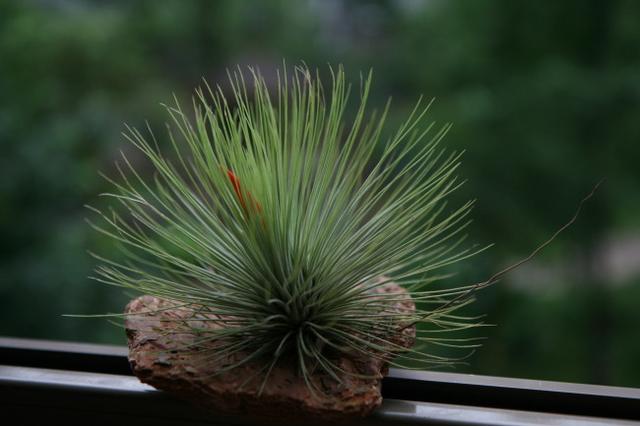
Light: Varieties with grayer leaves and more numerous and thicker white scales need stronger light; varieties with greener leaves and fewer, softer scales are more shade-tolerant. When cultivated indoors, they should be placed in a place with bright light. If the light is insufficient, it will cause the plant to become leggy and weak.
Fertilizing: In an artificial cultivation environment, you can use Hyponex or potassium dihydrogen phosphate plus urea diluted 1000 times with water and spray it once a week. You can also soak the plant in a fertilizer solution diluted 3000-5000 times for 1-2 hours. Fertilizing can be stopped in winter and during the flowering period. You can give liquid fertilizer, foliage liquid fertilizer, mix 3000CC water with 1GM liquid fertilizer and spray it as water, once every three days or once a week.
Diseases: Sunscald often occurs in environments with sufficient light. The reason is improper handling: when misted water on the leaf surface does not dry in time, the water droplets act like a convex lens and burn the leaf surface beneath them, but it will not spread. Usually, just pay attention to ventilation during care.
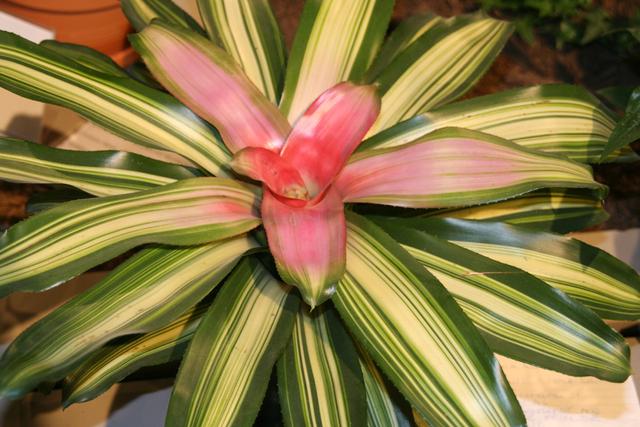
It can be seen that air plants are plants that do not need soil and can survive with occasional misting; they can be used to purify the air and absorb formaldehyde. They can also be used as indoor decorations and are very suitable for decorating studies, windowsills, and other places.
Follow WeChat ID: xiaobency, shared every day around 9 o'clock, listened to by ten thousand people