If you have a spider plant at home, you need to know these cultivation tips!
Spider plants have an extremely strong ability to absorb harmful gases. If you have just renovated your home, be sure to place several pots of spider plants around the house to purify indoor air and absorb the formaldehyde released by furniture. But if you do not know how to grow spider plants, it is very easy to kill them. Today I will introduce the cultivation methods for spider plants.
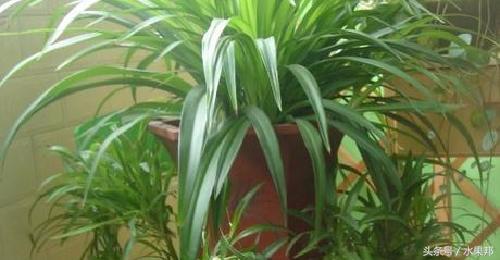
Cultivation Methods for Spider Plants
The spider plant is a perennial evergreen herbaceous flowering plant with fibrous roots. It has varied forms and is also highly shade-tolerant and easy to manage. It is often used as a hanging potted plant for indoor decoration or garden landscaping. The following points should be mastered in its care:
Light: Spider plants prefer semi-shaded environments. In spring and autumn, avoid direct exposure to strong sunlight. In summer, when sunlight is especially intense, they should only receive some slanting light in the morning and evening, and 50%-70% of sunlight should be blocked during the day; otherwise the leaf tips will dry up. Variegated varieties are especially afraid of strong sunlight. A spider plant with golden edges will grow more beautifully in a place with weak light, with the yellow edges more obvious and the leaves more glossy. However, in winter it should receive more sunlight to keep the leaves tender and fresh green. When grown in pots at home, spider plants should be placed in front of a south-facing window; otherwise the leaves will lose their luster and may even wither.
Temperature: The optimum growing temperature for spider plants is 15-25°C. If the winter temperature drops below 5-7°C, attention must be paid to cold protection and insulation.
Watering: Spider plants like moist environments, and the potting soil should be kept moist regularly. In summer, watering should be sufficient. Around noon and in the evening, water should also be sprayed on the branches and leaves to prevent the leaves from drying out. Indoor areas often have a lot of dust. If a spider plant accumulates too much dust, it will not only affect its growth but also diminish the fresh and bright appearance of the branches and leaves. Therefore, the branches and leaves should be sprayed and washed frequently to keep them bright and attractive. Dead and yellow lower leaves should be removed at any time. Normally, maintain normal humidity; it should be neither too dry nor too wet.
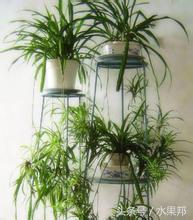
Fertilizing: Spider plants are foliage plants that are relatively tolerant of fertilizer. If fertilizer and water are insufficient, they are prone to scorched tips and aging, with yellowing leaves, losing their ornamental value. From late spring to early autumn, apply organic fertilizer liquid once every 7-10 days. However, for variegated varieties such as those with golden edges or golden centers, less nitrogen fertilizer should be applied, so as to avoid the variegation fading or even disappearing and affecting their appearance. Organic fertilizer made by fermenting bone meal, eggshells, and the like can be appropriately applied. After full fermentation, take an appropriate amount of diluted liquid and apply it once every 10-15 days to make the variegated leaves bright and vivid.
Changing soil and repotting: In the management of spider plants, to achieve lush stems and leaves, the soil should be changed and the pot replaced once every year in March. If the pot is relatively deep and the base fertilizer is sufficient, repotting can be done once every two years. When repotting, knock the plant out of the pot, cut off dead and rotten roots and excess roots, replace with new culture soil rich in humus, and then apply livestock hoof and horn pieces or fully decomposed cake fertilizer as base fertilizer. After planting, place it in a semi-shaded, warm place to recover. The optimum growing temperature for spider plants is around 25°C. After the plant has recovered and resumed vigorous growth, hang the pot under a corridor eave or in a suitable indoor position. Generally, the height should be such that it does not bump your head, and attention should be paid to ventilation.
How do spider plants propagate?
Spider plants can be propagated by cuttings, division, sowing, and other methods. Cutting and division propagation can be carried out at any time from spring to autumn. Spider plants have strong adaptability and a high survival rate, and are generally very easy to propagate. For cuttings, simply take a 5-10 cm stolon with new buds and insert it into the soil. It will root in about one week, and after about 20 days it can be transplanted into a pot. Water thoroughly and place it in a cool place for care.
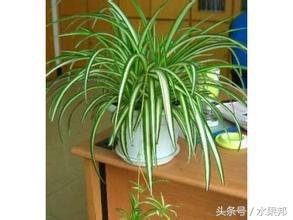
What should be done if spider plant leaves turn yellow?
Yellowing leaves during the growth of spider plants can be caused by many reasons:
First, too much fertilizer was applied, exceeding the plant's needs. At first the leaves become glossy and uneven, then the root system rots and the leaves turn yellow. Fertilizing should be stopped, more clean water should be poured, or the plant should be repotted, the roots cleaned, and new soil replaced.
Second, the pot has not been repotted and the soil has not been changed for a long time. The various nutrient elements contained in the potting soil have been exhausted, and the three major elements nitrogen, phosphorus, and potassium have not been replenished in time. The plant lacks nutrients, and the leaves appear yellow and thin. It should be promptly repotted with fertile loam and watered with alum fertilizer water.
Third, although spider plants are semi-shade-loving flowers, they still need at least four hours of diffused light every day; otherwise chlorophyll decreases and the leaves turn yellow.
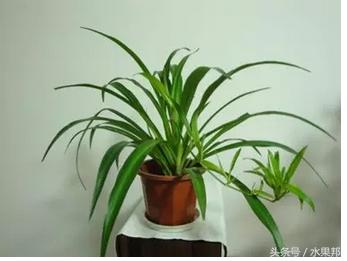
Fourth, the potting soil has poor air permeability and water permeability. If the potting soil retains water and does not dry out for a long time, root respiration becomes difficult, causing the leaves to turn yellow. The soil should be loosened in time and moisture controlled.
Fifth, watering has long been insufficient to penetrate through. The roots of the spider plant lose water, and the lower old leaves turn yellow. Water thoroughly and keep the potting soil warm and moist.
Precautions
The above is an analysis of the key points for cultivating spider plants. As long as you grasp the four major points - liking cool shade, frequent spraying, frequent fertilizing, and frequent repotting - growing beautiful spider plants will be no problem.