How to farm cicada nymphs? A delicacy that rural children all love to eat
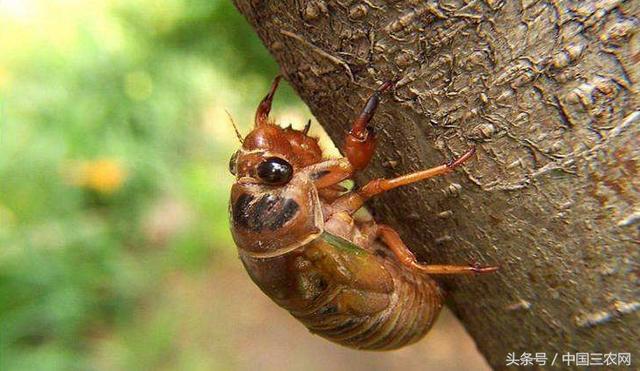
1. Obtaining seed stock. Primary seed stock can be collected naturally in the field; eggs, nymphs and adults can all be collected as seed stock. From July to September, all life stages can be collected; August to September is the best season for collecting nymphs; September is the best time for collecting cicada egg-bearing branches, and they can be collected throughout the year.
For egg collection, choose an ideal site with dense trees and abundant cicadas, use fruit-tree pruning shears or a long pole with a hook at the tip to gently remove the 1- to 2-year-old thin dead branches on the trees that were killed by cicada egg-laying. Any branch that is flat and withered on one side with an incomplete surface and has large numbers of milky-white oval eggs embedded in the xylem beneath the bark is a cicada egg branch. Cut off the excess egg-free dead tips above the egg-laying scar, leave 10-15 cm of egg-free branch below the egg-laying scar, bundle about 50 branches into a small bundle, and place it in a plastic bag for later use. To capture nymphs, target naturally matured final-instar nymphs. Nymphs can be collected from 7 to 12 p.m. by shining a flashlight on the base of the tree trunk; after collection, place them in a gauze cage to emerge and lay eggs. In the egg-laying gauze cage, plant shrub-like host plants, mainly various seedling fruit trees.
There are many ways to catch adult cicadas on trees, such as using a fire to attract them at night. To ensure the adult cicadas are not damaged, wheat gluten can be used to stick them: wash kneaded dough with water repeatedly to remove the starch, leaving pure gluten, stick it on the tip of a bamboo pole, and use it to catch adults in the early morning or during the day. Collecting egg-laying branches should be the main way to obtain seed stock.
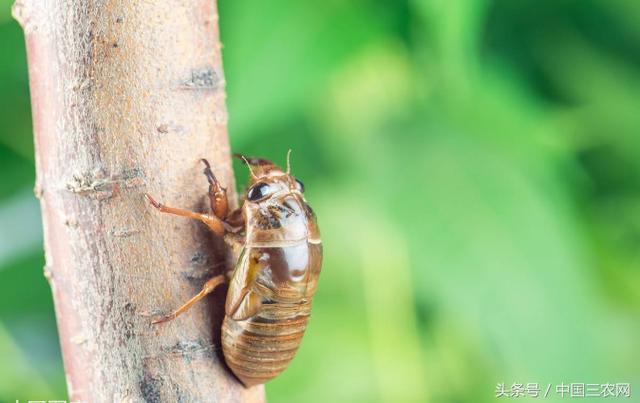
2. Seeding cicadas. The targets for seeding are newly hatched nymphs and eggs close to hatching. Place the egg-bearing branches collected directly from the field or from the seed stock site together indoors to promote hatching. Hatching method: in a plastic box 70 cm long, 40 cm wide and 20 cm high, spread a 5-10 cm thick layer of fine dry sand on the bottom, place the bundles of egg branches upright or horizontally on it, and continuously spray a fine mist with a small sprayer to keep the air around the egg-bearing branches at high humidity so that excess water droplets are absorbed by the fine sand at the bottom. Check the hatching of the eggs repeatedly in between; once nymph activity is found, the branches together with the fine sand can be placed in the breeding site for seeding.
The seeding time is generally September to October (two-year eggs) or June to July (eggs of the current year). On the ground under the host plants at the breeding site, about 1 m away from the base of the trunk, dig regular narrow trenches about 30-50 cm deep, in shapes such as rings, squares, triangles, parallel lines or radiating lines, for the purpose of later digging and harvesting. After "seeding", cover with soil and press firm, and keep records of the time, quantity, "seeding" trench shape and depth.
From the egg stage to growing and developing into a mature nymph (the cicada nymph), the cicada needs to grow underground for three winters and summers (actually 2 years): in the first year it begins growing in June, and in that year its body weight is only about 1 g, and the whole body and eyes are milky white; in the second year its weight develops to about 3 g, the body pigmentation deepens, and the eyes are pink; in the third year the nymph (cicada nymph) matures, weighing 4.5-5 g, with an average of 210 per kilogram; at this time the body color is brown and the eyes are black-gray. Based on body weight, depth of body color and changes in eye color, the time age stage of nymph growth and development can be accurately judged.
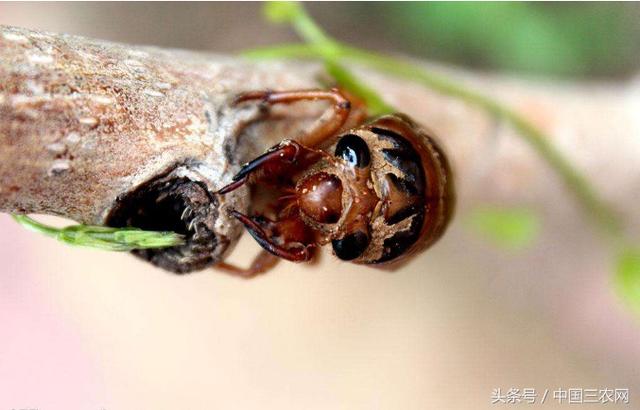
3. Supplying high-quality feed. Choose healthy tree species with well-developed root systems, vigorous growth and abundant sap, such as poplar, elm, willow, paulownia or various fruit trees in orchards. In addition, interplant some root and tuber plants, such as potatoes, sweet potatoes and Chinese yam.
4. Providing good environmental conditions. The suitable "seeding" depth for cicadas is 30-50 cm; it should face the sun and be protected from freezing, and the soil should be loose, fertile and pollution-free; it must not be too dry, nor have too high a water content or water accumulation, so as to ensure normal growth and development of the host plant roots, which should be young, tender, well-developed and juicy. In winter, cover the seeding area with wheat straw, rice straw, corn stalks, etc., to maintain ground temperature.
5. Building production facilities for adults and nymphs. In addition to collecting cicada eggs naturally, gauze net greenhouses can be set up to provide space for adults to lay eggs. Fruit trees in abandoned orchards can be used, or fruit tree seedlings can be replanted; cement pillars or bamboo poles can be used to set up a fence around the perimeter, with wire pulled in between, and then covered on the outside with nylon window screen. Adults that have emerged or been collected mate and lay eggs inside; afterward, the number of adults to keep can be determined as needed, and there is no need to collect seed stock from the field again.
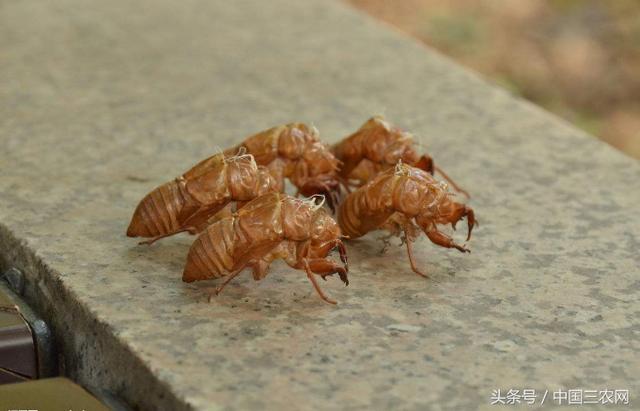
6. Doing good epidemic prevention. Nymphs after emerging from the soil (cicada nymphs) and adults after emergence have many natural enemies, such as toads, snakes, rodents, hedgehogs, feral cats, sparrows and mantises, all of which like to eat nymphs (cicada nymphs); microorganisms such as Beauveria bassiana, Metarhizium anisopliae and entomogenous algae fungi (cicada flower) also parasitize and harm them. In addition, floods and pollution from pesticides and chemical fertilizers also cause relatively great harm to nymphs (cicada nymphs) or cicadas, so attention and protection should be given during breeding.
The most important seasons are the egg stage on trees, the "cicada ant" occurrence period, and the emergence period of mature nymphs. The main natural enemies during the egg stage on trees and the cicada ant occurrence period are ants and red flower bugs; the treatment measures are soaking the egg-bearing branches in a 100-fold solution of strong ammonia essence or treating the soil with DDVP, strong chlorine essence, etc.