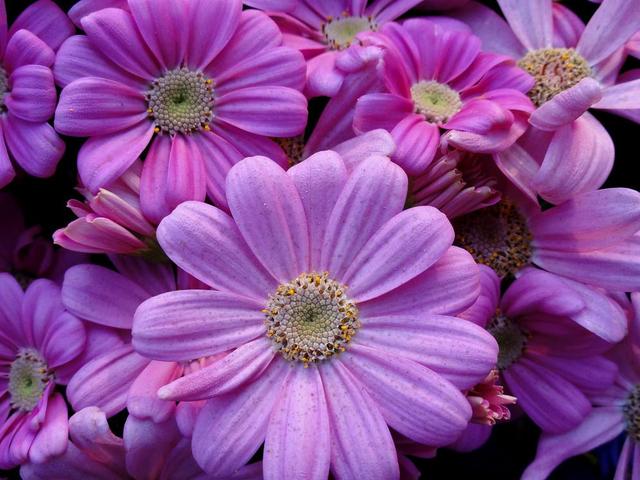
How to grow cineraria (Pericallis × hybrida) so it thrives
Other names for cineraria: cucumber flower, ganrilian, cineraria lotus. Place of origin: the Canary Islands, Spain. Cineraria flowers vary greatly in form and can be divided into four types: large-flowered, star, intermediate and double. The colors are brilliant and rich, giving it high ornamental value. Below are the detailed growing points.
1. Soil choice: Cineraria grows well in loose, fertile, well-drained sandy loam, and soil with a pH of 6.5 to 7.5 is more suitable for cineraria growth.
2. Temperature: The optimum temperature during the growing period of cineraria is 10 to 15°C. If the temperature is too high, the plant tends to grow leggy and the internodes elongate, which affects its ornamental value; if the temperature is too low, plant growth is inhibited, the flowers become smaller, and the plant may even suffer cold damage.
3. Light: ① Cineraria is a light-loving plant, so during the growing period it should be placed in a sunny spot with good light for care. It should be placed in front of a bright south-, west- or east-facing window for at least 4 hours of light every day to keep the flower colors brilliant and the plant sturdy.
② In summer, place cineraria in a semi-shaded spot to avoid direct strong light, otherwise the leaves tend to curl, dry out and lose their vitality.
4. Cultivation: ① For sowing, the soil can be prepared by mixing leaf mold and fine sand at a 1:1 ratio. After the potting soil is thoroughly soaked with water, scatter the seeds evenly on the surface of the soil and cover lightly with fine sand, with the thickness such that the seeds cannot be seen.
② After sowing, cover the surface of the pot with glass or plastic film to keep it warm and moist. At a temperature of 20°C, place it in a cool spot, and it will sprout in 7 to 10 days.
③ After the seedlings emerge uniformly, the glass or plastic film can be removed for ventilation, and the seedlings should gradually be moved into the sunlight.
④ About one month after emergence, when the seedlings have grown 2 to 3 true leaves, they can be pricked out. Water once with a dilute liquid fertilizer, and transplant the pricked-out seedlings into small flower pots with a diameter of 10 cm.
⑤ When the seedlings have grown 5 to 6 true leaves, they can be planted in flower pots with a diameter of about 20 cm. When potting, a small amount of long-acting base fertilizer should be applied at the bottom of the pot.
5. Watering: Cineraria leaves are large and thin, so the plant has a high water requirement, but it should not be watered too much. Watering should be moderate, and it is best to keep the potting soil moist at all times. If water is lacking, the leaves will wilt and droop, and when severely short of water, the leaves will turn yellow, dry up and wither.
6. Pruning: During the growing period of cineraria, side buds sprouting from the leaf axils of the branches and leaves at the base of the plant should be removed in time, while the upper axillary buds should be retained, so as to reduce nutrient consumption and avoid the branches and leaves becoming too crowded, thereby concentrating more nutrients for the growth of the upper flowering branches, which helps produce more, larger and more brilliantly colored flowers.
7. Fertilizing: ① During the growth and development period of cineraria, it needs to be watered once every 7 to 10 days with a dilute, fully decomposed fertilizer solution until the bud stage, which can make the seedlings grow sturdy and bloom abundantly. For the dilute fertilizer solution, fully decomposed soybean cake or peanut cake, spoiled soybeans or spoiled peanuts can be used, diluted 10 times with water before application.
② During the flowering period, cineraria needs 1 to 2 applications of phosphorus and potassium fertilizer, with little or no nitrogen fertilizer, to promote flower bud growth and inhibit leaf growth. Before flowering, too much nitrogen fertilizer should not be applied, the amount of watering should be controlled, and the plant should be moved to a low-temperature balcony on the shady side, because too high a temperature in its growing environment can easily cause the leaves to grow excessively large and affect its ornamental value.
8. Propagation: Cineraria is mostly propagated by sowing, and varieties that do not easily set seed can be propagated by cuttings. From April to October, people can sow in stages according to their own needs. If it is required to bloom before New Year's Day, sow in early April; if it is required to bloom around the Spring Festival, sow in mid-May; if it is required to bloom before the Spring Festival, sow from October; if there is no requirement for the flowering period, sowing in April to May is preferable.
9. Pest and disease control: Cineraria often suffers from verticillium wilt, which is mainly caused by viral pathogenic bacteria and is generally spread by leafhoppers. In infected plants, the opening of the inflorescence is suppressed, the flower color turns green, and development is abnormal, with occasional flower overgrowth. To control this disease, potassium fertilizer can be appropriately applied during the period of transplant growth to enhance the plant's disease resistance and reduce the chance of virus infection; appropriately spraying a 0.5% potassium permanganate aqueous solution for disinfection can also have a preventive effect; once a plant is found to be infected with the virus, the diseased plant should be pulled out immediately and burned to prevent its spread.