Advantages and Disadvantages of Vertical Grinding and Mixing Machines for Livestock Farming, and How to Maintain and Repair Them
Among the machines used in livestock farming, there is one machine that basically every farmer who supplements feed with corn will use.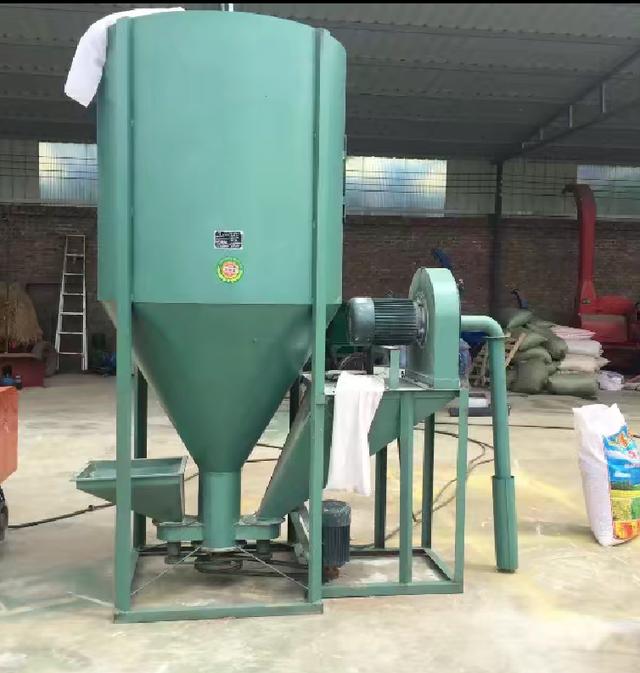 Vertical grinding and mixing machine
This kind of machine is very common, relatively simple in structure, reliable in performance, cost-effective, and frequently used. It is one of the indispensable pieces of equipment on a livestock farm.
This machine generally has two models and feeding methods: the 500 model and the 1000 model (representing the volumetric weight of the machine chamber, with the number expressed in kilograms). The working methods include self-priming type and screw-lift forced-feeding type. Because the forced-feeding type easily burns out the main motor, it is rarely seen now. Today I will use the 1000 self-priming type to explain the points to pay attention to.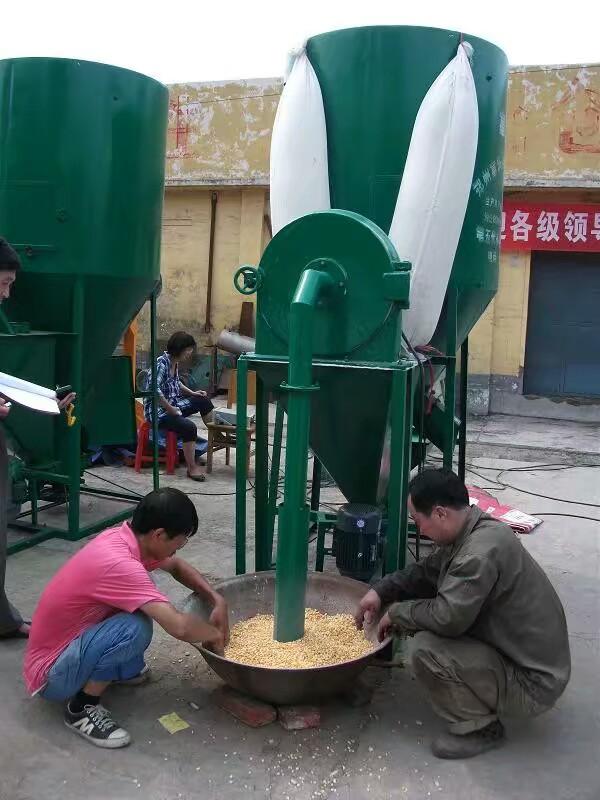
This machine mainly consists of a self-priming grinder, a mixing and lifting auger, and a feed bin combination. The main component of the self-priming grinder is the suction fan disc assembly.
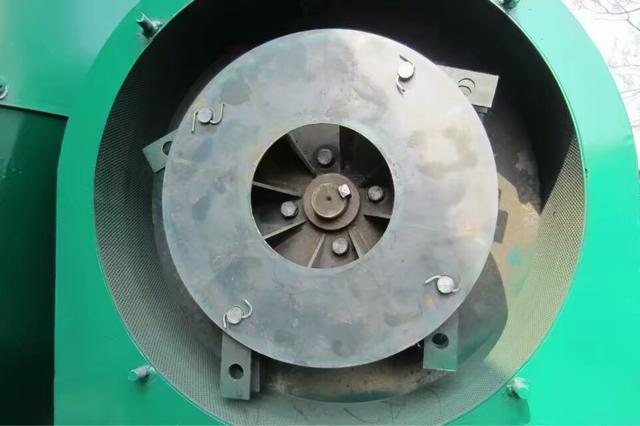 The fan disc assembly is made of steel plate, No. 45 steel pins, and manganese alloy hammers. It is adjusted and produced on a dynamic balance test bench at 3,000 revolutions per minute, with deflection required to be within 5 grams. This maximally ensures uniform force on the motor shaft bearing, increases the service life of the motor, and prevents the whole machine from vibrating or running off during operation. The main motor is generally 7.5~11 kilowatts, 2-pole, with a speed of 2,900 per minute. Through high-speed centrifugal motion, it creates negative pressure in the suction pipe, thereby achieving self-priming of grain into the grinding chamber, allowing the material to collide with the hammers in a high-speed environment and be ground. The ground material reaches below the screen aperture and then enters the lifting and mixing chamber.
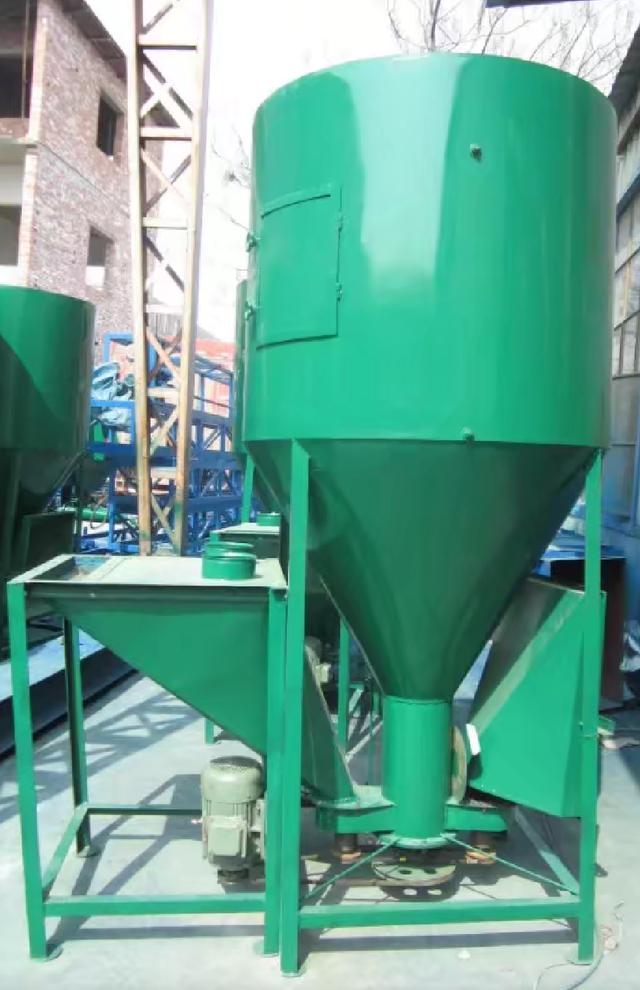 The mixing chamber uses screw lifting and mixing. The materials to be mixed are added through the feed inlet at the bottom. The lifting screw inside the feed mixer moves the mixed materials from the feed hopper of the vertical mixer into the vertical screw conveyor, lifts them upward to the top, then scatters them in an umbrella shape, falling from around the mixing cylinder, and re-enters the vertical screw conveyor from the gap at the bottom of the sleeve, being lifted upward again. This cycle of mixing continues until the mixture is uniform, and it is stored in the feed bin, ready to be taken as needed (mixing motor 3 kilowatts, 4-pole, 1,450 per minute).
Faults and troubleshooting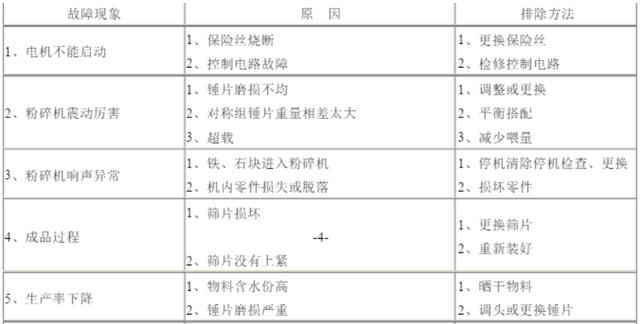
For the maintenance requirements of the grinding and mixing machine, apply grease to the main power bearing every six months, check whether the wiring terminals are loose, add a strong magnet at the grain suction port to remove iron, install indoors, and protect from rain and moisture.
Regarding the advantages and disadvantages of this machine, the following points should be noted.
First, whether the main motor is a copper-wound motor. Because the machine load will not be stable, a copper-wound one must be chosen.
Second, the grinder housing can be divided into steel plate and cast iron. Relatively speaking, cast iron parts have greater vibration resistance and weather resistance than steel plate.
Third, the amount of vibration during operation is the main way to judge the balance of the suction disc. The smaller the vibration, the better the machine performance.
Pay special attention: when replacing the suction disc hammers, be sure to number them first, weigh them after removal and keep a record, then make sure each group of replacement hammers has equal weight. Otherwise, it will cause severe vibration of the machine and equipment, making it unusable.
If any farming friends still have anything they do not understand, you can leave me a message.