What are the advantages and disadvantages of silage corn farming? The pros and cons explained clearly at once
As the scale of farming of cattle, sheep and other herbivorous livestock continues to expand, the application of silage feed in pigs has also attracted the attention of the industry, and the demand for green feed is constantly increasing. In response to the national call to "develop straw-based animal husbandry" and "adjust the structure of livestock and poultry farming," farms are working hard to promote the use of crop straw as feed, which has significantly improved the quality of silage feed.
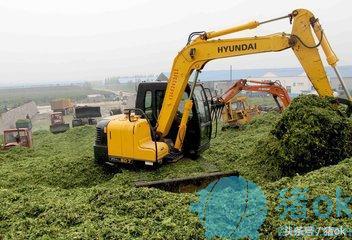
The crop straw most commonly used is corn straw, and its utilization has gone through two stages: simple corn straw silage and whole-plant corn silage. At present, most farms practice whole-plant corn silage, that is, loading green corn straw and green, juicy ears together into a silo, where under anaerobic conditions lactic acid bacteria ferment to produce lactic acid, thereby inhibiting the reproduction of other microorganisms, preventing further fermentation, and preserving the nutrients.
It is understood that silage corn is relatively common in dairy cattle farming; not only do most farms use corn silage feed, but they basically ensure year-round feeding. Originally, silage corn was mainly concentrated in autumn, storing summer-sown corn, with less storage of spring-sown corn. To alleviate the problem of insufficient forage supply during the transition between summer and autumn for dairy cattle and other herbivorous livestock, some farms actively organized silage-making of spring-sown corn, achieving multi-season corn silage. In recent years, while vigorously promoting the use of silage corn feed on dairy farms, some beef cattle and sheep farms have also begun to use silage feed.
However, silage corn also has quite a few problems. At present, some farms have an insufficient understanding of transforming the economic development model, comprehensively utilizing natural resource consumption, and developing grain-saving and straw-based animal husbandry; they lack enthusiasm for the silage utilization of crop straw and are content with traditional and habitual practices. In addition, funding is also a huge challenge facing the development of grain-saving silage corn. Some farms are unwilling to invest, believing that building silage pits and purchasing silage machinery and facilities requires a relatively large investment, that self-growing or purchasing silage corn ties up funds in a concentrated way, and that potential benefits are not visible, so they are content with small-scale operations.
According to expert analysis, silage corn feed has unique natural advantages. From the farm's perspective, feeding corn silage feed allows dairy cattle to eat high-quality green feed year-round; under the same management, milk yield can increase by 10%-14%, milk fat percentage can increase by 10%-15%, milk protein can reach above 3%, and milk fat can reach 4%, raising the purchase price by more than 7% compared with ordinary raw milk, with significantly improved economic benefits.
From the perspective of corn growers, after ordinary corn matures, the gross income per 667 sq m (1 mu) is more than 1000 yuan; if whole-plant corn silage is made at the dough stage, the yield per 667 sq m is 3.5-4 tons, and at the current purchase price, the gross income is 1100 yuan, basically the same income. However, when planting, silage corn can be appropriately planted densely, with a yield per 667 sq m reaching more than 6 tons. If a dedicated silage corn variety is planted, the yield will be even higher, and the income per 667 sq m can reach 1600 yuan or even higher; moreover, harvesting and selling whole-plant corn at the dough stage can save labor for corn harvesting, threshing, drying and so on compared with selling grain and straw after maturity.
The above is all the content of "The Rights and Wrongs of Silage Corn." To learn more exciting content, please continue to follow Pig OK Network. Editor in charge: Alin