Traditional Chinese Medicine Analysis of Mycoplasma Synoviae in Poultry Farming
Traditional Chinese Medicine Syndrome Differentiation of Mycoplasma Synoviae
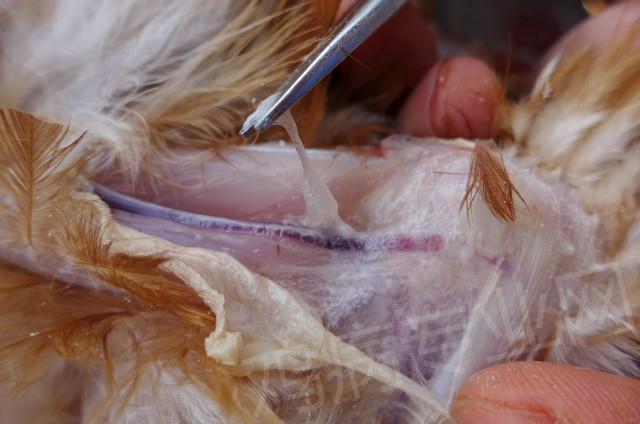
Mycoplasma synoviae disease is also known as infectious synovitis of chickens. The typical symptoms are swelling, lameness, and even deformity of the tarsal and metatarsal joints; in chronic cases, hard nodules may appear on the keel of the chest, which then soften into a thoracic cyst. Large blisters appear under the skin of the chest keel. In early-stage sick chickens, a pale yellow, clear, gelatinous mucus can be seen, which gradually turns into a turbid, viscous, cheese-like yellow-white exudate present in the sternal bursa and the tendon sheaths around the tarsal joints.
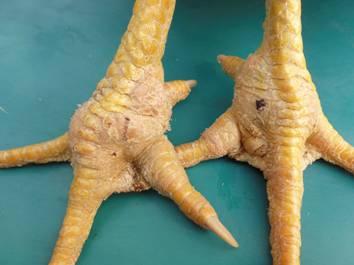
Traditional Chinese Medicine syndrome differentiation:
The fluid of water-dampness rises from below and is distributed throughout the body under the propulsion of yang qi. Therefore, any factor that affects the distribution function of yang qi can induce the occurrence of this disease, and thus cold and dampness become the chief culprits. The liver, spleen and kidney are located below and are responsible for the upward distribution of water-dampness. When the liver and kidney are deficient, water-dampness invades internally, and therefore rheumatic diseases are invariably related to abnormalities in the functions of the liver, spleen and kidney.
It belongs to the dampness pathogen disease among externally contracted diseases, mainly invading the body's center-of-gravity area (that is, the area where water-dampness accumulates) and the joint areas (that is, the gap areas through which the body's six excesses can invade). When the body's water-fluid distribution is imbalanced, areas with gaps and low position tend to accumulate fluid. The characteristic of water is to flow to low places, and the lowest parts of a chicken's body include the sternum and joints. These places are where excess water-fluid stagnates. Stagnation generates heat, which gradually turns into a cheese-like phlegm substance.
Treatment methods:
First expel water, then regulate the balance of water-fluid metabolism.
My method of learning Traditional Chinese Medicine is to combine it with phenomena in the natural world and draw analogies between them and the phenomena of the body, which makes it easier to understand. Just as water circulates in nature, water circulates in the body in the same way. For example, earth qi rises to become clouds, and heaven qi descends as rain; in the body, this is also how water and fire are brought into balance. When there is too much water, it must be a water imbalance, so one should find ways to manage the excess water, such as dredging, transforming, drying, and warming. In the body, one can likewise use the four natures and five flavors of medicinals to simulate nature's methods and thereby achieve the management of water.
Evaporation: Dried ginger and aconite are both pungent and hot substances. Both can warm the interior and dispel cold. Used together, they can treat internal exuberance of yin cold with failure of spleen yang.
Drying dampness: Atractylodes macrocephala is used for water-dampness retention, phlegm-fluid, and edema. To treat cold fluid, it can be combined with Poria cocos, cassia twig, and the like; to treat edema, it is often used together with Poria peel, areca peel, and the like.
Transforming dampness: Agastache rugosa and Eupatorium fortunei often appear together in my prescriptions. These two medicinals are representatives of aromatic dampness transformation and have the effect of diffusing dampness in the triple burner.
Dredging: Poria cocos and Alisma orientale are both sweet, bland, mild and gentle. Used together, they enhance the effect of draining dampness and promoting urination.
To learn more about Traditional Chinese Medicine poultry farming knowledge, follow us.