Detailed Explanation of the Hazards of Livestock and Poultry Manure and Fermentation Treatment Methods
The Regulations on the Prevention and Control of Pollution from Large-Scale Livestock and Poultry Breeding, adopted at the 26th executive meeting of the State Council on October 8, 2013, clearly stipulate that the state supports and encourages comprehensive utilization methods such as returning manure to fields, producing biogas, generating electricity, and manufacturing organic fertilizer. They encourage and support the combination of planting and breeding to absorb and utilize livestock and poultry breeding waste, promoting the local and nearby utilization of livestock and poultry manure, sewage, and other waste. These provisions are conducive to promoting the greater flow of livestock and poultry manure and other waste toward comprehensive utilization, thereby reducing environmental pollution at the source.
1、Characteristics of livestock and poultry manure:
The main characteristics of livestock and poultry manure are:
(1) High in organic matter and rich in nutrients;
(2) Contains pathogenic bacteria and other harmful organisms, making it epidemiologically unsafe;
(3) In some regions, livestock and poultry manure also contains large amounts of heavy metal contamination and antibiotic residues.
Reports indicate that livestock and poultry manure is rich in crude protein, crude fat, crude fiber, minerals, and nutrients such as calcium, phosphorus, potassium, and nitrogen. It can not only be used as feed for pigs, chickens, cattle, and other animals, but is also a high-quality fertilizer source with extremely high application value. Therefore, composting and fermenting large amounts of livestock and poultry manure into organic fertilizer to achieve harmless treatment and resource utilization of livestock and poultry manure, and to reduce the application of chemical fertilizers, is of great significance for protecting the ecological environment and promoting sustainable agricultural development.
Generally, livestock and poultry manure contains large amounts of pathogenic bacteria (such as Salmonella, Escherichia, respiratory enteroviruses, etc.), parasites, and weed seeds. Therefore, livestock and poultry manure must undergo high-temperature fermentation before it can be applied.
2. Resource utilization pathway for livestock and poultry manure - biological high-temperature aerobic fermentation
3.2.1 Hazards of direct application or incomplete decomposition of livestock and poultry manure
If livestock and poultry manure is applied directly without decomposition or is not thoroughly decomposed, the consequences are extremely serious.
(1) Root and seedling burning: Organic fertilizer that is not thoroughly decomposed will begin to ferment under suitable conditions after being applied to the soil. If the fermentation zone is close to the roots and the plant is small, the heat generated by fermentation will affect crop growth and, in severe cases, lead to plant death.
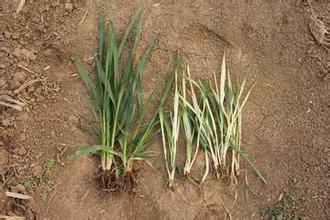
Root and seedling burning
(2) Spread of diseases and pests: Organic fertilizer that has not been decomposed or is not thoroughly decomposed contains pathogenic bacteria and pests such as E. coli and roundworms. After application, it will lead to the spread of diseases and pests.
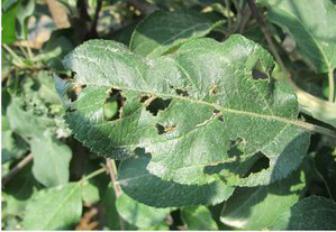
Spread of diseases and pests
(3) Heavy metal contamination: In some regions, livestock and poultry manure contains relatively high levels of heavy metals such as mercury, chromium, cadmium, lead, and arsenic. Direct application will cause secondary pollution to the environment, inhibit plant growth, and cause heavy metal levels in plants to exceed standards.
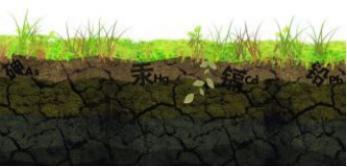
Heavy metal contamination
(4) Antibiotic residue contamination:
Since the discovery of antibiotics in the early 19th century, antibiotics have been widely used in the prevention and treatment of human and animal diseases. While antibiotics are used as drugs to treat animal diseases, they are also used as feed additives to promote animal growth. Among these, tetracycline antibiotics are the most important class of veterinary antibiotics and have become the most widely used class of antibiotics in China's livestock and poultry breeding industry due to their broad spectrum, good quality, and low price. Studies have shown that after tetracycline antibiotics enter the animal body, they cannot be completely absorbed, and about 75% is excreted in the form of the prototype or parent compound. Because these antibiotics have complex structures, are difficult to biodegrade, and have good water solubility, they are easily stored and accumulated in the environment. When these antibiotics enter the environment, they can have serious effects on microorganisms and plant populations, thereby harming human health and survival, and are therefore regarded as important pollutants. Other agricultural and veterinary antibiotics also present residue and environmental pollution problems after application, seriously threatening human health and ecological security.
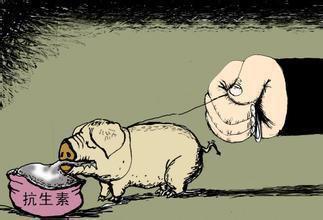
Antibiotic residue contamination
3. Biological high-temperature aerobic fermentation
The aerobic fermentation process of livestock and poultry manure is a microbiological process that uses microorganisms such as bacteria, actinomycetes, and fungi to controllably promote the biochemical transformation of biodegradable organic matter in livestock and poultry manure into stable humus-like substances. Soluble small-molecule organic matter in livestock and poultry manure is absorbed and utilized by microorganisms through their cell walls and cell membranes. Insoluble macromolecular organic matter first attaches to the exterior of microorganisms, where it is decomposed by extracellular enzymes secreted by the microorganisms into soluble small-molecule substances, which are then transported into microbial cells for utilization. Through the life activities of microorganisms - the processes of synthesis and decomposition - part of the organic matter is oxidized into simple inorganic substances, providing the energy needed for life activities, while another part of the organic matter is transformed and synthesized into new cellular material, causing microorganisms to multiply. Aerobic composting uses aerobic bacteria and oxygen to cause high-temperature fermentation of livestock and poultry manure. It is an economical and effective method for treating livestock and poultry manure, with advantages such as thorough decomposition of organic harmful substances, short composting cycle, low odor, and easy control. It uses microbial communities to decompose organic matter in a specific environment, improving livestock and poultry manure into stable humus for fertilizing fields or soil improvement.
The fermentation process of livestock and poultry manure is often divided into three stages. The first stage is the mesophilic stage. In the early stage of composting, mesophilic bacteria are relatively active. In the process of converting and utilizing the chemical energy of organic matter, part of the chemical energy is converted into heat energy. The end of the mesophilic stage is marked by the pile temperature rising to 45°C. The second stage is the thermophilic stage. Mesophilic bacteria begin to be inhibited or even die, and thermophilic bacteria take over. The residual and newly formed soluble substances in the organic matter continue to be decomposed, humus begins to form, and the oxygen demand of the compost gradually decreases. The thermophilic stage is characterized by a high oxygen consumption rate, high temperature, and a high degradation rate of volatile organic compounds. The third stage is the maturation stage. The maturation stage is characterized by low temperature, low oxygen consumption rate, increased porosity, and increased and stabilized humus. Although some plant nutrients in livestock and poultry manure, such as nitrogen and phosphorus, are volatile components, the nutrient components will not volatilize because the temperature during the entire composting process is generally 30-70°C. Moreover, harmless treatment requires ensuring that the pile temperature is maintained above 55°C for 5-7 days to achieve the purpose of killing pathogenic microorganisms and parasite eggs and to play a disinfecting role.
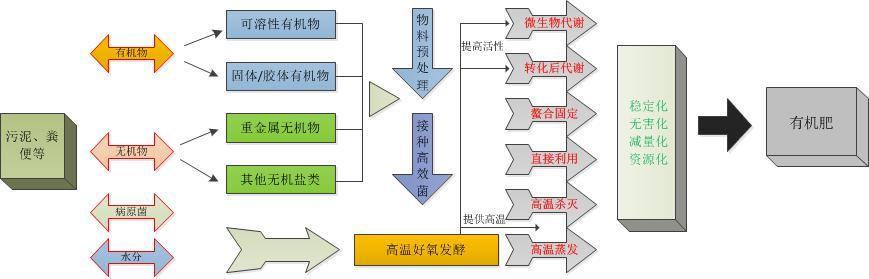
Schematic diagram of the biological high-temperature aerobic fermentation process
4. Quality assurance and after-sales service commitments
(1) Product quality commitment: All microbial inoculant products used are patented high-efficiency microbial + enzyme preparations developed and produced by our company. The products are safe, non-toxic, and do not produce secondary pollution.
(2) Schedule commitment: We promise to complete the project on schedule.
(3) Our company has many years of project treatment experience under similar conditions and has always attached great importance to environmental protection and civilized construction in projects, creating multiple model projects for environmental protection and civilized construction in various provinces and cities.