How to grow the golden fingers cactus? Growing methods and care tips
The golden fingers cactus belongs to the Cactaceae family and is also known as the golden hand ball or golden cylinder ball. Because it is easy to grow and does not prick people, it is loved by everyone and is often used in combination planters, for decorating homes, on tables and so on. So, what is the golden fingers cactus like? What are the growing methods and care tips for the golden fingers cactus? Next, the editor will introduce to you how to grow the golden fingers cactus, and its growing methods and care tips.
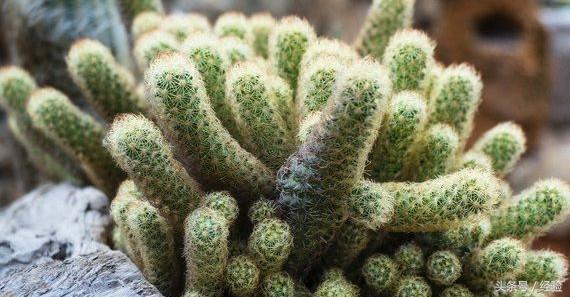
I. Brief introduction to the golden fingers cactus
The golden fingers cactus is also a type of cactus. It resembles human fingers and has golden-yellow spines, hence the name. Its appearance is beautiful and charming, making it an ideal home decoration.
II. Environmental requirements for growing the golden fingers cactus
1. Soil
The golden fingers cactus likes fertile, well-drained soil, so choosing the right soil before planting can reduce a lot of unnecessary trouble. First, it reduces later fertilizing; second, it reduces the occurrence of pests and diseases.
2. Light
Cacti originally grew in arid desert regions with plenty of sunlight. When moved into ordinary homes, their sunlight intensity must be ensured; full sun is fine, and no shading is needed. On sunny days, let it bask in the sun more; on cloudy days, it does not matter if there is no sunlight.
3. Temperature
The most suitable temperature for growth is 15~22°C, and the temperature under full-sun conditions is 20~28°C. This is basically close to the temperature in which people live, so keeping it at home does not require cooling or supplemental lighting. Be careful not to place it outdoors in winter, so as to avoid frost damage.
III. How to water the golden fingers cactus
Watering the golden fingers cactus should follow the principle of not watering until dry, and watering thoroughly when you do. The biggest taboo is giving it a shallow watering every few days, especially leftover water from a cup. The golden fingers cactus is very drought-tolerant. When the winter temperature is relatively low, keeping the potting soil slightly dry allows it to overwinter safely.
IV. How to fertilize the golden fingers cactus
The golden fingers cactus does not need much fertilizer. During the growing period, fertilize once a month. Choose thoroughly decomposed cake fertilizer, dilute and soak it, then water with the fertilizer solution, or choose granular fertilizer. Stop fertilizing during the winter dormant period.
V. Propagation methods for the golden fingers cactus
Cutting and division.
VI. Repotting and changing pots for the golden fingers cactus
The golden fingers cactus does not grow very fast, but for a period of time many offsets will grow beside it, and they will soon cover the surface of the pot. Usually repot once every 1~2 years, and division can be done when repotting. The golden fingers cactus must stop being watered 3-5 days before repotting. When repotting, cut off old roots, rotten roots and half-withered roots, place the root-trimmed golden fingers cactus in a cool, ventilated place away from sunlight, let the roots dry for 5-6 days, and then plant it.
VII. Pest and disease control for the golden fingers cactus
The golden fingers cactus rarely suffers from pests and diseases, but there are hazards such as anthracnose, leaf spot disease and mealybugs, so control should be done well, achieving early detection and early treatment. These pests and diseases often occur when ventilation is poor, so attention should be paid to maintaining ventilation in the growing environment.
VIII. Selection of flower pots for the golden fingers cactus
1. Plastic pot: light in texture, attractive in shape,pricecheap, poor in breathability and water permeability, and relatively short in service life.
2. Clay pot: made by firing clay. It has very good breathability and is not prone to water accumulation, but it breaks easily. It is also very suitable for succulentscultivation。
3. Porcelain pot: very finely made, often used as a cachepot, very attractive in appearance, with a variety of colors and patterns. However, it has poor breathability and water permeability and is easily damaged. It is suitable for decorative use with medium-sized succulents.
4. Wooden pot: often used to make various irregular-shaped pots, combining traditional or modern style, relatively rustic and natural. But the disadvantages are that the price is too high and it easily rots and gets damaged.
5. Purple clay pot: also called Yixing pot. It is attractive and elegant in appearance and expensive, with poor breathability and water permeability, and it is also easily damaged.
6. Glass pot: glass vessels have unique shapes and relatively diverse specifications. The price is relatively moderate, but the shortcomings are that they are not breathable and are also very easily broken.