Big differences between poultry farming in northern and southern China: 18 points worth saving

To better understand the differences between poultry farming in northern and southern China, avoid disorderly and blind market competition, and find the value of service personnel, the following is a brief summary of the differences between poultry farming in northern and southern China:
1. Climate differences
North: dry, with lower temperatures in winter and spring and less rainfall;
South: high temperature and high humidity, with more rainfall.
2. Farming models
North: a relatively high degree of intensification, mainly cage housing and net rearing, with a relatively high degree of mechanization and automation;
South: a relatively low degree of intensification, mostly free-range, cage housing, and floor rearing, with a relatively low degree of mechanization and automation.
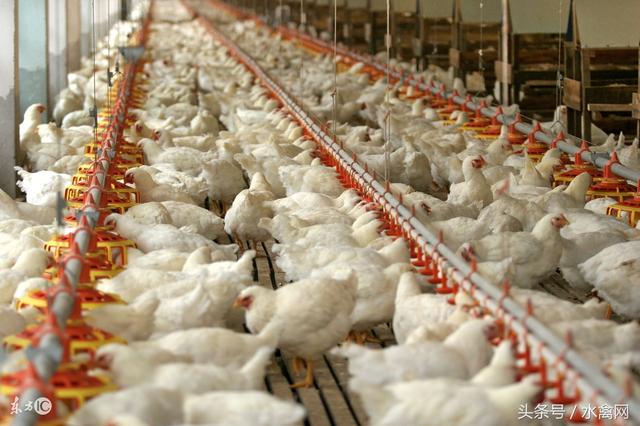
3. Poultry house ventilation methods
North: mainly negative-pressure ventilation (mechanical ventilation);
South: mainly positive-pressure ventilation (natural ventilation).
4. Poultry house structure
North: mainly fully enclosed, with emphasis on insulation, low-to-medium shed farming;
South: mainly semi-open and open, with emphasis on ventilation and cooling, high-shed farming.
5. Farming scale (number)
North: mostly more than 20,000;
South: mostly 2,000 to 20,000.
6. Cage housing differences
North: mainly 3 tiers, mostly H-type cage housing;
South: mainly 4 to 5 tiers, with all kinds of cage housing, adapted to local conditions to save space and cost to the greatest extent.
7. Farmers' farming technology
North: relatively high, with emphasis on feeding management;
South: very low, with few biosecurity measures and relatively poor feeding management.
8. Feed sales methods
North: mostly direct sales and cooperative models, with feed mostly complete compound feed;
South: mainly dealers, with feed mostly concentrate and premix, and farmers doing more of their own processing and mixing.
9. Number of technical service experts
North: almost every company has 1 to 4 service experts;
South: at most one.
10. Animal health monitoring
North: water quality monitoring, drug sensitivity tests, antibody tests, disinfection effect evaluation, etc. are all widely used, with very high testing frequency and density;
South: rarely used, at most testing antibody levels, with very low testing frequency and density.
11. Broiler farming breeds
North: mainly fast-growing white-feathered broilers;
South: mainly yellow-feathered broilers, green-legged partridge chickens, black chickens, and other local slow-growing broiler breeds.
12. Consumption patterns
North: more focused on meat yield and food safety;
South: more focused on the source of the chicken, the color of the chicken, taste, and food safety.
13. Profitability status
North: greater market fluctuation, mostly losses;
South: generally profitable, with farmers controlling costs very strictly.
14. Broiler rearing cycle and feed conversion ratio
North: broilers are mostly marketed at 35 to 42 days, with a feed conversion ratio of 1.46 to 1.65;
South: broilers are mostly marketed at 60 to 100 days, with a feed conversion ratio of 2.7 to 3.0.
15. Disinfection and water line management
North: frequent disinfection, relatively high frequency of water line disinfection and cleaning, and very meticulous water line height management;
South: very infrequent disinfection, water lines are almost never disinfected, and water line height management is very poor.
16. Feed quality control
North: great attention to powder feed management and moldy feed control;
South: because feed is mixed by farmers themselves, the problems of overly fine or overly coarse grinding are serious, and feed caking and mold are prominent.
17. Chick quality assessment
North: farmers have a certain understanding of chick quality;
South: farmers are not strict in controlling chick quality and uniformity, and their understanding is insufficient.
18. Data records and financial analysis
North: farmers' awareness of recording daily farming status is gradually increasing, they have a certain understanding of the European Production Efficiency Factor and financial analysis, and data management software is widely used;
South: farmers hardly record daily farming conditions, have no in-depth understanding of the European Production Efficiency Factor and financial analysis, and farming benefit accounting is extensive and simple.